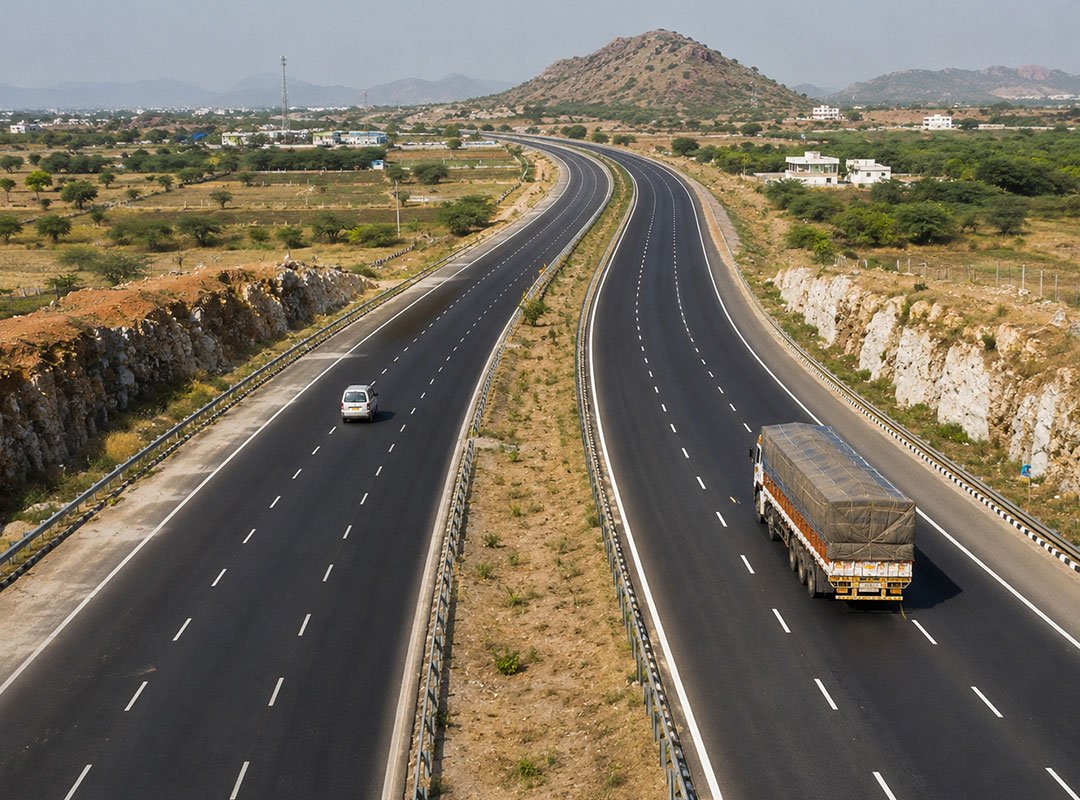
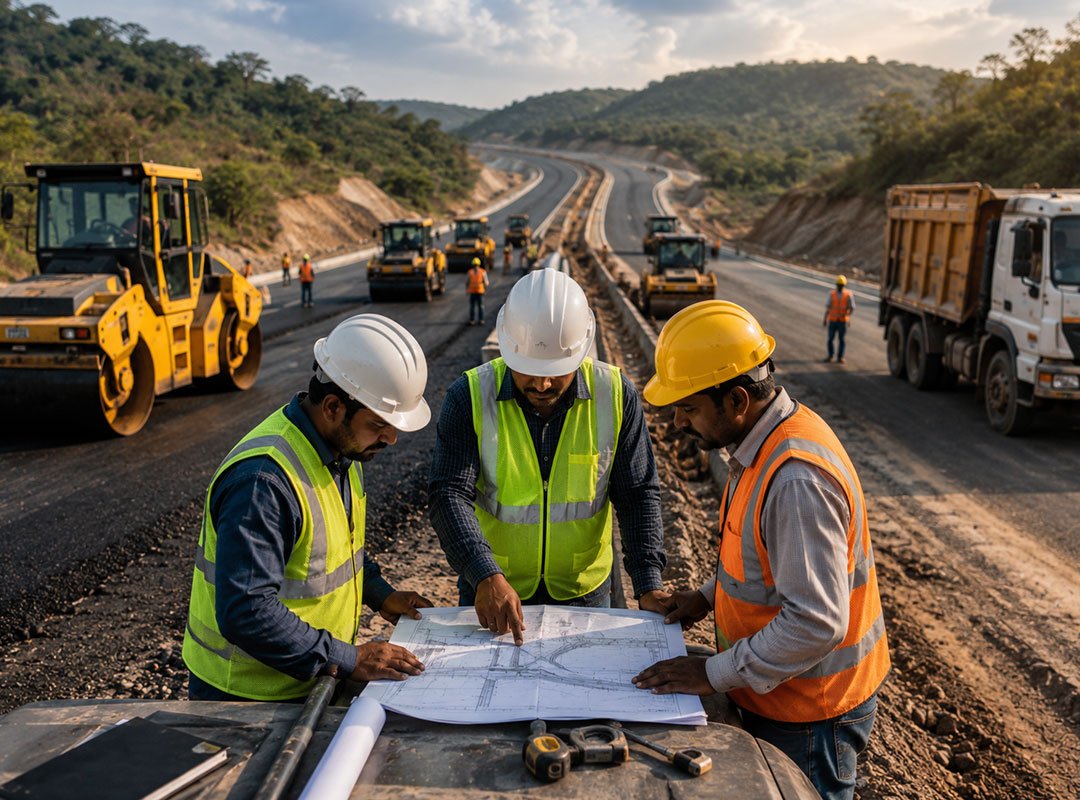
With increasing investments in highways, expressways, and industrial corridors, choosing the right Highway Construction Company in India has become essential for ensuring timely delivery, regulatory compliance, and long-term infrastructure performance.
India has one of the world’s largest road networks, spanning more than 6.7 million kilometres, with national highways accounting for only around 2% of the total road network while carrying nearly 40% of the country’s road traffic. This makes highway construction one of the most important sectors supporting economic growth, industrial development, logistics efficiency, and regional connectivity. Through initiatives such as Bharatmala Pariyojana, increasing EPC (Engineering, Procurement and Construction) projects, and the Hybrid Annuity Model (HAM), the Government of India has significantly accelerated highway infrastructure development. As project values continue to increase, selecting the right Highway Construction Company in India has become a strategic decision rather than simply a procurement exercise.
Selecting the right Highway Construction Company in India directly influences construction quality, project timelines, lifecycle costs, and long-term road performance. Awarding a project to an unsuitable contractor can result in delays, cost overruns, quality deficiencies, contractual disputes, and increased maintenance costs over the asset’s lifecycle. Government agencies such as the National Highways Authority of India (NHAI), state Public Works Departments (PWDs), and private infrastructure developers therefore evaluate contractors against comprehensive technical, financial, operational, and compliance criteria before awarding projects.
A competent Highway Construction Company in India should demonstrate much more than competitive pricing. Engineering expertise, project execution capability, equipment strength, financial stability, quality management systems, workforce competency, safety performance, and regulatory compliance all contribute to successful project delivery. Companies such as Pawan Highways India Pvt. Ltd. understand that successful highway infrastructure development depends on disciplined project execution, quality assurance, and technical excellence at every stage of construction. The following factors represent the most important evaluation criteria before selecting a Highway Construction Company in India.
1. Assess Relevant Highway Project Experience
The experience of a Highway Construction Company in India is one of the strongest indicators of its ability to execute future assignments successfully. Evaluation should focus on the scale, complexity, and type of projects completed rather than simply the number of years the company has operated. Projects involving national highways, expressways, bridges, flyovers, hill roads, or multi-lane corridors require specialised engineering expertise and execution capability. Project owners should also assess whether the contractor has successfully handled projects with similar terrain, traffic volumes, geotechnical conditions, and construction challenges. A company with relevant experience is better equipped to anticipate site risks, optimise construction sequencing, manage resources efficiently, and consistently deliver projects within the required quality standards and contractual timelines.
2. Evaluate Engineering and Technical Expertise
A capable Highway Construction Company in India should possess expertise in pavement design, geotechnical engineering, structural works, drainage systems, surveying, material science, and construction planning. It should employ qualified civil engineers, project managers, planning engineers, quantity surveyors, and quality control professionals capable of executing projects in accordance with technical specifications. The company should also demonstrate familiarity with MoRTH Specifications for Road and Bridge Works, Indian Roads Congress (IRC) codes, BIS standards, and project-specific requirements issued by authorities such as NHAI. Strong engineering capability enables faster problem-solving, efficient resource utilisation, reduced construction errors, and better long-term pavement performance.
3. Verify Financial Stability
The financial strength of a Highway Construction Company in India directly influences its ability to mobilise manpower, procure materials, deploy equipment, and sustain project execution throughout the contract period. Since highway projects require significant upfront investment before milestone payments are received, financial stability is an essential evaluation criterion. Project owners should review audited financial statements, annual turnover, net worth, profitability trends, debt-equity ratio, working capital availability, banking relationships, and liquidity position. The company’s order book and its ability to finance multiple ongoing projects without affecting execution quality should also be assessed. Companies with sound financial health are less likely to experience disruptions caused by funding constraints, delayed supplier payments, labour shortages, or equipment downtime, resulting in more reliable project execution.
4. Review Construction Equipment and Resources
A well-equipped Highway Construction Company in India should possess an adequate fleet of asphalt and concrete plants, pavers, graders, rollers, excavators, loaders, crushers, transit mixers, dumpers, and surveying equipment to maintain productivity and construction quality. While certain machinery may be hired when required, companies with substantial owned assets generally have greater operational flexibility and lower mobilisation delays. Project owners should verify whether critical equipment is owned or leased, as ownership usually provides better availability, faster mobilisation, and improved control over maintenance schedules. Equipment age, calibration records, maintenance practices, utilisation rates, and the availability of backup machinery should also be evaluated, as equipment failures remain a major cause of construction delays.
5. Assess Quality Management and Material Testing
Every Highway Construction Company in India should maintain structured quality management systems supported by qualified laboratory personnel, documented inspection procedures, calibrated testing equipment, and systematic quality records. ISO 9001 certification is also an important indicator that the company follows documented quality management processes. Evaluation should include the company’s capability to conduct field and laboratory testing for aggregates, bitumen, cement, concrete, soil, granular sub-base, wet mix macadam, asphalt mixes, compaction, density, core extraction, and pavement smoothness. Strong quality assurance practices minimise construction defects, reduce maintenance requirements, and ensure compliance with MoRTH specifications and client requirements. Companies such as Pawan Highways India Pvt. Ltd. recognise that consistent quality management and material testing are fundamental to delivering durable and compliant highway infrastructure.
6. Review Safety Performance and HSE Standards
Highway construction is a high-risk activity involving heavy equipment, excavation, elevated works, and live traffic. The safety record of a Highway Construction Company in India reflects its operational discipline and project management capability. Evaluation should include the Lost Time Injury Frequency Rate (LTIFR), accident history, implementation of safety management systems, availability of trained safety officers, emergency response procedures, worker induction programmes, PPE compliance, and regular safety audits. Compliance with statutory safety and environmental regulations should also be verified. Companies with well-established HSE practices generally experience fewer disruptions, improved workforce productivity, lower legal risks, and more consistent project execution.
7. Analyse Project Delivery Record
Delivering projects within the agreed timeline is one of the strongest indicators of a Highway Construction Company in India’s execution capability. Delays in highway construction increase project costs, disrupt traffic movement, postpone economic benefits, and expose project owners to contractual risks. Before awarding a project, clients should evaluate the company’s track record of completing similar assignments on schedule, the reasons for any delays, the recovery measures adopted, and adherence to contractual milestones. Client references, independent engineer reports, and project completion certificates provide valuable insights into execution consistency. A Highway Construction Company in India with a proven history of meeting milestones typically demonstrates stronger planning systems, efficient resource management, and effective project monitoring practices.
8. Check Regulatory Compliance
Highway projects in India are governed by technical standards, labour laws, environmental regulations, taxation requirements, and contractual obligations. A reliable Highway Construction Company in India should have a proven record of complying with regulations issued by authorities such as the Ministry of Road Transport and Highways (MoRTH), National Highways Authority of India (NHAI), Indian Roads Congress (IRC), and State Pollution Control Boards. The evaluation should also include contractual compliance, litigation history, environmental approvals, consent to operate where applicable, labour law adherence, insurance coverage, and statutory registrations. A Highway Construction Company in India with strong compliance practices reduces legal risks, avoids regulatory delays, and ensures smooth project execution.
9. Evaluate Supply Chain Capability
Highway construction requires the uninterrupted supply of aggregates, bitumen, cement, steel, geotextiles, drainage materials, fuel, and other construction materials. Any disruption in procurement can delay construction and increase project costs. A dependable Highway Construction Company in India should have an established supplier network, efficient inventory management systems, and the ability to procure quality materials from approved vendors in accordance with project specifications. Strong supply chain management enables a Highway Construction Company in India to maintain construction continuity, minimise equipment idle time, optimise resource utilisation, and achieve planned productivity throughout the project lifecycle.
10. Assess Digital Construction Capabilities
Technology plays an increasingly important role in improving efficiency, transparency, and quality in highway construction. A modern Highway Construction Company in India uses project management software, GPS-enabled equipment, drone-based site surveys, Building Information Modelling (BIM) where applicable, GIS mapping, and cloud-based progress monitoring to improve project execution. These technologies enable accurate progress tracking, better equipment utilisation, faster reporting, data-driven decision-making, and improved coordination between project stakeholders. By investing in digital construction practices, a Highway Construction Company in India can manage complex infrastructure projects with greater accuracy, efficiency, and accountability.
11. Review Workforce and Leadership
The success of a highway project ultimately depends on the competence of the people managing and executing it. When evaluating a Highway Construction Company in India, project owners should assess leadership experience and the availability of qualified personnel across engineering, planning, quality control, surveying, procurement, equipment management, and safety functions. Experienced project managers and site engineers play a crucial role in coordinating multiple construction activities, resolving technical challenges, managing subcontractors, and maintaining effective communication with clients and consultants. A skilled workforce enables a Highway Construction Company in India to maintain consistent execution quality, improve productivity, and successfully deliver complex infrastructure projects.
12. Verify Reputation and Client Satisfaction
The reputation of a Highway Construction Company in India reflects its ability to consistently deliver quality infrastructure and maintain professional relationships with clients. Before awarding a highway project, project owners should seek feedback from previous clients, consultants, and independent engineers regarding the company’s quality of work, responsiveness, adherence to contractual commitments, and ability to manage unforeseen site challenges. Repeat business from existing clients is another strong indicator of contractor reliability and performance. A strong reputation supported by successful project deliveries provides greater confidence that the Highway Construction Company in India can consistently meet the required standards of quality, safety, and performance.
Selecting the right Highway Construction Company in India requires balancing cost with technical capability, execution experience, financial stability, equipment strength, quality management systems, safety performance, regulatory compliance, workforce capability, technology adoption, and project delivery record. A structured evaluation process helps minimise execution risks and ensures that the selected contractor can deliver durable, high-quality highway infrastructure within the required timelines.
Whether the project involves a national highway, expressway, industrial corridor, or state highway, choosing an experienced Highway Construction Company in India remains one of the most important decisions influencing project quality, safety, and long-term infrastructure performance. With a strong focus on engineering excellence, quality assurance, regulatory compliance, and timely execution, Pawan Highways India Pvt. Ltd. continues to contribute to India’s growing road infrastructure by delivering projects that meet the highest standards of durability, safety, and operational efficiency.