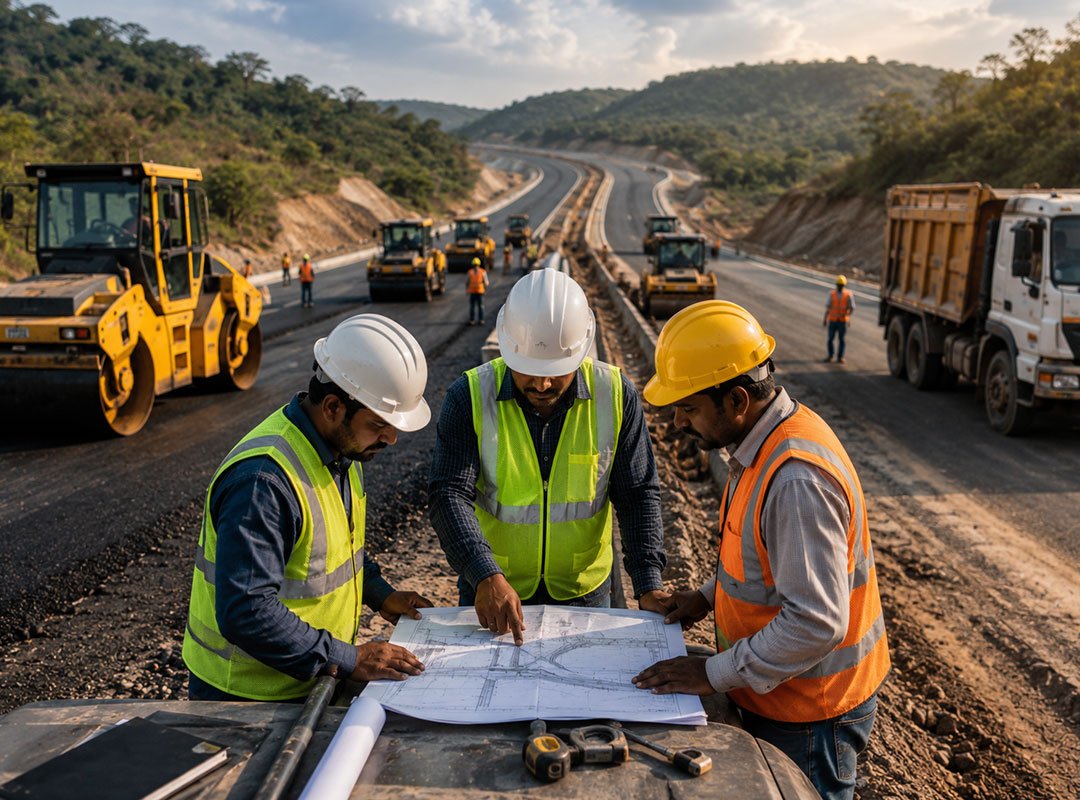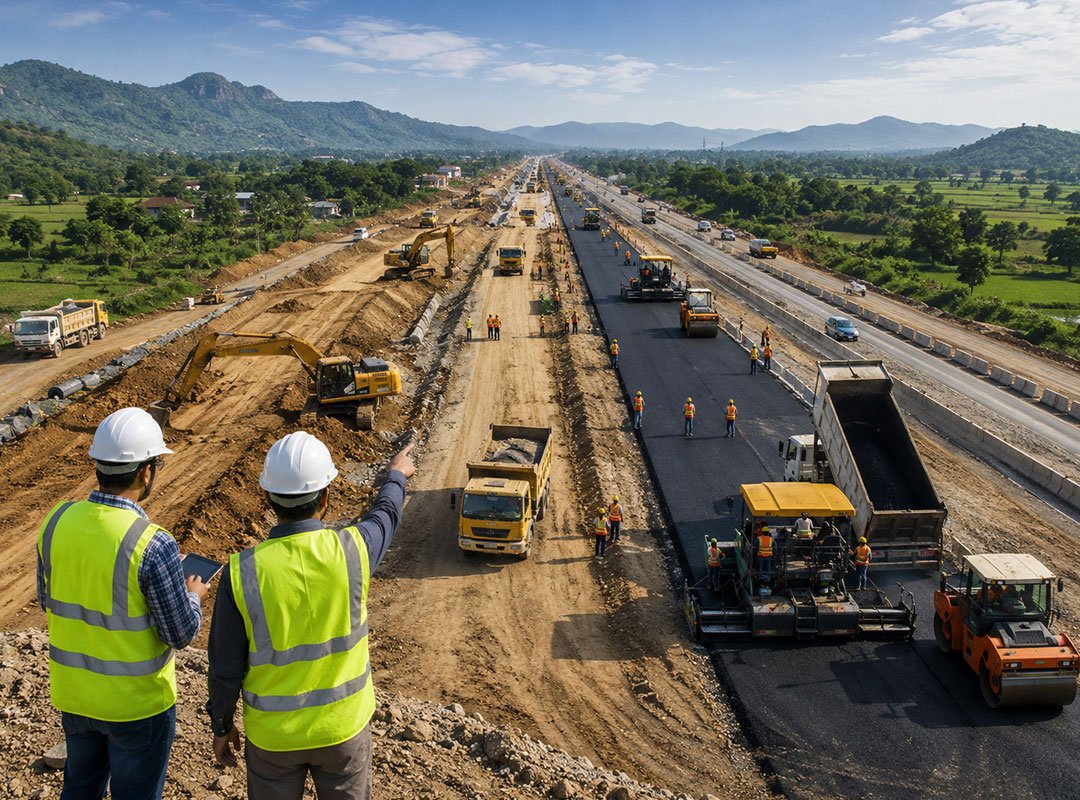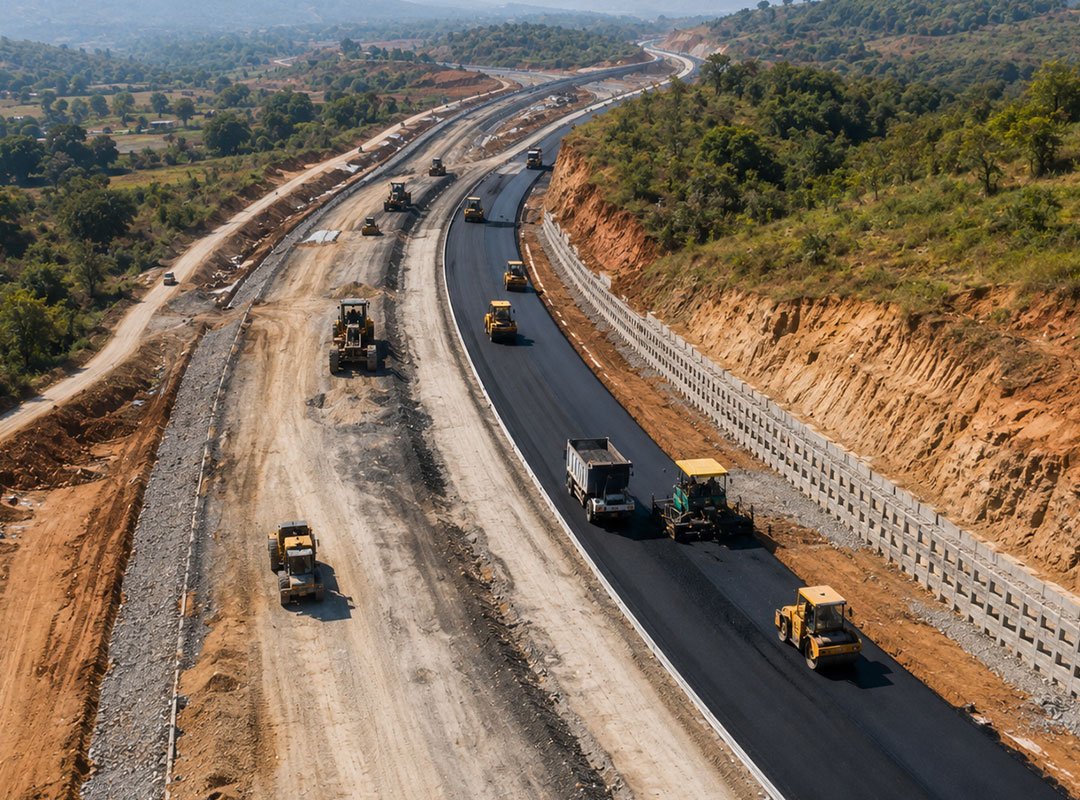
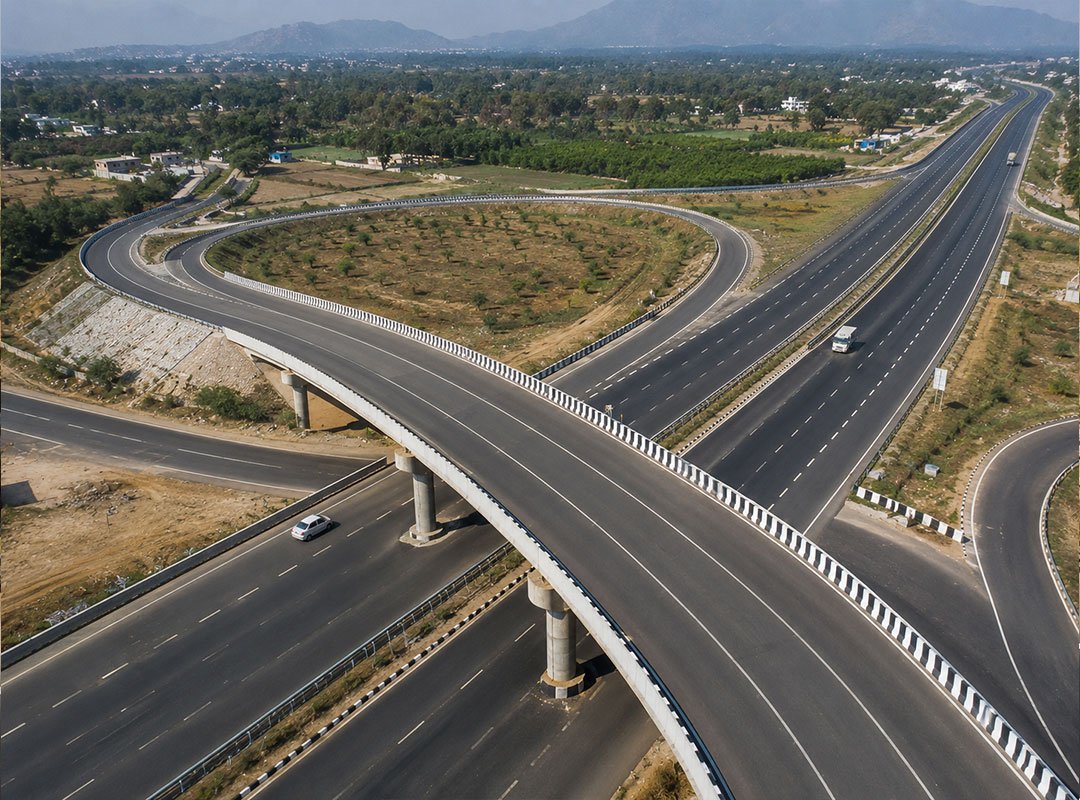
Although both highway builders and general road contractors contribute to India’s transportation infrastructure, the nature of the projects they undertake differs significantly in terms of engineering complexity, operational objectives, regulatory requirements, and long-term performance expectations. General road contractors typically execute urban roads, municipal streets, industrial roads, residential layouts, and internal access roads designed to facilitate local mobility. Professional Highway Builders in India, however, develop large-scale transportation corridors that connect cities, industrial regions, logistics hubs, ports, airports, and state boundaries, supporting the continuous movement of people and goods across the country.
The distinction is therefore not merely based on the length or value of a project but on the level of technical integration required throughout its lifecycle. Highway projects combine pavement engineering, bridge construction, grade separators, interchanges, drainage systems, traffic engineering, geotechnical solutions, utility management, environmental safeguards, and operational infrastructure into a single integrated transportation network. Every component must perform cohesively to ensure capacity, safety, durability, and long-term serviceability under continuously changing traffic conditions.
Professional highway builders also operate within highly structured technical and contractual frameworks established by organisations such as the Ministry of Road Transport and Highways (MoRTH), the National Highways Authority of India (NHAI), and the Indian Roads Congress (IRC). Delivering projects under these frameworks requires specialised engineering expertise, multidisciplinary planning, systematic project management, and the ability to coordinate multiple stakeholders throughout the project lifecycle. Companies such as Pawan Highways India Pvt. Ltd. (PHIPL) understand these complexities and deliver highway infrastructure through integrated engineering practices that support India’s expanding transportation network and long-term infrastructure development.
1. Highway Projects Function as Integrated Civil Infrastructure Systems
One of the biggest distinctions between professional Highway Builders in India and general road contractors is that highways are developed as complete transportation systems rather than standalone pavement projects. A National or State Highway corridor integrates carriageways, bridges, flyovers, railway overbridges (ROBs), underpasses, culverts, retaining structures, drainage networks, service roads, utility crossings, median infrastructure, roadside safety installations, and traffic management facilities into a single engineering solution. Every element is interdependent, requiring coordinated planning across multiple engineering disciplines so that the completed corridor performs efficiently throughout its design life instead of functioning as isolated civil works.
2. Highway Engineering Is Designed Around Long-Term Traffic Demand
Professional Highway Builders in India develop infrastructure by analysing projected traffic growth over several decades rather than addressing only present-day transportation requirements. Highway design considers anticipated increases in commercial vehicle movement, axle loading, passenger traffic, regional economic development, industrial expansion, and future connectivity requirements while determining carriageway capacity, pavement configuration, geometric alignment, and supporting infrastructure. This future-oriented engineering approach enables highways to accommodate sustained traffic growth with minimal operational disruption, whereas conventional road projects are generally designed to address comparatively localised mobility requirements and shorter-term demand patterns.
3. Highway Builders Deliver Infrastructure That Supports Multiple Transport Functions
Unlike conventional road construction, where the primary objective is providing surface connectivity, professional Highway Builders in India develop corridors that simultaneously support freight transportation, passenger mobility, emergency services, defence logistics, public transport movement, agricultural supply chains, industrial distribution, and regional economic integration. Highway infrastructure must therefore balance mobility, accessibility, operational efficiency, safety, and future expansion requirements within a single project while ensuring uninterrupted connectivity across diverse geographical regions. This broader transportation role requires engineering decisions that extend well beyond conventional road construction practices and focus on the long-term functionality of the entire corridor rather than individual road segments.
4. Professional Highway Builders Manage Projects at a Much Larger Operational Scale
The operational scale of highway development is substantially greater than that of conventional road construction, requiring professional Highway Builders in India to manage multiple work fronts, geographically dispersed construction teams, specialised subcontractors, material supply chains, temporary construction facilities, and large equipment fleets simultaneously. Highway projects often extend over long distances and involve numerous structures, utility interfaces, and engineering activities progressing in parallel under a unified execution programme. This level of operational complexity demands advanced project planning, systematic resource allocation, continuous coordination between engineering disciplines, and disciplined monitoring mechanisms to ensure that all project components progress in accordance with contractual schedules without affecting overall corridor continuity.
5. Highway Builders Work Within More Comprehensive Technical Standards
Professional Highway Builders in India execute projects under an extensive technical framework comprising the specifications of the Ministry of Road Transport and Highways (MoRTH), design guidelines issued by the Indian Roads Congress (IRC), Bureau of Indian Standards (BIS) codes, environmental regulations, and project-specific contractual requirements prescribed by authorities such as NHAI or State Highway Departments. These standards govern every aspect of highway development, including geometric design, pavement structures, bridges, drainage, road safety features, materials, construction tolerances, and performance requirements. General road contractors, while also following applicable engineering standards, generally operate within comparatively less complex technical frameworks because urban and municipal road projects involve fewer integrated infrastructure components and lower operational demands.
6. Highway Infrastructure Is Designed for Long-Term Asset Performance
Unlike conventional roads that primarily address local transportation requirements, highways are engineered as long-term national assets expected to deliver reliable performance under continuous heavy traffic and varying environmental conditions for many years. Professional Highway Builders in India therefore plan infrastructure by considering projected traffic loading, pavement durability, structural performance, maintainability, resilience against climatic conditions, and future expansion requirements from the earliest stages of project development. This asset-oriented approach ensures that highways continue delivering safe and efficient transportation throughout their intended service life while reducing the need for major rehabilitation and minimising disruptions to traffic movement over time.
7. Highway Builders Handle More Extensive Environmental and Land Constraints
Highway development extends across diverse terrains, agricultural land, forests, water bodies, urban settlements, and ecologically sensitive regions, making environmental and land-related challenges far more complex than those encountered in conventional road projects. Professional Highway Builders in India must execute projects while complying with Environmental Impact Assessment (EIA) conditions, Forest Clearance requirements, wildlife protection measures, pollution control norms, compensatory plantation obligations, borrow area regulations, and sustainable construction practices wherever applicable. They also coordinate with multiple government agencies during land acquisition, utility relocation, and environmental compliance to minimise project delays while ensuring that infrastructure development remains environmentally responsible and legally compliant throughout the project lifecycle.
8. Highway Projects Demand Greater Coordination Across Multiple Stakeholders
Unlike general road construction, which is often managed by a single local authority, highway projects require continuous coordination among numerous public and private stakeholders throughout planning and execution. Professional Highway Builders in India regularly work alongside highway authorities, design consultants, independent engineers, utility providers, railway authorities, irrigation departments, environmental agencies, local administrations, and law enforcement bodies to resolve technical, statutory, and operational issues that arise during project execution. Since the progress of one activity frequently depends on approvals or work completed by another organisation, effective stakeholder coordination becomes essential for maintaining construction schedules, reducing execution risks, and ensuring seamless delivery of large transportation corridors.
9. Highway Builders Deliver Infrastructure That Supports Future Economic Growth
Professional Highway Builders in India construct infrastructure with the objective of enabling long-term economic development rather than simply improving road connectivity. Well-planned highways reduce travel time, improve freight efficiency, strengthen industrial supply chains, enhance access to ports and logistics parks, encourage investment in emerging economic zones, and improve connectivity between manufacturing centres and consumer markets. According to the Ministry of Road Transport and Highways, improvements in highway infrastructure have played a significant role in reducing logistics bottlenecks and supporting India’s vision of becoming a globally competitive manufacturing and trade economy. Consequently, highway builders contribute directly to national productivity by developing infrastructure capable of supporting sustained economic expansion over several decades.
10. Specialised Highway Builders Create Infrastructure with Higher Long-Term Value
The defining characteristic of professional Highway Builders in India is their ability to deliver infrastructure that remains reliable, safe, and operationally efficient throughout its intended service life despite increasing traffic volumes and evolving transportation demands. Their expertise extends beyond construction to encompass integrated engineering, technical planning, regulatory compliance, multidisciplinary coordination, and lifecycle-focused asset development. This comprehensive approach results in transportation corridors that require fewer operational interventions, support higher traffic efficiency, improve user safety, and provide greater long-term value for governments, businesses, and the public. As India’s infrastructure network continues to expand, specialised highway builders will remain indispensable in developing resilient transportation corridors capable of supporting the nation’s future mobility and economic aspirations.
While both general road contractors and professional highway builders contribute to the development of India’s transport infrastructure, the scale, complexity, and long-term objectives of their work are fundamentally different. Highway construction demands integrated engineering, specialised technical expertise, comprehensive regulatory compliance, multidisciplinary coordination, and a lifecycle-driven approach that ensures infrastructure continues to perform efficiently for years after completion. As India’s investment in highways, expressways, and strategic transport corridors continues to grow, choosing an experienced highway infrastructure specialist becomes increasingly important. Pawan Highways India Pvt. Ltd. (PHIPL) combines engineering excellence, systematic project execution, and a commitment to quality to deliver highway infrastructure that strengthens connectivity, supports economic development, and contributes to the nation’s evolving transportation landscape.