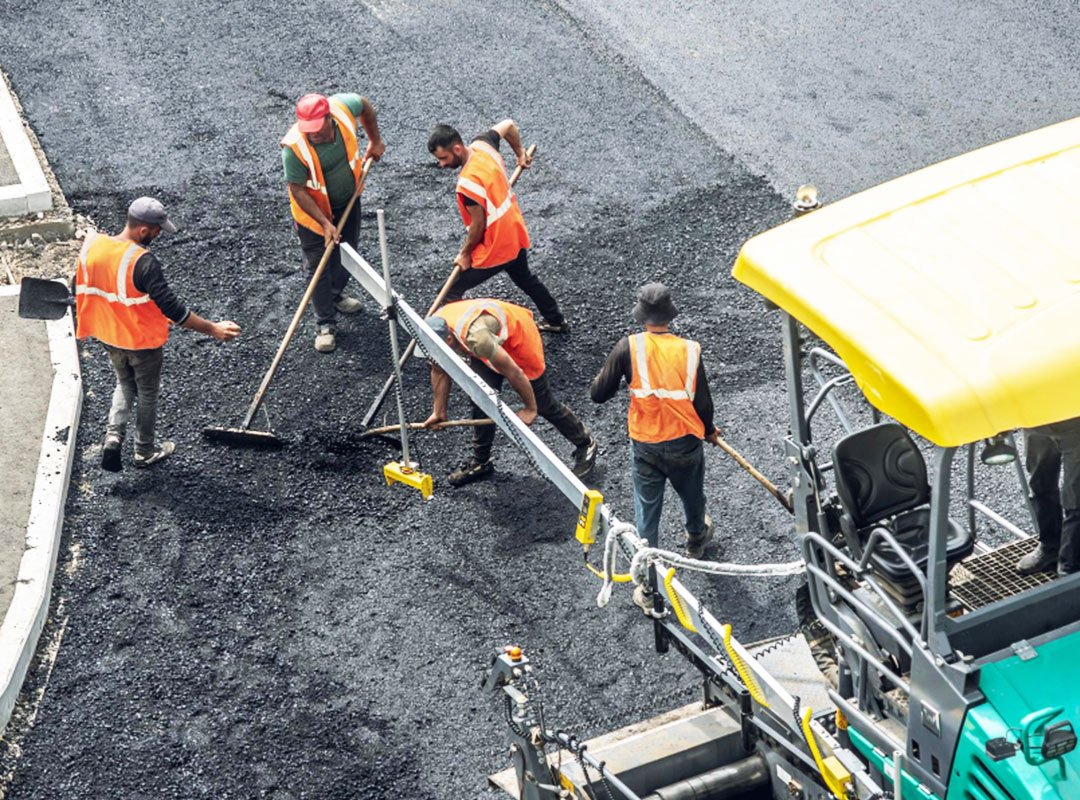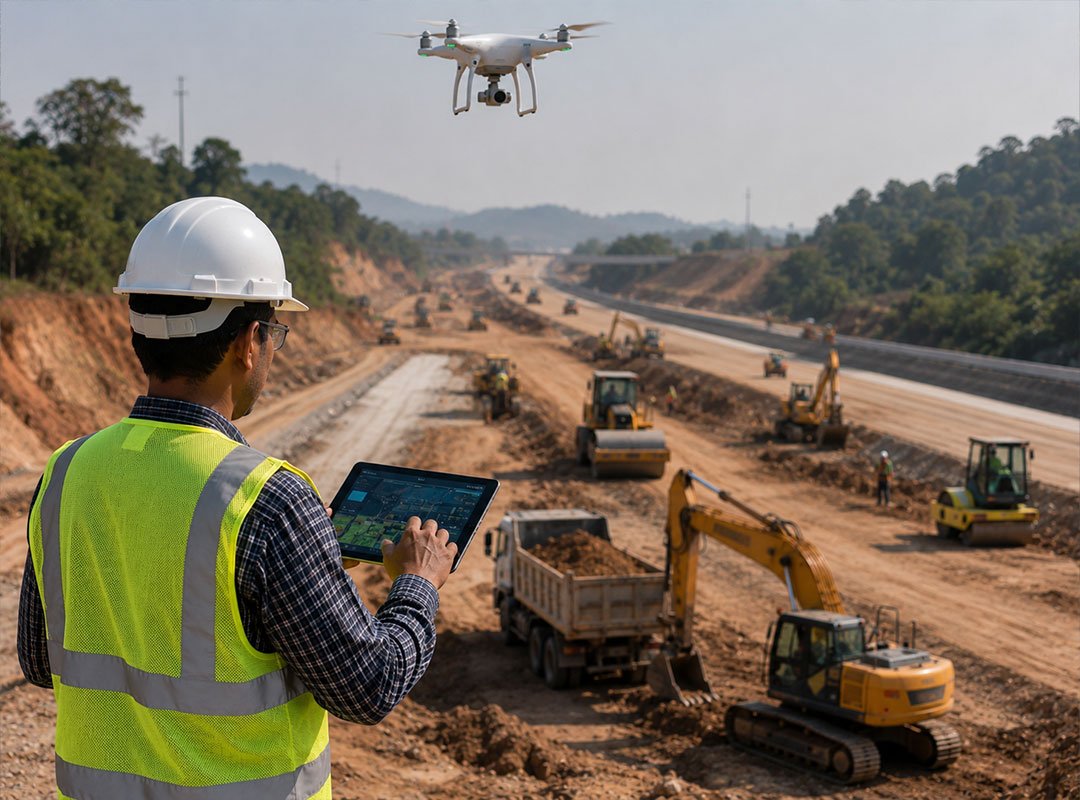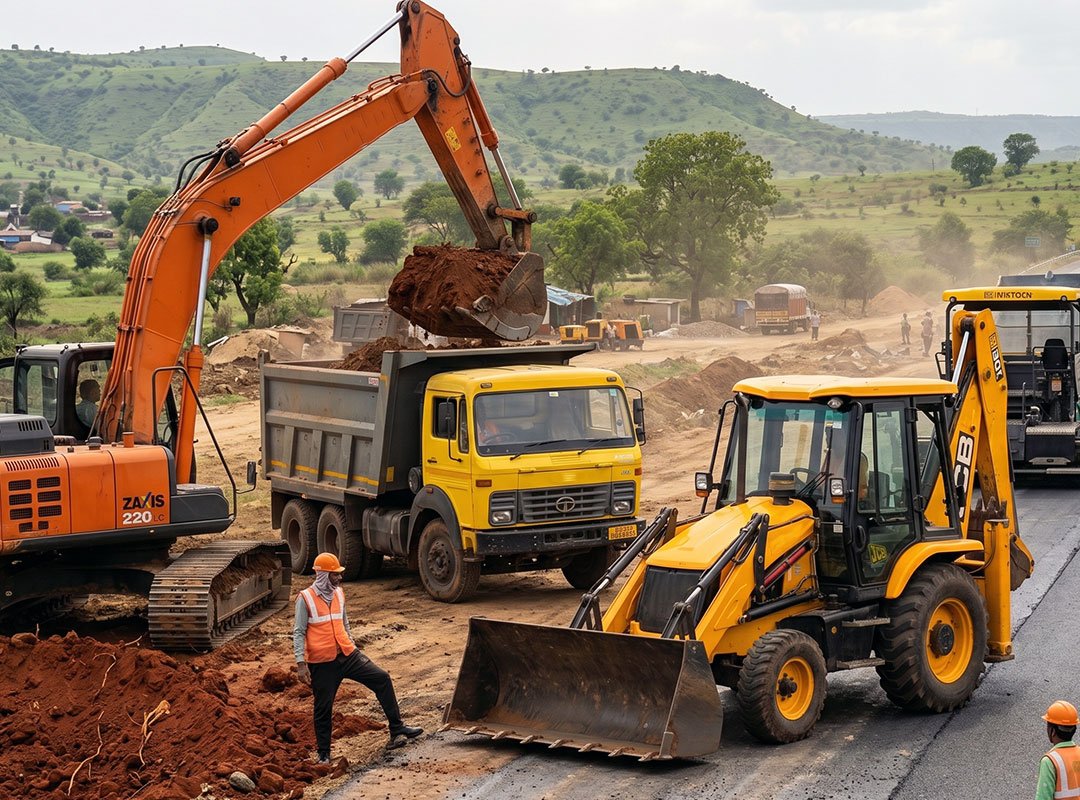
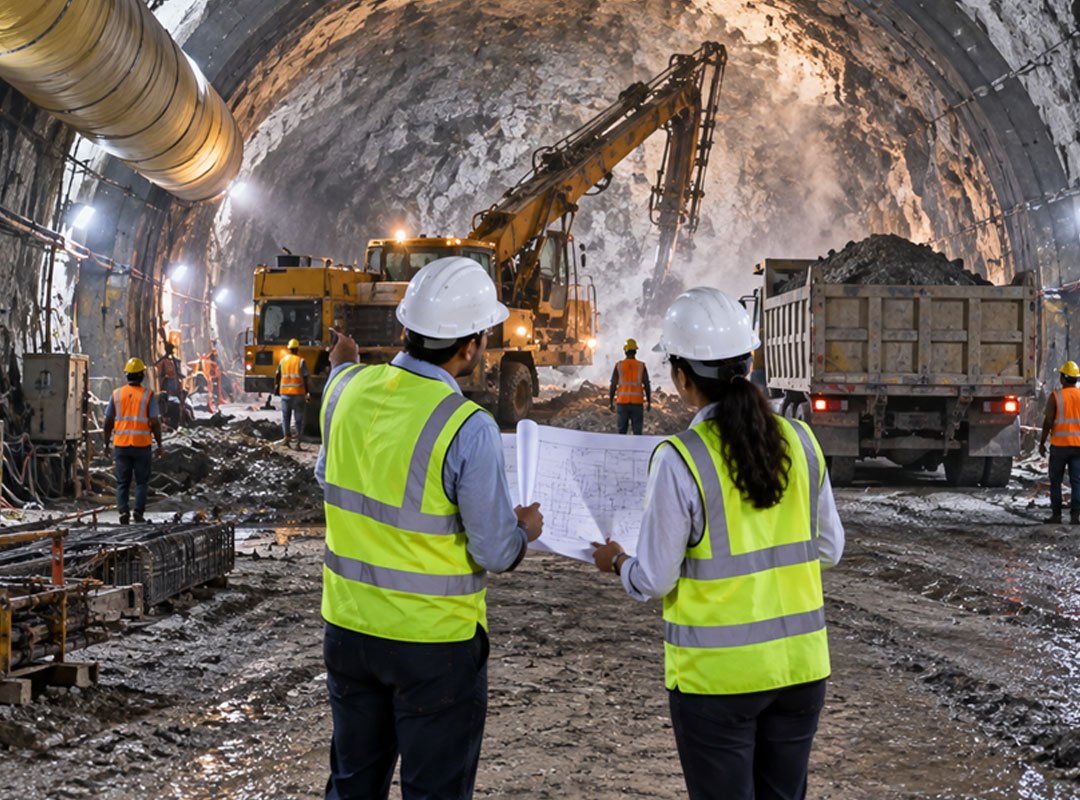
A conventional highway is generally constructed by preparing the ground, building the formation, placing pavement layers, and integrating structures and drainage along the alignment. A tunnel changes that relationship completely. Instead of creating the road on the surface, construction takes the road into the ground, where the surrounding rock or soil becomes an active part of the engineering system.
This difference explains why highway tunnel construction requires specialised investigation, excavation methods, ground support, instrumentation, waterproofing, ventilation, fire protection, and emergency systems. Indian road-tunnel practice is guided by IRC:SP:91-2019, Guidelines for Road Tunnels, while MoRTH has issued specific requirements and checklists for tunnel projects. IRC:SP:91 covers subjects ranging from geophysical investigations and tunnel supports to instrumentation, ventilation, fire safety and operation.
The growing scale of Indian tunnel infrastructure illustrates this complexity. In February 2026, the Union Government approved a 33.7 km Gohpur-Numaligarh connectivity project in Assam that includes a 15.79 km road-cum-rail tunnel beneath the Brahmaputra. The project has a capital cost of ₹18,662 crore.
1. The Ground Becomes Part of the Engineering System
In surface road construction, the contractor primarily builds on prepared ground. In tunnel construction, the surrounding ground directly affects the stability of the excavation. Rock type, fractures, weathering, groundwater, in-situ stresses and geological discontinuities can change considerably along the tunnel alignment. IRC:SP:91 therefore gives specific importance to geophysical investigations and geotechnical assessment. The guideline also recognises that tunnel design may need to be refined using observations obtained during excavation. This makes highway tunnel construction fundamentally different because the material surrounding the structure cannot simply be treated as a uniform foundation.
2. Excavation Method Depends on Ground and Geometry
There is no single excavation method suitable for every tunnel. Indian road-tunnel guidance covers drill-and-blast excavation, mechanical excavation, cut-and-cover construction, bored tunnels using tunnel boring machines, immersed-tube solutions and other specialised approaches. The choice depends on geology, tunnel size, depth, alignment, surrounding infrastructure, environmental conditions and the required construction sequence. The method also affects the tunnel’s cross-sectional shape and support requirements. Tunnel construction techniques therefore have to be selected against actual ground and project conditions rather than chosen simply because a particular machine or method is available.
3. The Excavation Face Must Be Managed Continuously
One of the defining characteristics of road tunnel construction is that excavation happens at a confined working face. Removing material changes the stress conditions around the opening, so excavation and support are closely linked. In conventional tunnelling, the heading may advance in controlled stages, with temporary support installed before the next excavation cycle proceeds. This sequence is fundamentally different from open-road earthwork, where a large exposed area can often be worked simultaneously. IRC:SP:91 describes tunnelling as an observational process in which ground behaviour and support performance are monitored as excavation advances.
4. Temporary Ground Support Is a Core Construction Activity
A tunnel cannot simply be excavated and left unsupported until the final lining is constructed. Depending on geological conditions, support can involve rock bolts, shotcrete, steel ribs, lattice girders, forepoling or other measures. The purpose is to control deformation and maintain stability while the permanent system is developed. IRC:SP:91 separates geotechnical design of primary support from the design of the inner lining, highlighting the different roles of these systems. In highway tunnel construction, support is therefore part of the excavation process itself rather than an optional finishing operation.
5. Instrumentation Provides Feedback From Underground
Tunnel construction has an unusual characteristic: important conditions cannot always be understood from surface inspection. Instrumentation can monitor ground movement, deformation, stress development and support performance as excavation progresses. IRC:SP:91’s tunnel instrumentation guidance states that monitoring provides information about the stability of underground openings and helps evaluate whether the support system is performing as intended. This information can support decisions on subsequent excavation and support. In conventional road construction, measurements largely verify finished or exposed work; in road tunnel construction, monitoring can directly influence how the next section is excavated.
6. Water Is an Underground Design Problem
Groundwater creates a different set of construction and operational challenges because water can enter through joints, fractures, permeable strata, portals or other geological features. Tunnel design consequently requires systems for controlling seepage and directing water away from the carriageway and structural elements. IRC guidance includes sub-surface drainage and waterproofing as specific tunnel design considerations. The permanent tunnel system may include drainage layers, waterproof membranes, channels, sumps and pumping arrangements depending on the site. Unlike a conventional road, where surface drainage is readily visible and accessible, tunnel construction techniques must manage water within an enclosed underground environment.
7. The Tunnel Has to Be Ventilated
A surface highway is naturally exposed to the atmosphere. A tunnel is not. Vehicle exhaust gases, heat and smoke can accumulate within an enclosed passage, making mechanical ventilation a critical part of tunnel design. IRC:SP:91 includes ventilation requirements covering factors such as tunnel length, traffic, admissible concentrations of toxic gases, visibility and smoke control. Current Indian tunnel specifications continue to refer to IRC:SP:91-2019 for ventilation design. Highway tunnel construction therefore includes mechanical and electrical infrastructure that has no equivalent scale on an ordinary open road.
8. Fire and Evacuation Are Designed Into the Structure
An incident inside a tunnel creates constraints that do not exist on an open carriageway. Smoke can rapidly reduce visibility, escape routes are limited, and emergency responders have to operate within an enclosed space. IRC:SP:91 therefore addresses fire detection, firefighting, emergency management, communication and evacuation. Depending on tunnel configuration and risk assessment, projects may include cross passages, emergency exits, refuge arrangements, fire-resistant systems and dedicated emergency access. The Sonamarg Tunnel, inaugurated in January 2025, includes an Integrated Tunnel Management System with features such as a public-address system, electrical fire signalling, radio rebroadcast and dynamic road information panels.
9. Lighting Is an Engineering Requirement, Not Decoration
Drivers entering a tunnel experience a rapid change from outdoor lighting to a controlled internal environment. Lighting therefore has to support visibility at the entrance, throughout the tunnel and during emergencies. Indian tunnel specifications refer to dedicated standards for normal and emergency lighting, with additional requirements incorporated into tunnel design. The enclosed environment also means that lighting has to work alongside signs, lane markings, ventilation, fire systems and emergency communication. In road tunnel construction, these systems are integrated into the tunnel cross-section and must be accommodated from the design stage.
10. Underground Space Creates Severe Logistics Constraints
On an open road, materials, vehicles and heavy equipment can approach the work face from multiple directions. Underground construction provides a much narrower access route. Excavated material has to be removed through portals, shafts or dedicated access arrangements, while concrete, reinforcement, support materials, ventilation equipment and machinery have to be brought into the tunnel. Ventilation for workers and equipment also has to be maintained during construction. These constraints mean that excavation speed is linked to material handling, access and equipment cycles. Tunnel construction techniques are therefore inseparable from underground logistics and the physical limitations of the tunnel itself.
11. Tunnel Lining Has Structural and Waterproofing Functions
The permanent tunnel structure has requirements beyond simply creating a finished wall. IRC:SP:91 describes the inner lining as part of a system that contributes to long-term stability, accommodates utilities and, together with waterproofing, helps maintain water tightness. Depending on the design, the final lining may consist of reinforced concrete or other specified structural systems. Construction quality is especially important because access to the completed tunnel surface is limited compared with an open road. In highway tunnel construction, the lining represents the permanent structural and operational environment through which traffic will eventually move.
12. Portals Are Special Transition Zones
A tunnel does not begin and end abruptly from an engineering perspective. The portal connects underground conditions with surface terrain and must deal with slope stability, drainage, retaining structures, approach geometry and the transition between daylight and tunnel conditions. Portal excavation can also involve unstable rock or soil even before the main underground excavation begins. This makes the interfaces particularly important in road tunnel construction. The approaches can also require substantial civil works, as seen in the Sonamarg project, which includes the main tunnel, an egress tunnel and approach roads as part of the overall connectivity system.
13. Tunnel Construction Has a Stronger MEP Component
A conventional highway certainly uses electrical and communication systems, but a tunnel depends much more heavily on mechanical, electrical and control infrastructure. Ventilation fans, lighting, power distribution, fire detection, pumps, communication systems, surveillance equipment and emergency controls may all operate together. A draft IRC MEP policy published for internal circulation in 2026 specifically addresses fire detection and suppression, ventilation, power and emergency response for Indian road tunnels. This reflects how tunnel projects increasingly function as integrated civil and systems infrastructure rather than civil structures alone.
14. The Difference Continues After Construction
The technical distinction does not disappear when excavation ends. A tunnel requires systematic inspection and maintenance of structural elements, drainage, lighting, ventilation, fire systems, communication equipment and other tunnel furnishings. IRC:SP:91 includes a dedicated section on operation and maintenance, reflecting the fact that tunnel safety depends on keeping multiple systems operational throughout the asset’s life. The Government’s increasing use of complex tunnel projects also demonstrates why lifecycle capability matters. The Sonamarg Tunnel, for example, was delivered with an Integrated Tunnel Management System designed to support its operational environment.
The fundamental difference between tunnel and conventional road construction is the environment in which the road is created. A surface road is built largely through visible layers of prepared ground and pavement. A tunnel is excavated within geological material that directly influences stability, construction sequence, support, water control and monitoring.
That is why highway tunnel construction requires a combination of geotechnical engineering, excavation, structural design, instrumentation, waterproofing, ventilation, lighting, fire protection, electrical systems and emergency planning. Road tunnel construction is consequently not simply conventional road building performed underground. It is a specialised form of infrastructure delivery in which the ground, excavation process, structural support and operating systems are integrated into one engineered environment. As India develops tunnels to cross mountains, rivers and other physical barriers, specialised knowledge and disciplined execution will remain central to delivering infrastructure that is structurally sound, operationally reliable and designed for long-term use.