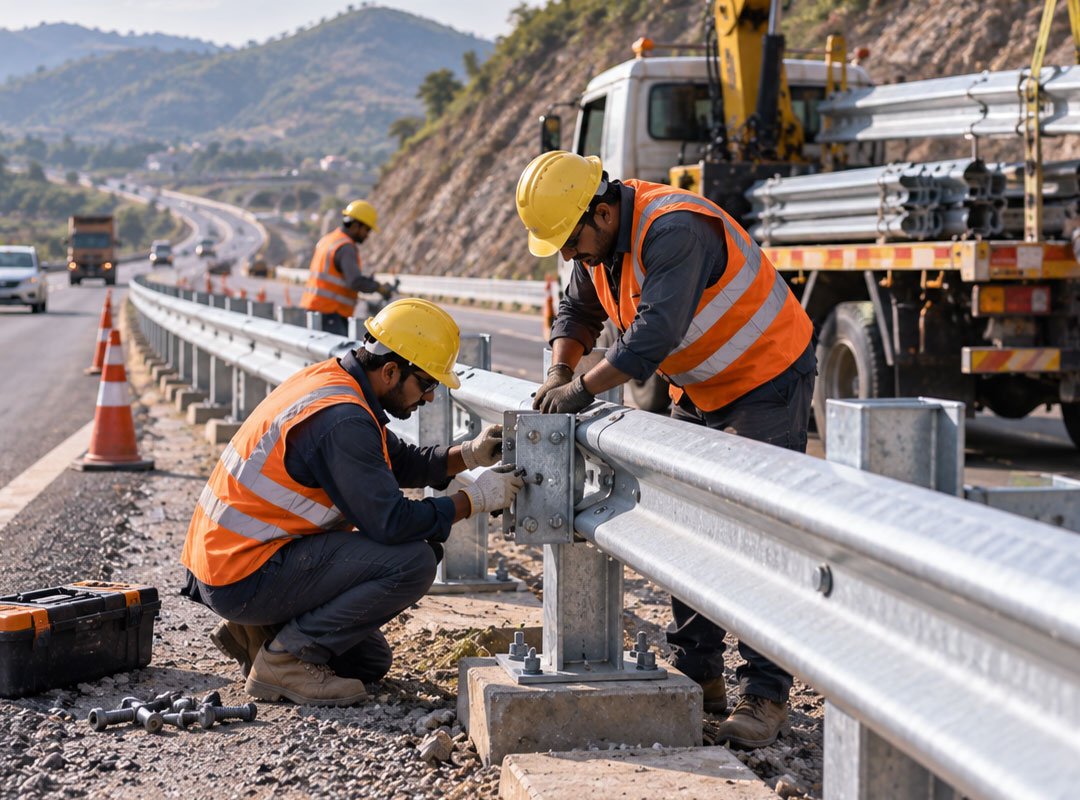

Modern infrastructure development is no longer driven only by machinery, engineering precision, or financial investment. The success of large-scale highway projects increasingly depends on how effectively organizations manage people across complex operational environments. This is where Highway Construction Workforce Management, Infrastructure Workforce Efficiency, and Construction Site Productivity Management have become critical industry priorities.
Across the global construction sector, governments are investing billions into transportation corridors, expressways, economic highways, and urban connectivity projects. According to Oxford Economics, the construction industry contributes nearly 13% of global GDP, while transportation infrastructure remains one of the largest areas of public investment worldwide. However, despite technological advancements and modern equipment, large infrastructure projects continue to face delays, budget overruns, labor inefficiencies, and operational disruptions.
McKinsey research shows that large infrastructure projects often exceed budgets by up to 80% and experience schedule delays of nearly 20%. A major reason behind this underperformance is ineffective Highway Construction Workforce Management and poor coordination between field operations, subcontractors, supervisors, and labor teams. The reality is simple. Roads are built by people before they are completed by machines.
Every kilometer of highway involves thousands of workers operating under demanding conditions. Engineers, surveyors, machine operators, safety officers, logistics teams, and field supervisors work simultaneously across large geographic stretches. Without strong Infrastructure Workforce Efficiency, even the best-funded projects struggle to maintain productivity and consistency. The infrastructure industry is now recognizing that operational success is deeply connected to workforce strategy. Effective Construction Site Productivity Management is no longer considered a support function. It has become a direct driver of project profitability, execution speed, safety performance, and long-term infrastructure quality.
1. The Complexity of Large Highway Projects
Large highway projects operate in highly dynamic environments where multiple teams function simultaneously across dispersed locations. Unlike conventional building construction, highways extend across districts, terrains, weather zones, and traffic corridors, making Highway Construction Workforce Management significantly more complicated. A single expressway project may involve excavation crews operating miles apart, bridge construction teams working at different intersections, asphalt paving units moving continuously, and logistics teams coordinating thousands of material deliveries daily. Managing labor allocation at this scale requires advanced Construction Site Productivity Management systems.
The challenge becomes even greater because highway projects often depend on temporary and migrant labor. Workforce turnover remains high, subcontractor dependency is significant, and operational continuity becomes difficult without structured Infrastructure Workforce Efficiency planning.
2. Workforce Efficiency Directly Impacts Profitability
The financial impact of labor inefficiency in highway construction is enormous. Labor expenses account for approximately 20% to 40% of total project costs depending on geography and project scale. However, indirect workforce-related losses often create even larger financial damage. Poor Construction Site Productivity Management leads to idle machinery, delayed workflows, rework, safety incidents, scheduling disruptions, and project overruns. Every operational gap eventually translates into financial loss.
A report by Autodesk and FMI estimated that poor communication and fragmented data cost the global construction industry more than $1.8 trillion annually. Much of this inefficiency stems from weak Highway Construction Workforce Management systems and inconsistent workforce coordination. Improving Infrastructure Workforce Efficiency even marginally can create massive cost savings on billion-dollar infrastructure projects. A 5% increase in workforce productivity may save millions through faster execution, reduced overtime, and better equipment utilization. Leading infrastructure firms are now using workforce analytics, digital attendance systems, real-time monitoring platforms, and labor tracking solutions to strengthen Construction Site Productivity Management. The industry is shifting from reactive supervision toward predictive workforce planning.
3. Safety and Productivity Are Closely Connected
For years, productivity and safety were treated as competing priorities in construction. Today, the industry understands that strong Infrastructure Workforce Efficiency actually improves safety performance. Highly organized sites with clear schedules, defined responsibilities, structured communication, and disciplined execution experience fewer workplace incidents. In contrast, weak Highway Construction Workforce Management creates confusion, fatigue, rushed execution, and operational stress. The International Labour Organization estimates that construction workers face fatal accident risks nearly three times higher than most other industries. Highway construction increases these risks further because workers operate around heavy machinery, elevated structures, active traffic zones, and physically demanding environments. Fatigue management has become one of the most important aspects of Construction Site Productivity Management. Long shifts, extreme weather exposure, repetitive physical tasks, and transportation challenges reduce worker concentration significantly.
Research from the National Safety Council indicates that fatigue-related productivity losses cost industries billions annually while also increasing accident risks substantially. Companies investing in worker welfare consistently report stronger Infrastructure Workforce Efficiency. Better accommodation, transportation, hydration systems, meal planning, and shift management improve workforce consistency and operational discipline. Effective Highway Construction Workforce Management now includes physical well-being, mental resilience, and workforce sustainability.
4. The Growing Skilled Labor Crisis
The infrastructure industry is facing an increasing shortage of skilled labor. Demand for experienced machine operators, project supervisors, welders, surveyors, and technical workers continues to rise faster than workforce availability. According to the Associated General Contractors of America, over 80% of construction companies struggle to fill skilled labor positions. Similar labor shortages are impacting highway infrastructure projects across Asia, Europe, and the Middle East. This shortage directly affects Construction Site Productivity Management because modern highway projects rely heavily on advanced machinery and digital systems. GPS-guided grading equipment, drone mapping systems, automated paving technologies, and real-time monitoring tools require technically skilled operators. Traditional labor models are evolving rapidly.
Companies with strong Highway Construction Workforce Management strategies are prioritizing continuous workforce training rather than relying only on recruitment. Infrastructure firms now conduct regular upskilling sessions, operational refreshers, equipment simulations, and safety workshops directly on-site. Skilled workers execute tasks faster, reduce operational errors, improve equipment handling, and strengthen overall Infrastructure Workforce Efficiency. The companies that invest in workforce capability today will lead tomorrow’s infrastructure sector.
5. Communication Drives Operational Efficiency
One of the biggest causes of infrastructure delays is communication failure. Large highway projects involve multiple contractors, suppliers, consultants, engineers, and field teams operating simultaneously. Without effective communication systems, coordination quickly breaks down. Strong Construction Site Productivity Management depends on fast, accurate, and transparent communication. Instructions often move through several management layers before reaching field workers. Site conditions change rapidly. Weather disruptions alter schedules instantly. Equipment availability fluctuates continuously. Weak communication systems create operational confusion and reduce Infrastructure Workforce Efficiency.
Many infrastructure projects still rely heavily on manual reporting and verbal coordination. This increases information delays, accountability gaps, and execution inconsistencies. Modern Highway Construction Workforce Management increasingly depends on digital communication platforms, centralized dashboards, live reporting systems, and mobile coordination tools. According to PwC, digitally connected construction environments can improve productivity by up to 15% while reducing operational delays significantly. However, technology alone cannot solve workforce challenges. Strong communication culture remains essential for effective Construction Site Productivity Management. Workers need clarity. Supervisors need responsiveness. Management teams need visibility. Efficient communication builds efficient infrastructure.
6. Workforce Morale and Productivity
Construction remains one of the most physically demanding industries globally. Workers often face long hours, harsh weather conditions, remote locations, and intense deadline pressure. Despite this, workforce morale remains an overlooked aspect of Highway Construction Workforce Management. Studies consistently show that motivated workers demonstrate higher productivity, lower absenteeism, stronger safety compliance, and improved operational discipline. Poor workforce engagement reduces Infrastructure Workforce Efficiency and increases turnover rates. Strong Construction Site Productivity Management includes workforce recognition, transparent leadership, fair compensation, respectful communication, and healthy site culture. Leading infrastructure companies now understand that workforce motivation directly influences project execution quality. Workers who feel respected are more likely to maintain productivity under pressure. This shift toward human-centered leadership is reshaping Highway Construction Workforce Management globally.
7. Technology Is Transforming Workforce Operations
Technology is rapidly changing how infrastructure projects manage labor and operations. Biometric attendance systems now provide real-time workforce visibility. AI-driven scheduling platforms optimize labor deployment. Wearable devices monitor worker fatigue and environmental exposure. Drones support site inspections and progress tracking. The global construction technology market is expected to exceed $20 billion within the next few years as companies invest aggressively in digital transformation. However, successful implementation depends on aligning technology with practical Construction Site Productivity Management needs.
Many infrastructure firms fail because they deploy complex systems without preparing workers properly. Effective Highway Construction Workforce Management requires technology that simplifies operations rather than creating additional complexity. The best-performing companies integrate technology gradually while improving Infrastructure Workforce Efficiency through workforce adaptation and training. Digital transformation is no longer optional in highway construction. It is becoming a competitive necessity.
8. Managing Diverse Workforces Across Large Sites
Large highway projects typically involve workers from different regions, languages, cultures, and educational backgrounds. This diversity creates operational complexity but also strengthens workforce resilience when managed properly. Effective Highway Construction Workforce Management requires inclusive operational systems. Language barriers can create safety risks. Cultural differences may affect communication patterns. Educational gaps influence training effectiveness. Migrant workers often face isolation and adjustment challenges.
Strong Construction Site Productivity Management includes multilingual communication systems, visual safety instructions, simplified workflows, and culturally aware leadership approaches. Companies that manage workforce diversity effectively usually experience stronger collaboration and better Infrastructure Workforce Efficiency. Infrastructure development is fundamentally a large-scale human coordination exercise. The stronger the collaboration, the stronger the execution.
9. Leadership Determines Workforce Performance
No workforce strategy succeeds without strong leadership. Large infrastructure projects require leaders who understand both technical operations and human behavior. Engineering knowledge alone is insufficient. Effective supervisors must communicate clearly, manage pressure, resolve conflicts, and maintain workforce discipline. Strong Highway Construction Workforce Management depends heavily on field leadership quality. Poor supervision creates confusion, disengagement, and operational friction. Strong supervisors improve accountability, morale, and Construction Site Productivity Management.
The best infrastructure leaders remain visible on-site. They understand field conditions firsthand instead of relying entirely on reports and meetings. Leadership presence directly improves Infrastructure Workforce Efficiency because workers respond strongly to direct engagement and operational clarity. Modern infrastructure firms increasingly invest in leadership development programs alongside technical training initiatives. The industry is finally recognizing that infrastructure success depends as much on leadership capability as engineering capability.
10. Workforce Sustainability Matters
Sustainability discussions in construction often focus on emissions, materials, and environmental standards. However, workforce sustainability is becoming equally important. Unsafe conditions, burnout, excessive overtime, poor living environments, and unstable labor systems are not sustainable business models. Long-term Highway Construction Workforce Management requires stable, healthy, and skilled workforce ecosystems. Governments and investors are increasingly evaluating labor practices as part of infrastructure project approvals and financing decisions. Environmental, Social, and Governance frameworks now place greater emphasis on workforce welfare. Strong Construction Site Productivity Management includes worker protection, fair labor systems, safe accommodation, and operational sustainability. Companies prioritizing workforce sustainability typically achieve stronger Infrastructure Workforce Efficiency, lower turnover, and improved project continuity. The future of infrastructure development depends on sustainable workforce systems as much as sustainable engineering systems.
Modern highway infrastructure is built on human capability as much as engineering capability. Behind every expressway, bypass, corridor, and transportation network lies a massive workforce operating under pressure to deliver complex projects within strict timelines. Machinery may drive execution speed, but people drive operational success. The global construction industry is entering a period where workforce strategy will determine long-term competitiveness. Companies that continue treating labor management as a secondary function will struggle with delays, inefficiencies, safety incidents, and workforce instability.
In contrast, organizations investing in workforce communication, leadership development, training systems, worker welfare, and digital integration will create stronger operational outcomes. Infrastructure success is no longer measured only by the roads being built. It is measured by how effectively the people building those roads are managed, supported, and empowered. The companies that understand the human side of infrastructure will ultimately lead the next generation of global highway development.