India’s infrastructure sector is witnessing one of the biggest transformations in its history. Highways are no longer viewed only as transportation corridors connecting cities and states. They are now critical economic assets that support industrial expansion, logistics efficiency, trade movement, tourism, and regional development. As India pushes toward becoming a global economic powerhouse, the need for faster, safer, and more durable roads has increased significantly. This is where Modern Highway Construction Equipment in India is playing a defining role. The construction industry is rapidly shifting from traditional labor-intensive execution methods toward highly mechanized and technology-driven operations. Advanced machinery, automation systems, digital monitoring tools, intelligent compactors, and GPS-enabled equipment are changing how highways are designed, built, and maintained across the country. The rise of Modern Highway Construction Equipment in India is directly improving execution speed, reducing project delays, enhancing quality standards, and increasing long-term road durability. With the government investing heavily in expressways, economic corridors, smart logistics routes, and industrial connectivity, the highway sector is under immense pressure to deliver projects faster than ever before.
India already has one of the largest road networks in the world, spanning over 6.67 million kilometers. The country’s infrastructure pipeline continues to expand through initiatives such as Bharatmala Pariyojana, PM Gati Shakti, and national expressway development programs. According to industry estimates, the Indian road construction market crossed USD 150 billion in 2025 and continues to grow rapidly due to rising infrastructure investments. This large-scale expansion would not be possible without the increasing adoption of Modern Highway Construction Equipment in India.
1. Faster Execution Through Modern Highway Construction Equipment in India
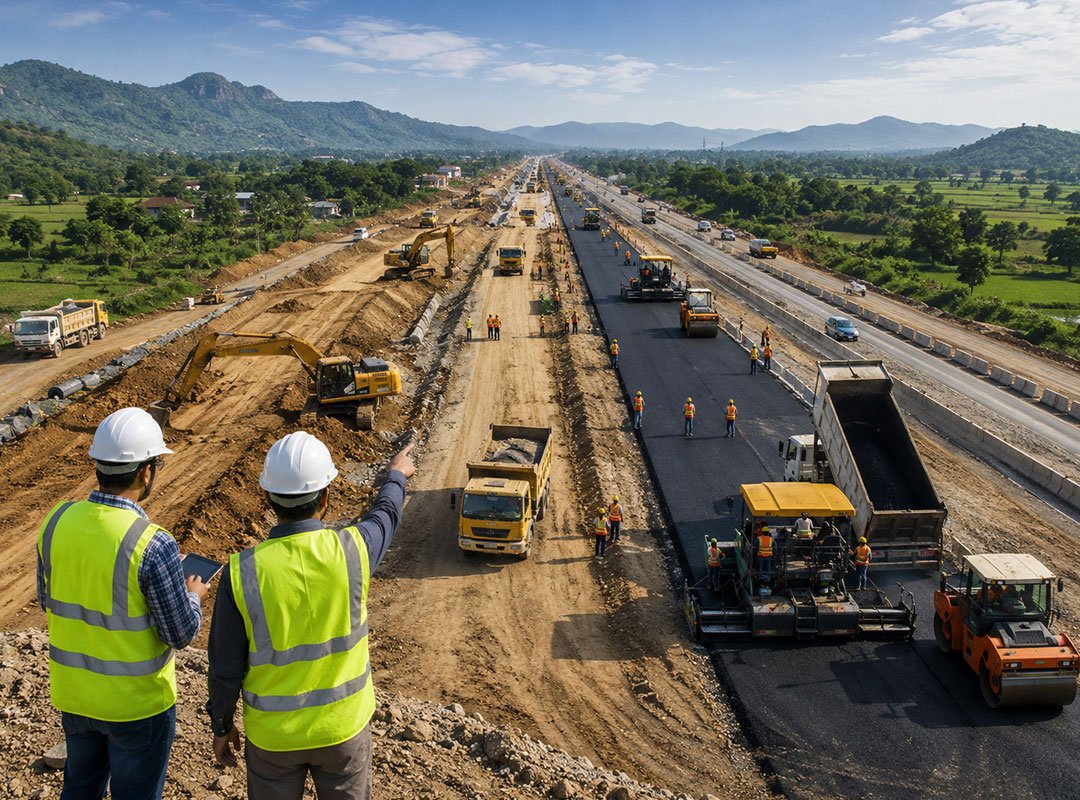
The biggest impact of Modern Highway Construction Equipment in India can be seen in project execution speed. Traditional highway construction methods often depended on manual supervision, outdated machinery, and fragmented workflows. This created delays, rework, uneven quality standards, and rising project costs. Today, modern excavators, motor graders, wheel loaders, asphalt pavers, and intelligent compactors are helping contractors complete projects within much tighter timelines. High-capacity hydraulic excavators can move larger quantities of earth with lower fuel consumption and shorter cycle times. Automated grading systems ensure precise leveling without repeated manual corrections. Sensor-based pavers improve asphalt consistency and surface smoothness over long highway stretches. The introduction of Modern Highway Construction Equipment in India has significantly increased daily productivity levels on expressway and highway projects. This productivity improvement is essential because infrastructure deadlines have become more aggressive. Delays now directly impact project financing, contractor profitability, and logistics efficiency.
2. Highway Infrastructure Development in India Is Entering a New Phase
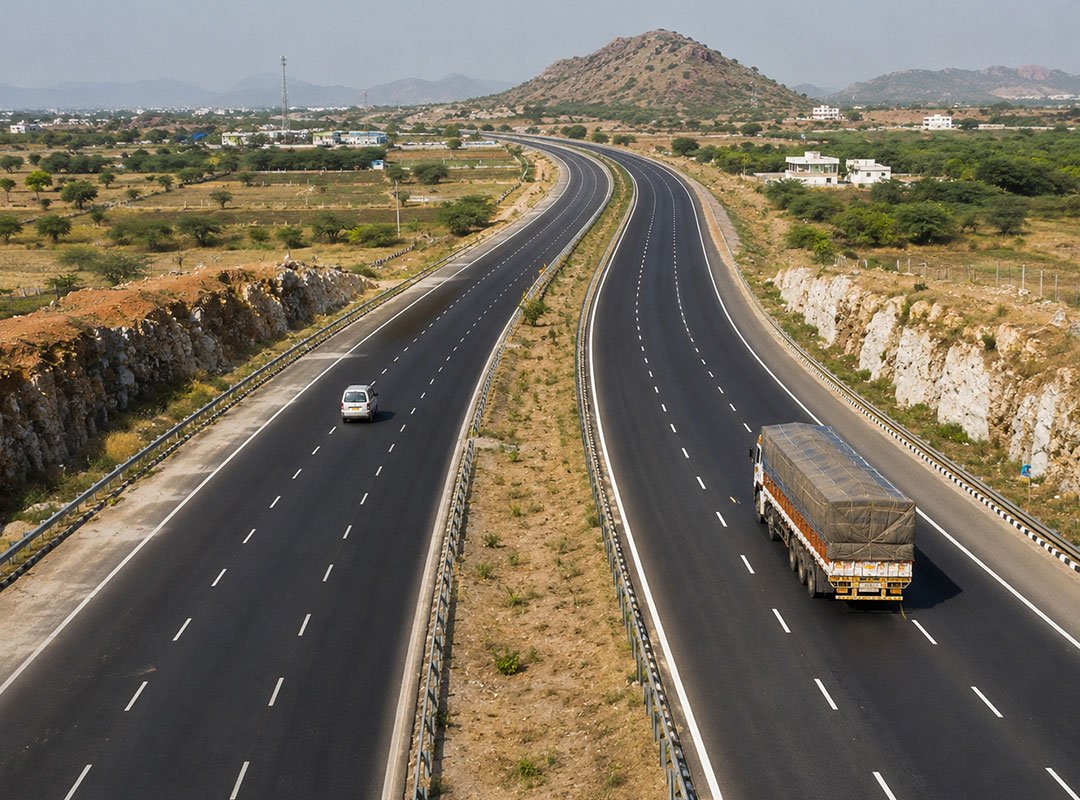
The scale of Highway Infrastructure Development in India is unlike anything seen before. The government is focusing on large-scale economic corridors, greenfield expressways, industrial connectivity routes, and border infrastructure projects to strengthen national logistics capacity. The success of Highway Infrastructure Development in India depends heavily on speed, precision, and execution quality. Traditional construction methods alone cannot support the country’s rapidly growing infrastructure demands. This is why contractors are increasingly investing in Modern Highway Construction Equipment in India. High-speed expressways require precise engineering standards, better pavement quality, and long-term structural durability. Mechanized construction ensures these standards are achieved consistently across large project stretches. As Highway Infrastructure Development in India continues to accelerate, advanced machinery is becoming essential rather than optional.
3. Automation Is Redefining Road Construction Productivity Technology
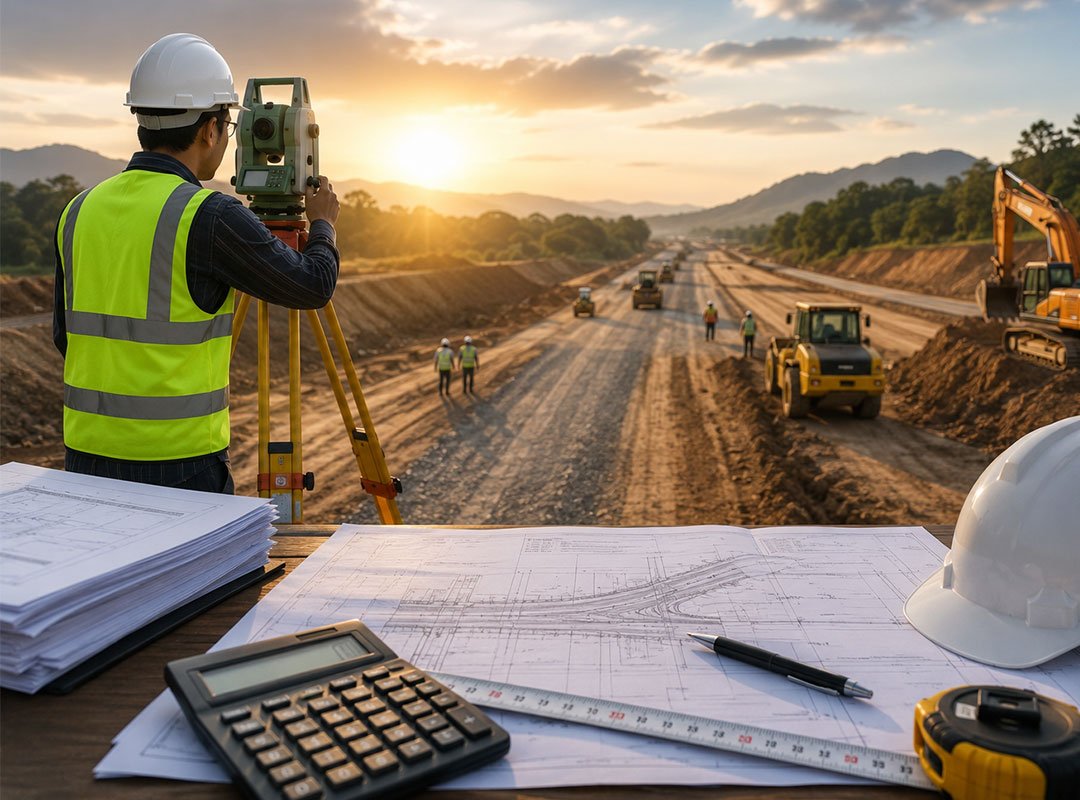
One of the biggest innovations shaping the industry is the rise of Road Construction Productivity Technology. Automation systems are transforming how highways are built. The National Highways Authority of India has already introduced pilot projects using intelligent construction technologies such as GPS-guided motor graders, intelligent compactors, and stringless pavers. This shift toward Road Construction Productivity Technology is improving operational precision and reducing dependency on manual estimation methods. GPS-enabled graders can automatically maintain designed slopes and elevations. Intelligent compactors monitor surface stiffness and density in real time. Stringless paving systems use digital controls instead of traditional guide wires to improve alignment accuracy. The integration of Road Construction Productivity Technology reduces human error, minimizes rework, and improves highway durability. The future of Indian infrastructure will depend heavily on how effectively companies adopt Road Construction Productivity Technology across their projects.
4. Intelligent Compaction Is Improving Highway Durability
Compaction quality directly affects pavement strength and road lifespan. Poor compaction can lead to cracks, rutting, uneven settlement, and expensive maintenance requirements. Traditional compaction methods often relied on operator experience and random quality checks. However, Modern Highway Construction Equipment in India is changing this through intelligent compaction systems. Advanced rollers now use sensors, GPS mapping, and onboard monitoring systems to measure compaction quality during operations. Operators receive live feedback regarding weak areas and density levels. This use of Road Construction Productivity Technology improves consistency across pavement layers and reduces structural failures in the long term. The adoption of intelligent compactors is becoming increasingly important because India’s highways now handle much higher freight movement and traffic density compared to previous decades. Better compaction means longer-lasting roads and lower lifecycle maintenance costs.
5. Telematics Is Enhancing Operational Efficiency
Modern infrastructure projects involve hundreds of machines operating simultaneously across large construction stretches. Managing these fleets manually creates inefficiencies, idle time, and fuel wastage. This is where Road Construction Productivity Technology is transforming project management. Telematics systems integrated into Modern Highway Construction Equipment in India allow contractors to monitor machine performance, fuel consumption, idle hours, equipment location, and maintenance schedules in real time. These systems help improve fleet utilization and reduce operational downtime. Predictive maintenance alerts identify machine issues before breakdowns occur, allowing contractors to prevent expensive delays. Fuel monitoring systems help reduce wastage and improve cost efficiency. The combination of telematics and Modern Highway Construction Equipment in India is helping infrastructure companies optimize project execution at a much larger scale.
6. Earthmoving Equipment Is Increasing Construction Speed
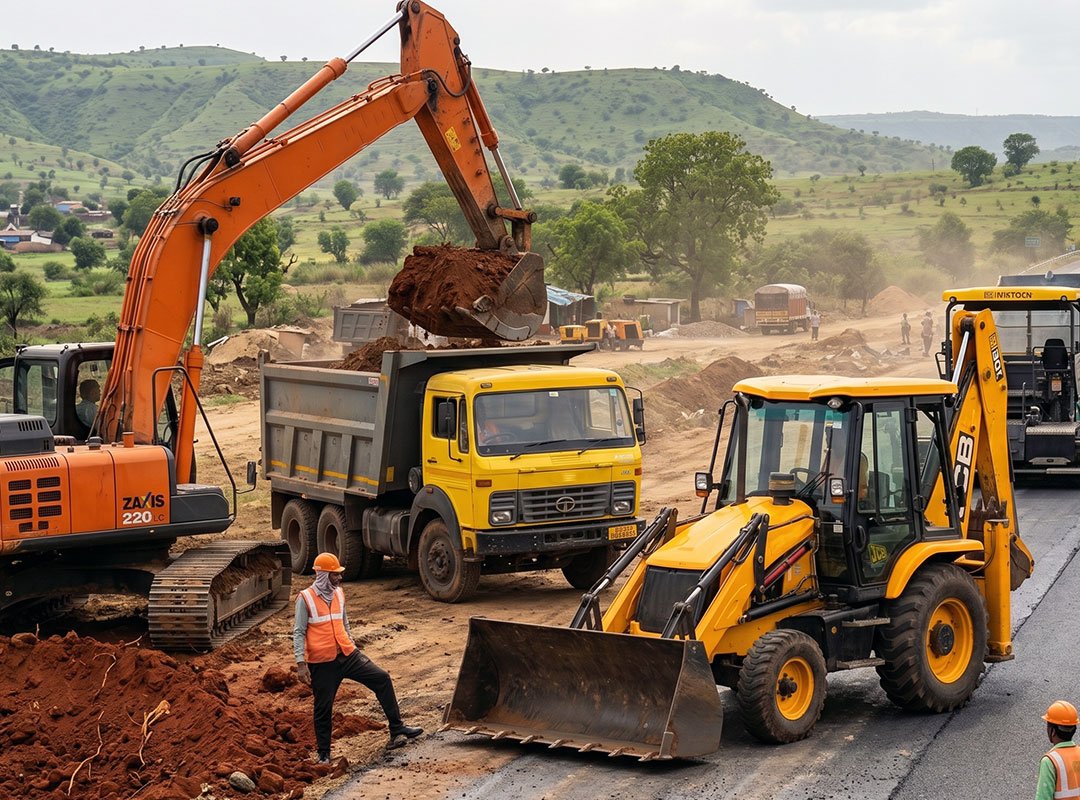
Earthwork remains one of the most time-consuming phases of highway construction. Excavation, embankment creation, grading, and material transportation directly influence overall project timelines. The growing use of Modern Highway Construction Equipment in India is dramatically increasing earthmoving productivity. Large hydraulic excavators, bulldozers, articulated dump trucks, and automated motor graders now deliver faster cycle times and improved operational efficiency. Advanced hydraulic systems allow machines to perform heavier workloads while consuming less fuel. Improved bucket capacities and automated controls increase precision while reducing material wastage. The use of Modern Highway Construction Equipment in India is particularly important in greenfield expressway projects where massive quantities of soil movement are required within tight deadlines. Without mechanization, achieving the current scale of Highway Infrastructure Development in India would be nearly impossible.
7. Asphalt Technology Is Improving Surface Quality
Surface quality plays a critical role in highway safety, ride comfort, and pavement durability. Modern asphalt systems are improving paving consistency through advanced automation features. Sensor-based pavers, thermal monitoring systems, and automated screed controls are helping contractors achieve smoother surfaces with higher operational precision. This is another major advancement in Road Construction Productivity Technology. Automated asphalt batching plants now ensure accurate mix designs, consistent temperature control, and higher production capacity. The integration of Modern Highway Construction Equipment in India into paving operations is helping contractors complete longer stretches of highways with better surface quality standards. Improved paving consistency also reduces future repair and maintenance requirements.
8. Mechanization Is Reducing Dependence on Manual Labor
India’s construction industry has historically relied on large labor forces. However, labor shortages, migration issues, and rising wage costs are creating execution challenges. The adoption of Modern Highway Construction Equipment in India is helping contractors reduce excessive dependence on manual labor while improving productivity. A single advanced machine can now perform tasks that previously required dozens of workers. This not only increases speed but also improves construction consistency and site safety. The shift toward mechanization is also creating demand for skilled machine operators, equipment technicians, automation experts, and digital infrastructure specialists. As Highway Infrastructure Development in India expands further, the industry will require a more technology-driven workforce.
9. Sustainability Is Becoming a Key Priority
Environmental sustainability is becoming increasingly important in infrastructure projects. Modern manufacturers are designing cleaner, fuel-efficient machinery to meet stricter emission regulations. Eco-modes, intelligent power management systems, and fuel-saving hydraulic technologies are reducing operational costs and environmental impact simultaneously. This evolution in Modern Highway Construction Equipment in India is helping contractors improve productivity while meeting sustainability goals. The integration of fuel-efficient systems into Road Construction Productivity Technology is also helping companies reduce carbon emissions and improve long-term operational efficiency. Infrastructure developers are now expected to balance speed, quality, and environmental responsibility together.
10. Data-Driven Construction Is Improving Decision Making
Data has become one of the most valuable assets in modern infrastructure development. Machines equipped with digital sensors generate real-time operational insights related to productivity, fuel usage, machine health, compaction quality, and execution efficiency. This level of Road Construction Productivity Technology is improving project visibility and operational decision-making. Project managers can now monitor equipment performance remotely, identify bottlenecks quickly, and allocate resources more efficiently. The integration of analytics into Modern Highway Construction Equipment in India is helping contractors achieve higher levels of accountability and execution control. Digital construction management is becoming essential as projects increase in complexity and scale.
11. Future of Infrastructure Development
Pawan Highways India Pvt Ltd (PHIPL) represents the evolving landscape of infrastructure and highway development in the country. Companies involved in modern road construction are increasingly focusing on advanced machinery, mechanized execution systems, and quality-driven project delivery. As the demand for Highway Infrastructure Development in India continues to rise, infrastructure companies must adopt Modern Highway Construction Equipment in India to remain competitive and efficient. The future of road development will depend on how effectively infrastructure companies integrate automation, digital systems, and intelligent construction technologies into their execution strategies. The role of companies like Pawan Highways India Pvt Ltd goes beyond road construction. They contribute directly to connectivity, industrial growth, logistics efficiency, and long-term national development.
12. Challenges Still Exist
Despite the progress, the industry still faces several challenges. Advanced machinery requires significant capital investment, which can be difficult for smaller contractors. Operator training and technical skill development also remain critical concerns. Modern systems require trained personnel capable of handling advanced controls, automation tools, and digital monitoring platforms. Project delays caused by land acquisition, environmental approvals, utility relocation, and financing issues can also reduce equipment utilization efficiency. However, despite these challenges, the adoption of Modern Highway Construction Equipment in India continues to grow because the long-term productivity benefits are undeniable.
13. The Future of Road Construction Productivity Technology
The future of Indian infrastructure will be driven by automation, artificial intelligence, machine learning, and digital engineering systems. Drone surveying, Building Information Modeling (BIM), AI-powered analytics, autonomous construction equipment, and smart project monitoring systems will further strengthen Road Construction Productivity Technology in the coming years. Electric and hybrid machinery will also become increasingly important as sustainability regulations tighten. The next phase of Highway Infrastructure Development India will rely heavily on intelligent infrastructure systems and connected construction ecosystems. The companies that adopt Modern Highway Construction Equipment in India aggressively today will lead the future of infrastructure tomorrow.
The rise of Modern Highway Construction Equipment in India is fundamentally transforming how roads and highways are built across the country. Mechanization, automation, telematics, intelligent compaction, and digital project management systems are improving execution speed, construction quality, and long-term infrastructure durability. The integration of Road Construction Productivity Technology is helping contractors reduce delays, optimize costs, improve operational efficiency, and deliver world-class infrastructure standards. At the same time, the rapid pace of Highway Infrastructure Development India is creating enormous opportunities for companies willing to invest in technology-driven construction practices. India’s infrastructure future will not be shaped by traditional execution models alone. It will be shaped by intelligent machinery, digital innovation, and modern engineering capabilities. And the organizations embracing this transformation today will become the leaders of tomorrow’s infrastructure ecosystem.