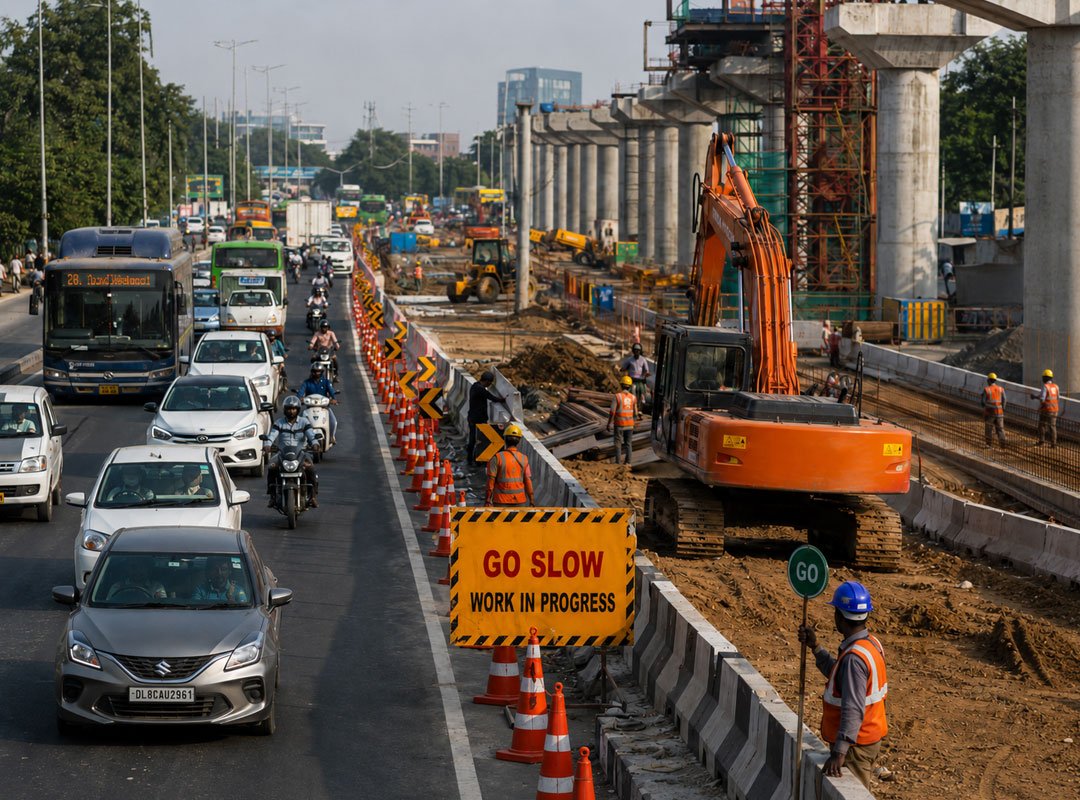
Every highway is designed to serve for decades, making pavement selection one of the most important engineering decisions in infrastructure development. Whether a road is built using asphalt or concrete directly influences its construction cost, maintenance requirements, durability, and lifecycle performance.
India has the world’s second-largest road network, spanning over 6.6 million kilometres, according to the Ministry of Road Transport and Highways (MoRTH). Although National Highways account for only about 2% of the country’s total road network, they carry nearly 40% of road traffic, making pavement selection one of the most important engineering decisions in infrastructure development. Every kilometre of road must withstand increasing traffic volumes, heavier axle loads, diverse climatic conditions, and growing expectations for sustainability and cost efficiency.
One of the most discussed topics in highway engineering is Asphalt vs Concrete Roads, or the difference between asphalt and concrete roads, as both pavement types offer distinct advantages in terms of construction cost, durability, maintenance, lifecycle performance, and environmental impact. India has traditionally relied on asphalt pavements because of their lower construction costs and faster execution. However, concrete roads have gained prominence for expressways, industrial corridors, and freight-heavy routes due to their longer service life and lower maintenance requirements.
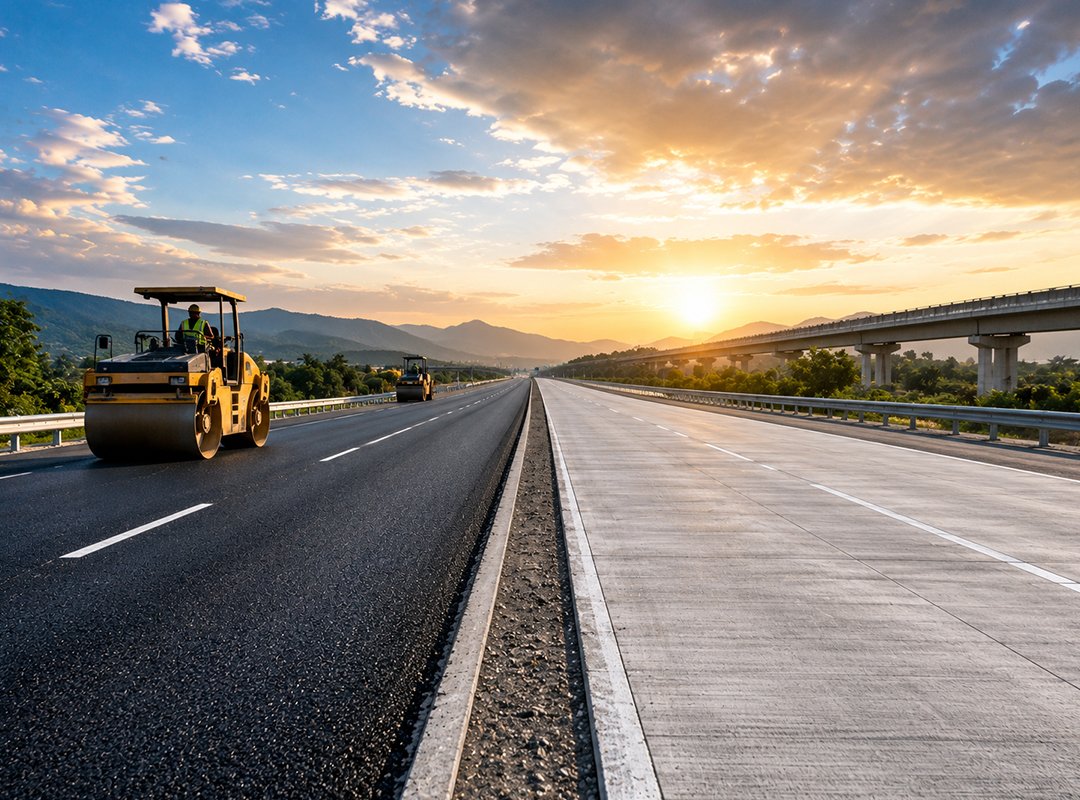
Today, agencies such as the National Highways Authority of India (NHAI), MoRTH, and the Indian Roads Congress (IRC) increasingly evaluate pavement options using lifecycle cost analysis rather than initial construction cost alone. Instead of identifying a single winner in the Asphalt vs Concrete Roads debate, the focus is on selecting the pavement that best suits traffic demand, project objectives, environmental conditions, and long-term economic performance. Understanding the strengths and limitations of both pavement systems is essential for building durable, cost-effective, and future-ready transportation infrastructure. Although asphalt continues to account for the majority of India’s road network because of its economic and construction advantages, concrete pavements are increasingly being adopted for expressways, urban arterial roads, and freight-intensive corridors where lower lifecycle maintenance justifies the higher initial investment.
1. Understanding the Engineering Difference Between Asphalt and Concrete Roads
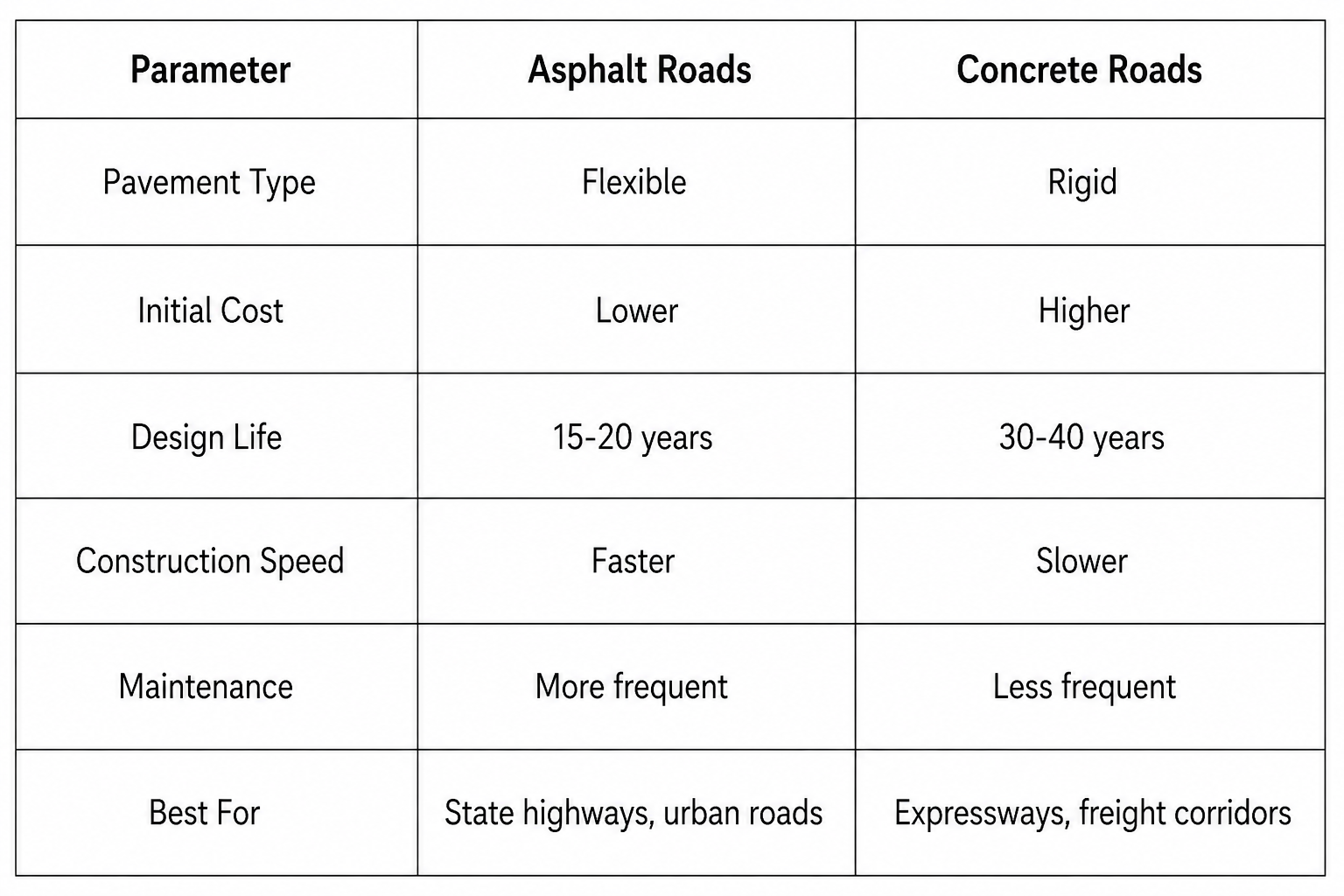
Understanding the difference between asphalt and concrete roads begins with how each pavement responds to traffic loads. Asphalt pavements, also known as flexible pavements, consist of multiple aggregate layers bound together using bitumen. These layers flex slightly under vehicle loads and distribute stresses gradually through the pavement structure. Concrete pavements, or rigid pavements, use Portland cement concrete slabs with high flexural strength that spread wheel loads over a much larger area. While flexible pavements depend significantly on the strength of the underlying subgrade, rigid pavements derive most of their structural capacity from the concrete slab itself. These engineering characteristics influence pavement thickness, construction techniques, maintenance needs, and overall service life. The Indian Roads Congress has established separate design standards under IRC:37 for flexible pavements and IRC:58 for rigid pavements, ensuring that pavement selection is based on projected traffic, axle loads, and site conditions rather than material preference. Understanding these principles is essential when evaluating an asphalt road vs concrete road for any infrastructure project.
2. Initial Construction Cost Favours Asphalt
When comparing an asphalt road vs concrete road, initial construction cost is often one of the deciding factors. Asphalt roads generally require lower upfront investment, making them suitable for projects with budget constraints or aggressive construction schedules. MoRTH estimates indicate that rigid pavements typically cost 20% to 40% more than flexible pavements during construction, depending on pavement thickness, material prices, transportation costs, and local availability. Asphalt roads also have shorter construction timelines because they can be opened to traffic soon after laying and compaction. However, evaluating pavements solely on initial construction cost provides only part of the picture. Roads are long-term public assets, and maintenance, rehabilitation, and operational expenses over several decades often exceed the original construction investment. For this reason, highway agencies increasingly rely on lifecycle cost analysis, comparing the total cost of ownership instead of simply selecting the lowest initial bid.
3. Lifecycle Cost Determines Long-Term Value
Although asphalt roads require lower initial investment, the difference between asphalt and concrete roads becomes more apparent when lifecycle costs are considered. Asphalt pavements require periodic overlays, resurfacing, crack sealing, and rehabilitation because bitumen gradually ages under traffic loading and weather exposure. Concrete pavements generally require fewer structural interventions over a design life of 30 to 40 years, with maintenance usually limited to joint resealing or isolated slab repairs. For freight-intensive highways, lower maintenance frequency reduces lifecycle expenditure, minimises traffic disruptions, and improves network availability. This is why lifecycle cost analysis has become a key factor in selecting pavement types for India’s expressways, industrial corridors, and high-volume transport routes.
4. Traffic Loading Plays a Critical Role in Pavement Selection
Traffic volume alone does not determine pavement performance because axle load has a much greater impact on pavement deterioration. According to MoRTH, commercial vehicles contribute disproportionately to road damage, and engineering studies based on the Fourth Power Law show that doubling an axle load can increase pavement damage by nearly 16 times. Asphalt pavements perform efficiently under moderate traffic but become more susceptible to rutting, fatigue cracking, and permanent deformation under sustained heavy loading, particularly during high temperatures. Concrete pavements distribute wheel loads over a wider area, making them more resistant to deformation and better suited for industrial zones, logistics parks, container terminals, toll plazas, and heavily trafficked National Highways. Asphalt, however, remains an efficient solution for rural roads, municipal roads, district roads, and highways carrying balanced traffic volumes where flexibility and cost efficiency are priorities.
5. Maintenance Requirements Influence Long-Term Performance
Maintenance strategy directly affects the long-term performance and cost of any road asset. Asphalt pavements require periodic preventive maintenance because bitumen gradually hardens due to oxidation, moisture, ultraviolet exposure, and repeated traffic loading. Surface renewal or overlays are generally required every 8 to 15 years, along with routine crack sealing and patch repairs. These maintenance activities are relatively simple and can often be completed with minimal traffic disruption. Concrete pavements require significantly less routine maintenance over their 30 to 40-year service life, with repairs usually limited to joint resealing and occasional slab replacement. Reduced maintenance translates into fewer lane closures, lower user delay costs, and improved operational efficiency, making concrete particularly suitable for strategic highway corridors with continuous heavy traffic.
6. India’s Climate Directly Affects Pavement Performance
India’s geographical diversity creates unique challenges for pavement performance, with roads exposed to extreme heat, intense monsoon rainfall, coastal humidity, flooding, and freezing temperatures in Himalayan regions. Asphalt pavements soften under high temperatures and become more vulnerable to rutting, while lower temperatures can make bitumen brittle. During summer, pavement surface temperatures in several parts of India exceed 60°C, making appropriate binder selection and mix design critical. Concrete pavements are less affected by heat in terms of structural strength but experience thermal expansion and contraction, requiring well-designed joints to prevent cracking. During the monsoon, efficient drainage is equally important for both pavement types because prolonged water stagnation weakens pavement foundations regardless of the surface material. This reinforces why the Asphalt vs Concrete Roads debate cannot be answered without considering local climatic conditions, drainage design, subgrade quality, and construction practices.
7. Faster Construction Makes Asphalt Ideal for Time-Sensitive Projects
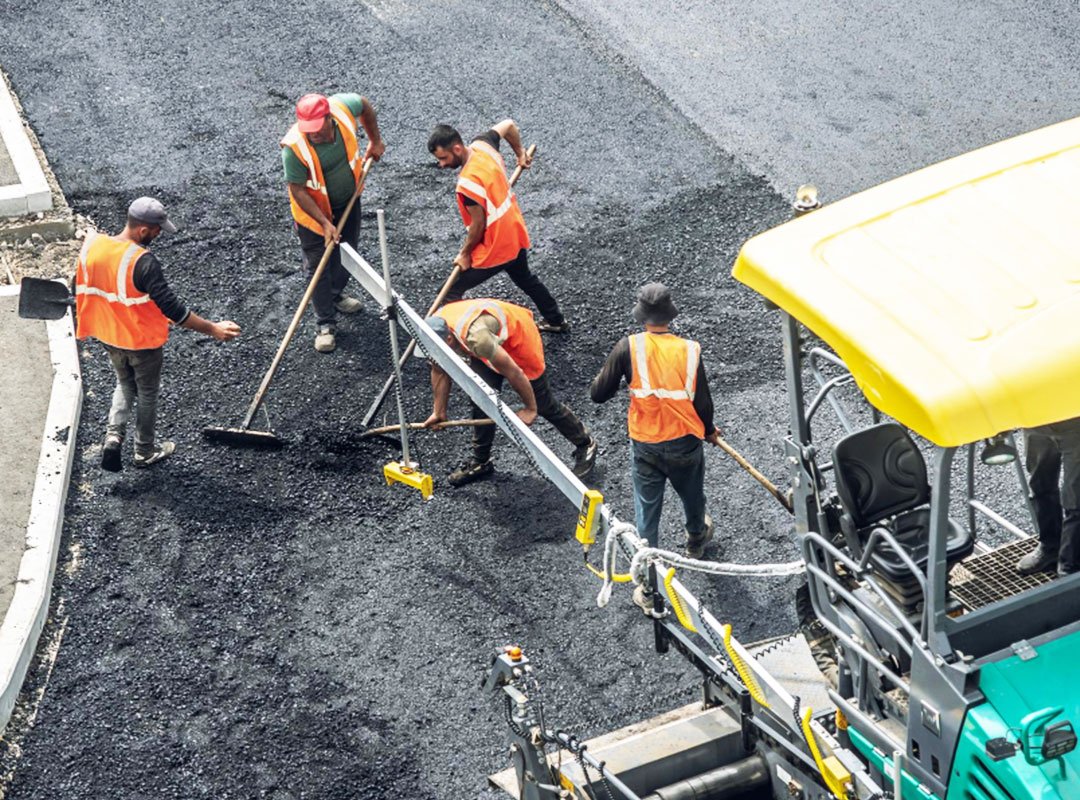
As India accelerates highway development through initiatives such as Bharatmala Pariyojana, industrial corridors, and urban infrastructure projects, construction speed has become a critical factor in pavement selection. Asphalt offers a significant advantage because it can be laid, compacted, and opened to traffic soon after cooling, making it ideal for highway widening, rehabilitation projects, airport runways, and urban roads where traffic disruptions must be minimised. Concrete pavements require batching, placement, finishing, and curing, with conventional concrete typically taking around 28 days to achieve its design strength, although high early-strength concrete can reduce this period. Despite technological advancements, rigid pavements generally involve longer construction schedules. When comparing an asphalt road vs concrete road, asphalt remains the preferred option for projects with tight deadlines, phased construction, or limited traffic diversion opportunities.
8. Sustainability Depends on Lifecycle Performance, Not Just Material
Environmental sustainability has become an integral part of modern highway construction as governments and developers focus on reducing carbon emissions and conserving natural resources. Asphalt has made significant progress through technologies such as Reclaimed Asphalt Pavement (RAP), which allows existing pavement material to be recycled into new asphalt mixes, reducing the demand for virgin aggregates and bitumen. NHAI has also encouraged the use of waste plastic, fly ash, construction and demolition waste, and reclaimed pavement materials in highway projects. Concrete offers sustainability advantages through its longer service life and reduced maintenance frequency, resulting in fewer reconstruction activities over several decades. However, cement production contributes approximately 7% to 8% of global carbon dioxide emissions, making embodied carbon an important consideration. Therefore, the difference between asphalt and concrete roads from a sustainability perspective depends on lifecycle environmental impact, recycling potential, and project-specific requirements rather than material selection alone.
9. Ride Quality, Safety and User Experience Matter
The performance of a road extends beyond structural durability to include driving comfort, safety, and operational efficiency. Asphalt pavements generally provide a smoother and quieter riding surface because of their flexible nature, improving driving comfort and reducing tyre noise. Concrete pavements maintain surface geometry more effectively under heavy traffic as they are resistant to rutting and permanent deformation. In both cases, skid resistance depends largely on surface texture rather than pavement material, making proper finishing, grooving, and routine maintenance essential for road safety. Modern construction practices enable both pavement types to achieve high standards of ride quality and safety when built according to IRC and MoRTH specifications. This highlights that the Asphalt vs Concrete Roads discussion should consider user experience alongside engineering performance.
10. Asphalt Remains the Preferred Choice for Most Roads in India
Despite the growing adoption of concrete pavements for select projects, asphalt continues to dominate India’s road network because of its cost efficiency, faster construction, and adaptability. Most district roads, state highways, municipal roads, rural roads, and rehabilitation projects benefit from asphalt due to its lower initial investment and easier maintenance. It also allows authorities to strengthen and upgrade roads in phases as traffic demand grows. Technological advancements such as polymer-modified bitumen, warm mix asphalt, RAP, and mechanised paving have significantly improved asphalt durability and sustainability. In the Asphalt vs Concrete Roads debate, these advantages ensure that asphalt remains the practical choice for a large portion of India’s expanding road network.
11. Concrete Roads Are Better for Heavy-Duty Transport Corridors
Concrete pavements offer clear advantages for infrastructure expected to carry consistently high traffic volumes and heavy commercial vehicles over long periods. Expressways, freight corridors, industrial zones, ports, logistics parks, mining roads, container terminals, and toll plazas benefit from concrete’s ability to resist rutting, maintain structural stability, and reduce major maintenance interventions. Although the initial investment is higher, the lower maintenance requirements and longer service life often make concrete more economical over the pavement’s lifecycle. As India expands its logistics infrastructure through programmes such as PM Gati Shakti, concrete pavements will continue to play an important role in supporting high-value transport corridors where uninterrupted performance is essential.
12. The Right Choice Depends on Engineering Requirements
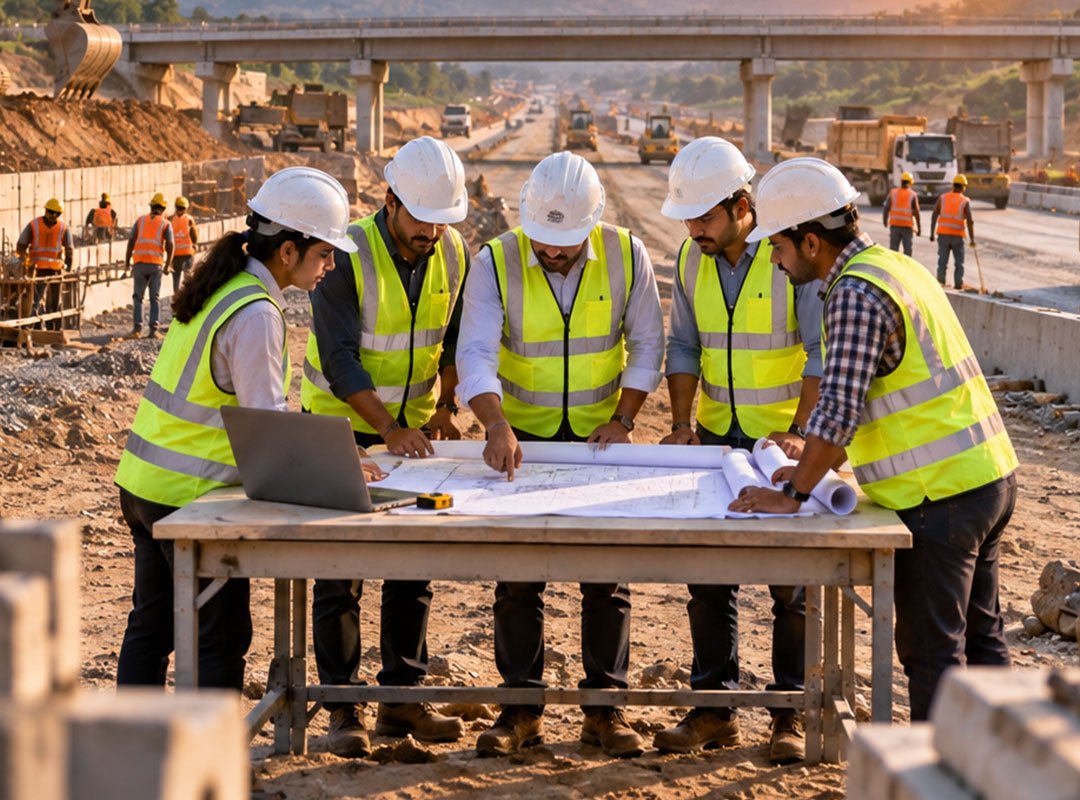
The difference between asphalt and concrete roads should be evaluated through engineering analysis rather than conventional assumptions. Traffic projections, axle loads, soil conditions, drainage, climate, material availability, construction timelines, maintenance strategy, and lifecycle cost all influence pavement selection. A rural highway carrying moderate traffic has very different design requirements from an industrial access road serving continuous heavy freight movement. Modern highway engineering therefore relies on lifecycle cost analysis, mechanistic pavement design, and rigorous quality control to determine the most suitable pavement type for each project instead of treating one material as universally superior.
13. Building India’s Future Requires Smarter Pavement Decisions
India’s infrastructure pipeline continues to expand through investments in national highways, expressways, industrial corridors, border roads, smart cities, and rural connectivity. Delivering durable and cost-effective roads requires more than choosing between asphalt and concrete. It demands detailed engineering, high-quality materials, efficient construction practices, and strict adherence to IRC and MoRTH standards. Every road is a long-term public asset that influences transportation efficiency, logistics costs, road safety, and economic growth. As traffic demand increases and sustainability becomes more important, selecting the right pavement for the right application will ensure India’s infrastructure remains resilient, efficient, and future-ready.
The Asphalt vs Concrete Roads debate has no single winner because both pavement systems serve different engineering and operational requirements. Asphalt remains the preferred choice for much of India’s road network due to its lower construction cost, faster execution, and ease of maintenance, while concrete offers superior durability and lower lifecycle maintenance for high-traffic freight corridors and long-life infrastructure assets. The key to successful highway development lies not in choosing one material over the other, but in selecting the pavement that best matches traffic demand, lifecycle costs, environmental conditions, and project objectives.
For Pawan Highways India Pvt. Ltd. (PHIPL), building high-performance roads means combining sound engineering principles with modern construction technologies and strict quality standards. As India’s highway network expands, selecting the right pavement technology for the right application will remain one of the most important factors in delivering safe, durable, and cost-efficient infrastructure. By combining engineering expertise, quality execution, and lifecycle-focused planning, PHIPL continues to contribute to building resilient highways that support India’s long-term economic growth.