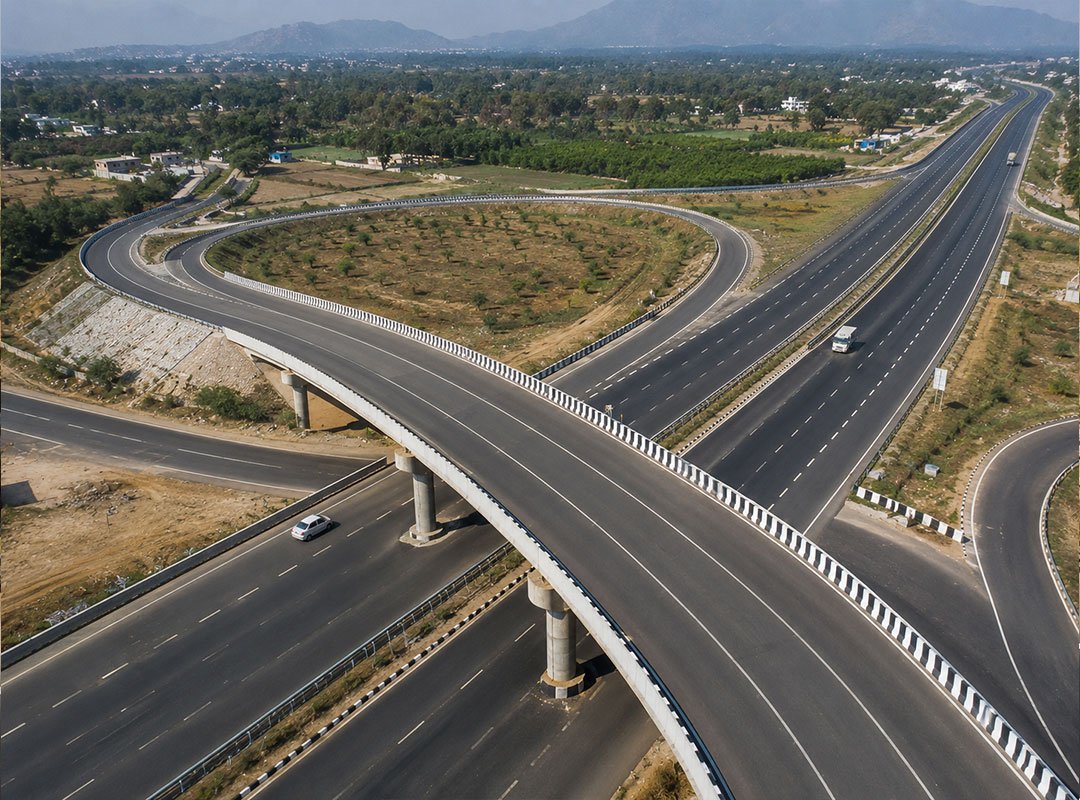
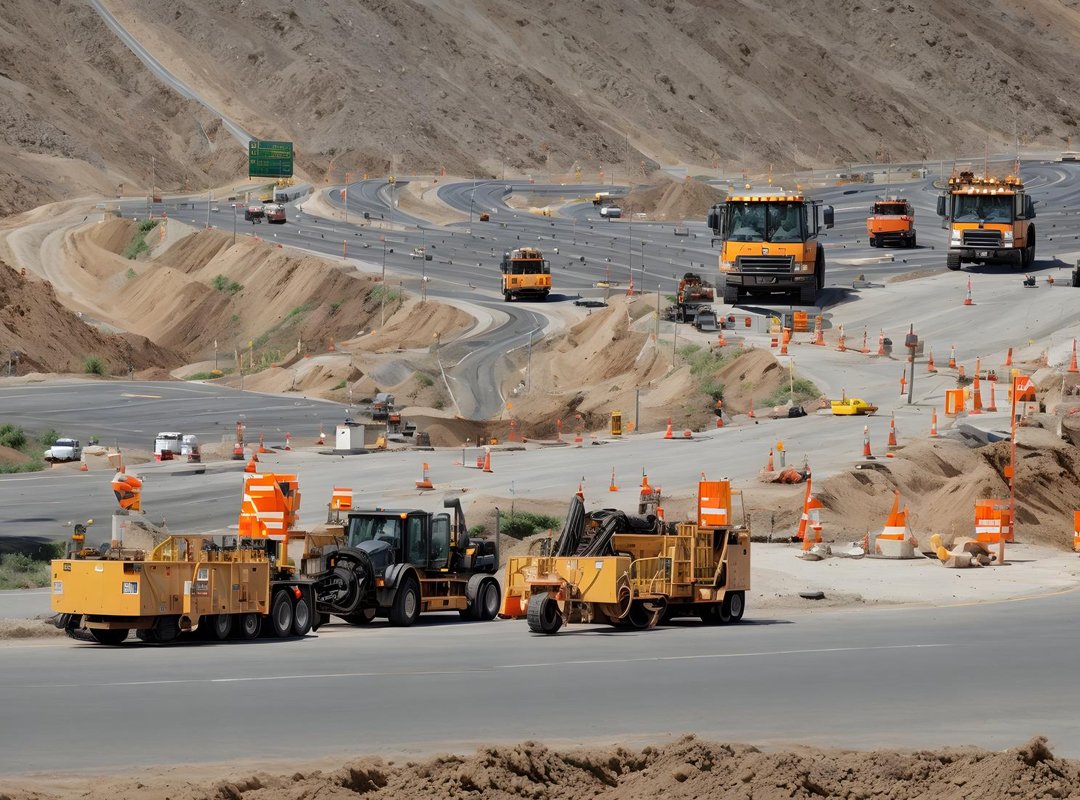
A highway construction site may look like a single project, but the material movement behind it resembles a distributed supply chain. Aggregates may come from quarries located many kilometres away, bitumen may arrive from distant supply points, cement may be sourced regionally, and borrow soil may need to be obtained from approved areas close to the project corridor. These materials must reach the correct construction front in the required quantity, within the usable time window, and without disrupting the sequence of work. For a Highway Construction Company in India, material logistics is therefore a technical and operational function rather than simply a transportation activity.
The scale of this movement can be substantial. A MoRTH project document for the Bewar-Etawah section of NH-92 in Uttar Pradesh illustrates the scale of material movement involved in highway construction. The project estimated approximately 342,502 cubic metres of aggregates, 6,766 tonnes of bitumen, 8,359 cubic metres of cement and 15,439 cubic metres of sand. The document also identified Mathura as the approximate source of bitumen, with an average lead distance of around 180 km. Such project-specific quantities demonstrate why material sourcing, haul planning, storage and delivery schedules must be coordinated well before materials are required at individual construction fronts.
Material logistics also affects cost, productivity, equipment utilisation, environmental performance, and construction continuity. MoRTH guidance specifically requires investigation of material sources, quarry sites and borrow areas and calls for mass-haul planning to determine how materials will be transported efficiently. For an experienced Road Development Company in India, the objective is not simply to procure materials, but to create a controlled flow from source to processing facility, stockyard, batching or hot-mix plant, and finally to the exact location where the material is incorporated into the highway.
1. Material Planning Begins With the Quantity Estimate
Before procurement begins, highway contractors need to establish how much of each material will be required and when it will be required. Quantities are derived from the project design, Bill of Quantities, pavement composition, structural drawings, construction programme, and anticipated wastage or processing requirements. Materials such as aggregates, sand, cement, bitumen, steel, geosynthetics, and borrow soil have different consumption patterns, storage requirements, and procurement lead times. A Highway Construction Company in India therefore converts the project programme into a material requirement schedule so that procurement is linked to actual construction demand instead of relying on a single bulk purchase at the beginning of the project.
2. Source Selection Determines the Efficiency of the Supply Chain
The nearest material source is not automatically the most economical or technically suitable source. Quarry locations, borrow areas, cement suppliers, bitumen sources, and other vendors must be evaluated for material suitability, available quantity, production capacity, statutory permissions, environmental restrictions, haul distance, and reliability of supply. MoRTH’s material-investigation guidance specifically calls for identifying sources, quarry sites and borrow areas, determining material quality and quantity, and preparing quarry charts and mass-haul diagrams for transportation planning. This makes source mapping an engineering and commercial decision that directly influences the logistics model of a highway project.
3. Aggregates Require a Dedicated Supply Chain
Aggregates are among the most volume-intensive materials used in highway construction and can originate from quarries located far from the project alignment. Once extracted, the material may pass through crushing, screening, and grading processes before being transported to stockpiles or directly to the relevant processing plant. A contractor must therefore coordinate quarry production with crushing capacity, truck availability, stockpile levels, and consumption rates at the construction front. Poor coordination can create either material shortages that stop production or excessive stockpiles that occupy valuable space and tie up working capital. Effective aggregate logistics is particularly important for pavement works because large quantities may be consumed continuously once laying operations begin.
4. Bitumen Logistics Is Different From Aggregate Logistics
Bitumen cannot be managed in exactly the same way as bulk aggregates because its physical characteristics, storage requirements, heating requirements, and application conditions are different. It may arrive in bulk through specialised supply arrangements and has to be stored and handled using suitable facilities before being incorporated into bituminous mixes. Delivery schedules therefore need to correspond with hot-mix plant requirements and planned paving operations. An MoRTH project document illustrates the potential distance involved: one NH-92 project package identified Mathura as the approximate source for its estimated bitumen requirement, with an average lead of about 180 km. For a Road Construction Company in India, controlling this supply chain is essential because an interruption in binder availability can affect an entire paving operation even when aggregates and other inputs are already available.
5. Haul Distance Directly Influences Material Cost
Every kilometre travelled by a loaded vehicle adds transportation time, fuel consumption, vehicle operating cost, tyre wear, driver hours, and exposure to traffic or weather-related delays. This is why material logistics cannot be separated from project economics. A material that is cheaper at its source may become more expensive after a long haul than a slightly higher-priced material available closer to the project. Contractors therefore assess the combined landed cost rather than only the purchase price. MoRTH’s requirement for mass-haul planning reflects this principle by linking material sources with transportation requirements and project locations.
6. Stockyards Create a Buffer Between Supply and Consumption
A highway project rarely consumes every material at exactly the same rate at which it arrives from suppliers. Stockyards and designated storage areas provide a controlled buffer between external supply and site consumption. Aggregates may be stored in separate stockpiles according to size or grading, while cement, steel, bitumen, admixtures, geosynthetics, and other materials require storage arrangements appropriate to their properties. Stock levels must be high enough to absorb short-term supply interruptions but not so high that materials deteriorate, become contaminated, occupy excessive space, or represent unnecessary working capital. The location and capacity of stockyards are therefore important components of the overall logistics plan.
7. Construction Plants Become Material Distribution Hubs
Hot-mix plants, wet-mix plants, batching plants, and crushing units do more than process materials. They act as intermediate points in the highway supply chain. Aggregates may move from quarries to crushing and screening facilities, then to stockpiles, and subsequently into wet-mix or hot-mix production. Cement, sand, aggregates, water, and admixtures may converge at batching plants for concrete production before being dispatched to structural work fronts. This means plant location must be considered alongside material sources and the sequence of construction activities. PHIPL’s experience as an EPC contractor in India includes projects involving pavement structures, structural works, and associated infrastructure, where coordinated material movement is essential to maintaining continuous production.
8. Truck Scheduling Determines Whether Materials Arrive on Time
Material availability at the source does not guarantee material availability at the construction front. Trucks must be scheduled according to loading capacity, haul distance, unloading time, return journey, road conditions, and plant production rates. If trucks arrive too slowly, the processing plant or paving operation may remain underutilised. If too many trucks arrive simultaneously, vehicles may queue at the plant or unloading point. Effective scheduling therefore seeks to maintain a steady cycle between loading, transportation, unloading, and return. On long highway corridors, this becomes particularly important because several construction fronts may compete for the same fleet of vehicles.
9. Just-in-Time Delivery Is Useful, but Highway Projects Need Buffers
Just-in-time supply can reduce unnecessary inventory and storage costs, but highway construction cannot always depend on deliveries arriving immediately before use. Weather, traffic restrictions, vehicle breakdowns, quarry interruptions, regulatory issues, and supplier constraints can affect delivery schedules. The Ministry has previously highlighted the role of just-in-time supply in reducing project execution delays through initiatives such as INAM-Pro, which was designed to improve the availability of construction materials and equipment. In practice, contractors must balance timely procurement with strategically maintained buffer stocks so that a short-term disruption does not stop a critical construction activity.
10. Material Quality Must Be Preserved During Transportation
A material that meets specifications at its source can still become unsuitable if it is contaminated, segregated, damaged, or improperly stored during transportation and handling. Aggregates need to be protected from contamination by soil or unsuitable materials, cement must be stored under appropriate conditions, and bituminous materials require controlled handling and storage. Concrete components and processed mixes also have time-sensitive requirements between production and placement. For this reason, logistics planning includes not only where materials travel but also how they are loaded, covered, stored, unloaded, and handled at each stage. The objective is to ensure that the material reaching the construction front retains the characteristics established during approval and testing.
11. Logistics Planning Must Follow the Construction Sequence
Material movement becomes efficient only when it is linked to the actual sequence of work. If earthwork is progressing at one section while pavement construction is active at another, their material requirements will be completely different. Similarly, bridge construction may require steel, cement, aggregates, reinforcement, and formwork materials according to a separate structural programme. A professional Highway Construction Company in India therefore maps material requirements against construction fronts and planned activities rather than treating the entire corridor as one consumption point. This approach helps prioritise deliveries, allocate vehicles, and prevent critical materials from being sent to sections where they cannot yet be used.
12. Logistics Also Includes Reverse Movement and Waste Management
Highway material logistics is not limited to bringing materials onto the site. Excavated soil, rejected material, construction debris, milled pavement material, packaging waste, and other surplus materials may need to move away from active construction areas. In some cases, suitable excavated or reclaimed material can be processed and reused rather than transported to disposal locations. MoRTH guidance encourages assessment of alternative and recycled materials based on regional availability, technical feasibility, greenhouse-gas reduction, and life-cycle cost. Managing both inbound and outbound material movement can reduce unnecessary haulage, improve site organisation, and make better use of available resources.
13. Local Sourcing Can Reduce Transport Pressure
Where technically suitable and legally permitted, sourcing materials closer to the project can reduce haul distances and associated transportation requirements. The NH-92 example demonstrates how different materials can have very different source distances: borrow soil and cement were identified as locally available in the project documentation, while aggregates and bitumen had different source locations and leads. However, local sourcing must never be based on proximity alone. Material quality, quantity, approvals, environmental conditions, production capacity, and consistency must all be established before a source becomes part of the project’s supply chain.
14. Logistics Performance Can Be Measured
Material logistics can be managed using measurable indicators rather than informal assumptions. Contractors can track material consumption against planned quantities, average haul distance, truck turnaround time, plant utilisation, stock levels, delivery reliability, material wastage, and the frequency of supply-related interruptions. These indicators help identify whether a quarry is producing enough material, whether the transport fleet is adequately sized, whether stock levels are appropriate, and whether a plant is receiving inputs at the required rate. Measurement converts logistics from a support activity into a controllable part of project performance.
15. Why Material Logistics Matters to Highway Construction
The final highway is visible to the public, but the supply chain that feeds its construction remains largely unseen. Every kilometre of pavement, bridge structure, drainage element, and associated infrastructure depends on thousands of individual material movements being coordinated with engineering activities. For a professional Road Development Company in India, efficient logistics reduces idle equipment, prevents avoidable work stoppages, controls transportation costs, protects material quality, and supports consistent production across the project corridor. PHIPL’s experience in highway and infrastructure projects demonstrates the importance of coordinating procurement, processing, transportation, and site execution within a single project delivery system.
Highway construction is supported by a complex material supply chain that begins long before a material reaches the construction site. Source investigation, quantity forecasting, quarry and borrow-area planning, transportation, stockpiling, plant operations, truck scheduling, quality preservation, and waste movement all influence whether the right material reaches the right location at the right time.
For a Highway Construction Company in India, logistics is therefore not simply about moving materials from one point to another. It is about synchronising the entire supply chain with construction demand while controlling cost, maintaining material suitability, and preventing interruptions to productive work. As highway projects become larger and construction programmes become more demanding, disciplined material logistics will remain an essential part of efficient infrastructure delivery.
With experience across highway, EPC, and infrastructure projects, Pawan Highways India Pvt. Ltd. (PHIPL) approaches material-intensive construction through coordinated planning and systematic execution. Its project experience includes the Delhi-Dehradun Economic Corridor and other highway infrastructure assignments where pavement, structural, and associated works must progress within defined contractual schedules.