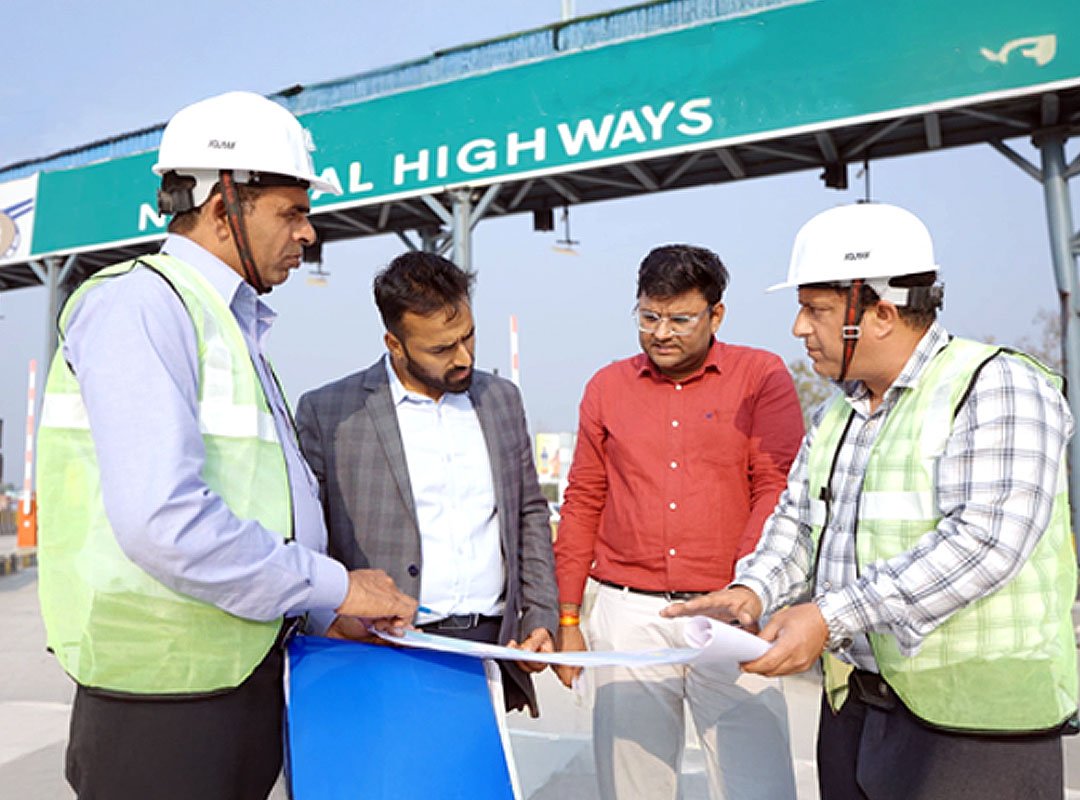
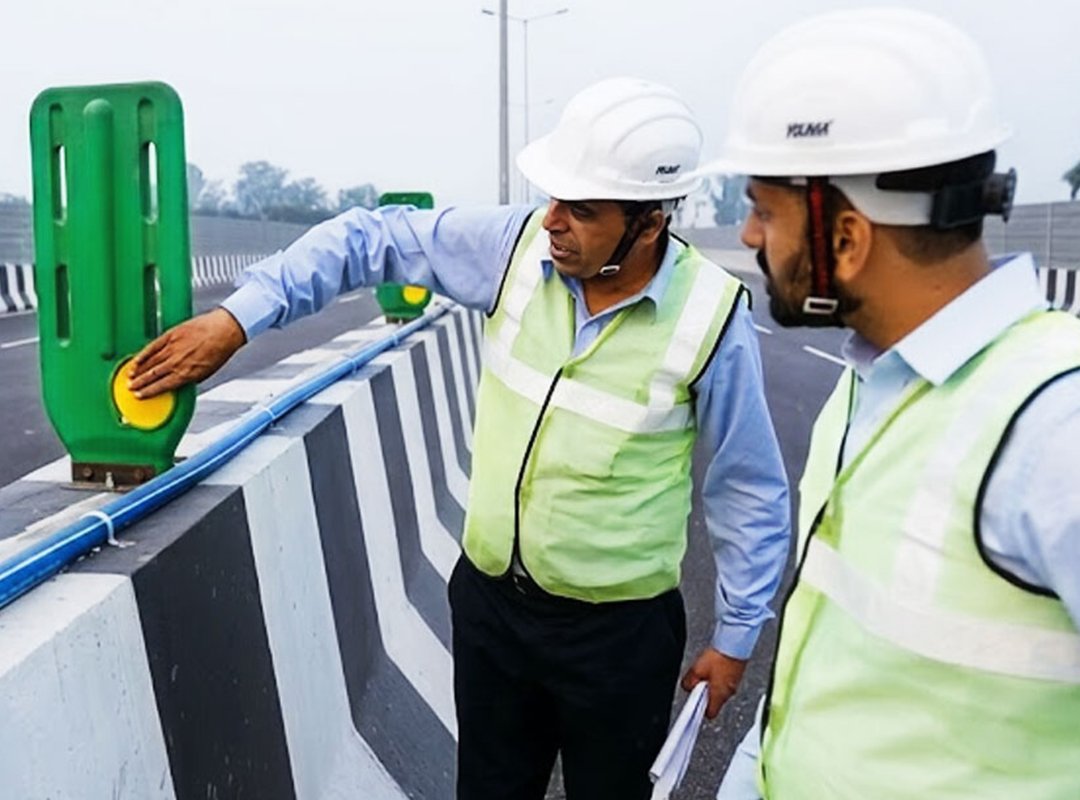
For many civil engineering graduates, highway construction isn’t the first career option they explore. Most are familiar with building construction, structural design, or consulting roles, while opportunities in highways are often overlooked. Yet, some of India’s largest infrastructure projects are creating careers that combine engineering, technology, project management, commercial management, and leadership. If you’re looking for a profession that offers continuous learning, visible career progression, and the chance to contribute to projects that shape the country’s connectivity, a career in highway construction deserves serious consideration.
What makes this industry unique is the variety of career paths it offers. A highway project is not delivered by Site Engineers alone. Behind every completed road are Planning Engineers ensuring schedules stay on track, Survey Engineers establishing precise alignments, Quality Engineers maintaining construction standards, Contracts Engineers managing commercial documentation, Safety Engineers protecting people and assets, Design Engineers preparing engineering solutions, and Project Managers coordinating every aspect of execution. Understanding these roles early helps you make better career decisions instead of accepting the first opportunity that comes your way.
Another misconception is that careers in highways are available only with construction companies. In reality, professionals can build successful careers with EPC contractors, design consultants, Project Management Consultants (PMCs), testing laboratories, infrastructure developers, and government agencies involved in road and transport development. The skills required may differ slightly, but the career opportunities remain extensive across the infrastructure ecosystem.
One mistake many graduates make is choosing a job based only on salary or designation. In highway construction, the first few years should be about learning rather than earning. The projects you work on, the responsibilities you receive, and the mentors you work with will influence your career far more than a slightly higher starting package. Companies that execute complex EPC highway projects often expose young engineers to multiple departments, giving them a broader understanding of how infrastructure projects are planned, executed, monitored, and delivered.
If you’re planning to enter the highway construction industry in India, the following insights can help you make informed decisions and build a long-term career rather than simply securing your first job.
1. Before Applying for Jobs, Understand Which Role Fits You
A common mistake among fresh graduates is applying for every vacancy that mentions “Civil Engineer.” While this may increase interview opportunities, it often leads to dissatisfaction because different roles require different interests and strengths. Before applying, spend time understanding what each position actually involves.
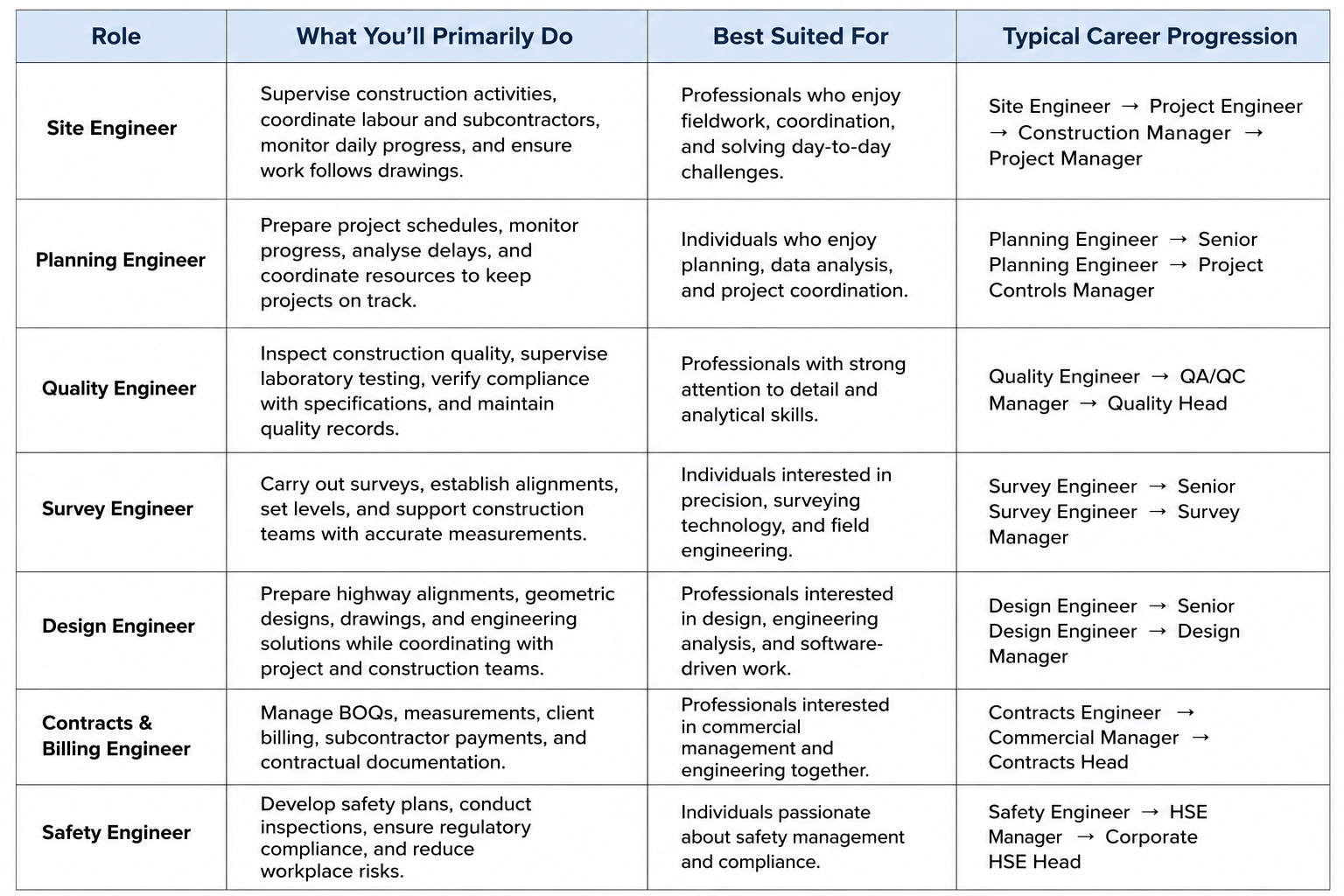
The best career choice is the one that aligns with your strengths. Someone who enjoys analysing schedules may not enjoy supervising construction activities every day, just as someone who thrives in field operations may find planning or billing less engaging. Understanding these differences early allows you to build expertise in the right area instead of changing departments every few years.
2. How to Enter the Highway Construction Industry
For fresh graduates, there are several pathways into highway construction jobs. The most common is through campus placements conducted by infrastructure companies. Many organisations also recruit Graduate Engineer Trainees (GETs) through direct applications, career portals, walk-in drives, and employee referrals. Candidates who have completed internships on highway or infrastructure projects often gain an advantage because they already understand basic project execution and workplace expectations.
Apart from EPC contractors, opportunities also exist with highway consultants, design firms, testing laboratories, and Project Management Consultants (PMCs). These organisations expose engineers to different aspects of infrastructure development, allowing professionals to choose a career path that aligns with their interests. Rather than applying randomly, shortlist companies based on the type of projects they execute and the learning opportunities they offer.
3. Getting Your First Job Is Easier When You Know What Employers Actually Look For
One question graduates often ask is, “What do highway construction companies expect from fresh engineers?” The answer is usually different from what colleges prepare students for.
Most companies do not expect fresh graduates to know every clause of the MoRTH Specifications or be experts in project execution. Technical knowledge improves with experience. What recruiters look for is whether a candidate shows curiosity, takes ownership of responsibilities, communicates clearly, and demonstrates a genuine willingness to learn. A candidate who has completed an internship, understands basic construction terminology, and can explain what they observed on a project usually creates a stronger impression than someone who only talks about academic grades or software certificates.
Hiring Manager’s Perspective
One pattern experienced recruiters consistently observe is that the engineers who perform well during interviews are not necessarily the ones with the highest marks. They are the ones who understand the role they have applied for, explain their internship experience confidently, ask thoughtful questions, and show genuine enthusiasm for learning. Technical knowledge can always be strengthened through training, but qualities such as accountability, curiosity, and professionalism are much harder to develop. These traits often influence hiring decisions as much as academic performance.
Another factor that helps candidates stand out is awareness of the industry. Understanding the difference between EPC and HAM projects, knowing the basic stages of highway construction, or being familiar with the responsibilities of your chosen role reflects genuine interest in the profession. These simple efforts can significantly improve your chances of securing highway construction career opportunities.
4. Your First Two Years Will Shape the Rest of Your Career
Many young professionals focus on promotions from the day they join a company. Experienced industry leaders, however, know that the first two years are about building capability, not chasing designations. The professionals who grow the fastest are usually those who use this period to understand how an entire project functions instead of limiting themselves to a single activity.
If you’re working as a Site Engineer, spend time with the Planning team to understand how schedules are prepared. Visit the quality laboratory and learn why specific tests are conducted. Sit with the Contracts team to understand BOQs, measurements, and billing. Observe how survey teams establish alignments before construction begins. This broader exposure helps you connect different parts of a project and prepares you for leadership responsibilities much earlier in your career.
One lesson shared by many experienced Project Managers is that professionals who understand how different departments contribute to project delivery consistently perform better when they move into supervisory or managerial roles. Cross-functional learning not only improves technical understanding but also strengthens decision-making, coordination, and problem-solving skills.
5. Build Skills That Make You Valuable, Not Just Employable
One of the biggest misconceptions among graduates is that learning more software automatically makes them better engineers. While technical tools are important, companies value professionals who can solve problems, work independently, communicate effectively with different stakeholders, and take ownership of responsibilities. Before investing in multiple certifications, identify the role you want to build your career in and then focus on learning the skills that directly support that role.
For example, Planning Engineers should understand scheduling, resource planning, delay analysis, and Primavera P6. Site Engineers should focus on reading drawings, construction sequencing, productivity tracking, and equipment management. Quality Engineers should become familiar with MoRTH Specifications, IRC Codes, laboratory testing procedures, and quality documentation. Contracts and Billing Engineers benefit more from understanding BOQs, measurements, rate analysis, contract conditions, and billing software than from learning design applications. Specialising in skills relevant to your chosen role creates a stronger professional profile than collecting certificates that have little connection to your day-to-day responsibilities.
6. Certifications Should Support Your Career, Not Define It
Professional certifications can strengthen your profile, but they should complement your experience rather than replace it. Recruiters rarely shortlist candidates simply because they have completed multiple online courses. Instead, they look for certifications that demonstrate a clear commitment to a particular career path. If you’re aiming for construction project management careers, certifications in Primavera P6, project scheduling, or project management can be valuable. Engineers interested in quantity surveying should consider programmes on estimation, contract management, and billing, while those pursuing highway engineering jobs in quality should strengthen their knowledge of quality management systems, testing procedures, and relevant engineering standards. Before enrolling in any certification, ask yourself whether the skill will help you perform better in your chosen role. If the answer is yes, it is worth the investment.
7. How Career Growth Really Happens in Highway Construction
Career growth in highway construction is not based solely on experience. It is built on trust, responsibility, and the ability to deliver results consistently. Most professionals begin as Graduate Engineer Trainees, Junior Engineers, or Site Engineers before progressing to Project Engineer, Senior Planning Engineer, QA/QC Manager, Commercial Manager, Construction Manager, and eventually Project Manager or Project Head. However, promotions rarely happen because someone has completed a certain number of years. They happen because managers trust that individual to handle larger responsibilities.
In most organisations, professionals who grow quickly share a few common characteristics. They complete assigned work without constant supervision, take ownership of problems instead of waiting for instructions, communicate effectively with different teams, and remain dependable even during challenging project phases. Managers naturally assign larger work packages, client interactions, and leadership responsibilities to such individuals. In the long run, reliability and accountability become just as important as technical expertise.
8. Avoid These Mistakes That Slow Down Career Growth
Every experienced professional can identify a few decisions that slowed their career. Learning from these common mistakes can help young engineers avoid unnecessary setbacks.
The first mistake is changing jobs too frequently for small salary increases. While changing organisations can sometimes accelerate growth, moving every year often prevents engineers from experiencing the complete lifecycle of a highway project. Completing a project from mobilisation to final handover provides exposure to planning, execution, quality inspections, client reviews, billing, claims, and project close-out, all of which are essential for future leadership roles.
The second mistake is limiting yourself to one department. Engineers who understand planning, surveying, quality, contracts, and execution become more effective managers because they appreciate how decisions in one department affect the entire project.
The third mistake is ignoring documentation. Daily progress reports, inspection requests, measurement books, quality records, and contractual correspondence may appear routine, but they become invaluable during client meetings, audits, variation claims, and dispute resolution. Engineers who maintain accurate documentation earn greater trust from both clients and senior management.
9. Choose a Company That Invests in People, Not Just Projects
The company you choose at the beginning of your career has a significant influence on your professional development. While salary is important, it should not be the only factor when evaluating an opportunity. Ask questions that reveal how much the organisation invests in its people. Will you receive exposure to different departments? Will senior engineers mentor young professionals? Will you participate in planning meetings, quality reviews, and client interactions? Does the organisation encourage continuous learning?
Companies executing large EPC highway projects generally provide broader exposure because engineers experience multiple phases of construction within a single project. Working in such environments helps professionals develop technical knowledge, commercial awareness, coordination skills, and leadership capabilities much faster. At Pawan Highways India Pvt. Ltd. (PHIPL), engineers work on diverse infrastructure projects that encourage collaboration across planning, execution, quality, commercial management, and project coordination, enabling young professionals to build well-rounded careers.
10. Salary and Long-Term Career Prospects
One of the most frequently asked questions about highway construction jobs is whether they offer strong long-term earning potential. While compensation varies depending on the organisation, project size, location, and individual performance, professionals who continuously develop specialised skills and take on greater responsibilities generally experience steady salary growth.
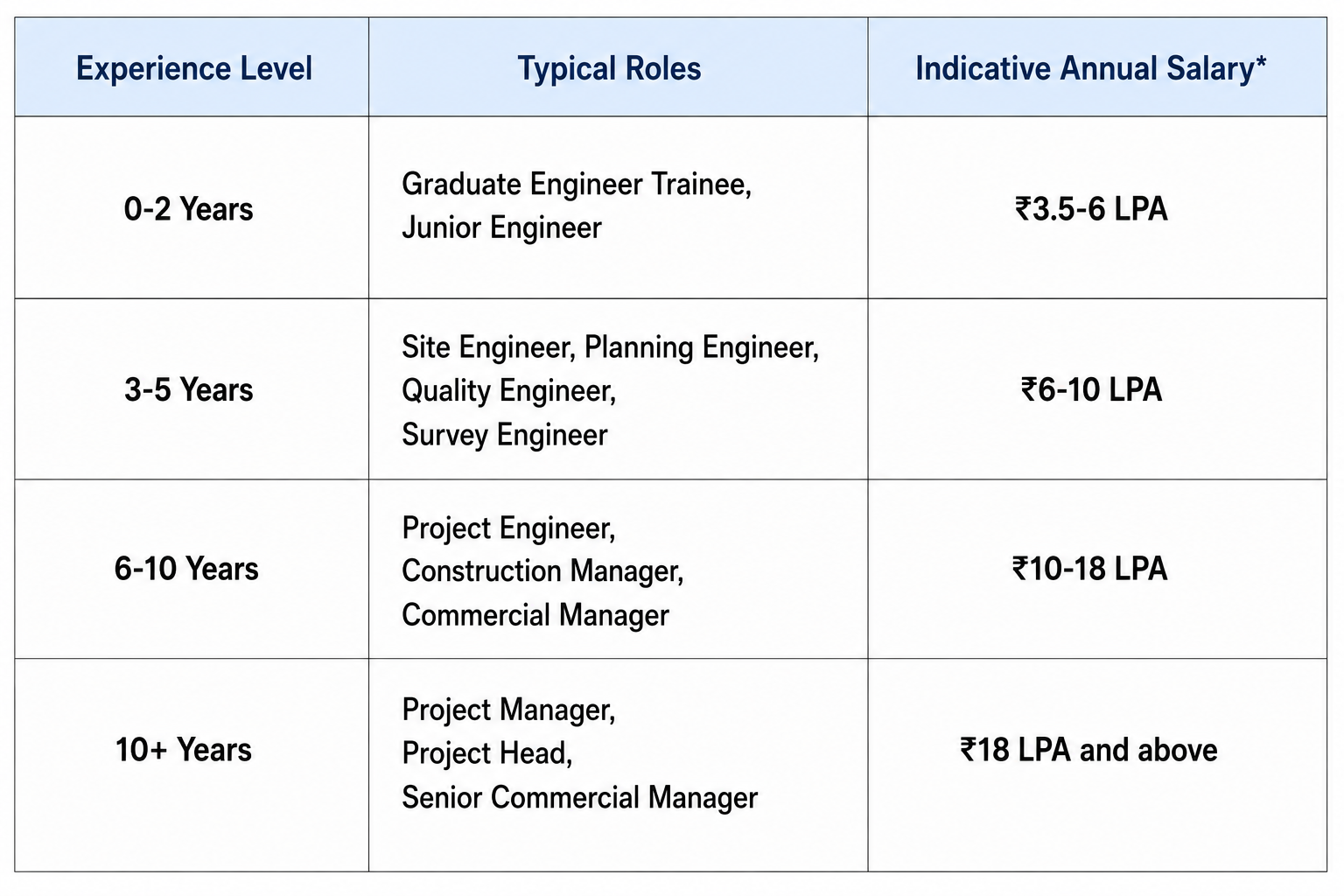
*Indicative salary ranges may vary depending on the employer, project location, project complexity, and individual performance.
Rather than choosing a job based solely on the highest starting package, evaluate the learning opportunities it offers. Engineers who gain experience across different project functions often progress faster into leadership positions and achieve stronger long-term earning potential.
Building a successful career in highway construction is about making informed choices from the very beginning. Choosing the right role, developing relevant skills, gaining practical exposure, learning from experienced professionals, and taking ownership of responsibilities have a far greater impact on long-term success than chasing short-term gains. Whether you aspire to become a Site Engineer, Planning Engineer, Design Engineer, Quality Engineer, Contracts Engineer, Safety Engineer, or Project Manager, every career path offers opportunities to grow, specialise, and contribute to infrastructure that shapes the nation’s future.
For anyone exploring highway construction career opportunities, the industry offers much more than employment. It provides a structured career path, exposure to complex engineering projects, opportunities to work with multidisciplinary teams, and the satisfaction of contributing to projects that improve connectivity and economic development. The professionals who succeed are those who remain curious, continue learning, and consistently deliver results.
Ready to Build Your Career?
At Pawan Highways India Pvt. Ltd. (PHIPL), we believe that exceptional infrastructure is built by exceptional people. Whether you’re a fresh graduate looking for your first opportunity or an experienced professional ready for the next challenge, PHIPL offers an environment where learning, innovation, teamwork, and professional growth go hand in hand.
Explore current career opportunities and become part of projects that are transforming India’s transportation infrastructure. Apply Now: https://phipl.com/careers/