
Large infrastructure projects, particularly in the highway construction sector, are defined by their scale, complexity, and long-term impact. From initial feasibility studies to final commissioning, every stage involves careful planning, coordination, and execution. While project planning often receives significant attention and investment, the true measure of success lies in how effectively those plans are implemented on the ground.
In practice, a noticeable gap often emerges between what is planned and what is executed. This gap is not necessarily the result of poor intent or lack of expertise. Instead, it stems from the dynamic nature of construction environments, where multiple variables interact simultaneously. For highway construction companies, understanding the relationship between construction planning vs execution is essential to delivering projects that meet quality, timeline, and budget expectations.
1. Understanding the Planning–Execution Disconnect
Project planning is typically carried out in structured environments using detailed data, predictive models, and standardized methodologies. Engineers, planners, and consultants collaborate to design workflows that are efficient, logical, and aligned with project objectives. These plans are essential as they establish the foundation for execution. However, once a project transitions to the construction phase, it enters a far more dynamic environment. Site conditions, weather variations, logistical challenges, and real-time operational decisions introduce complexities that cannot always be fully anticipated during planning. As a result, even well-prepared plans require continuous adjustment. This disconnect between controlled planning conditions and variable on-ground realities is where coordination becomes critical. The ability to manage construction planning vs execution effectively determines how well a project adapts without losing direction.
2. The Importance of Ground-Level Coordination
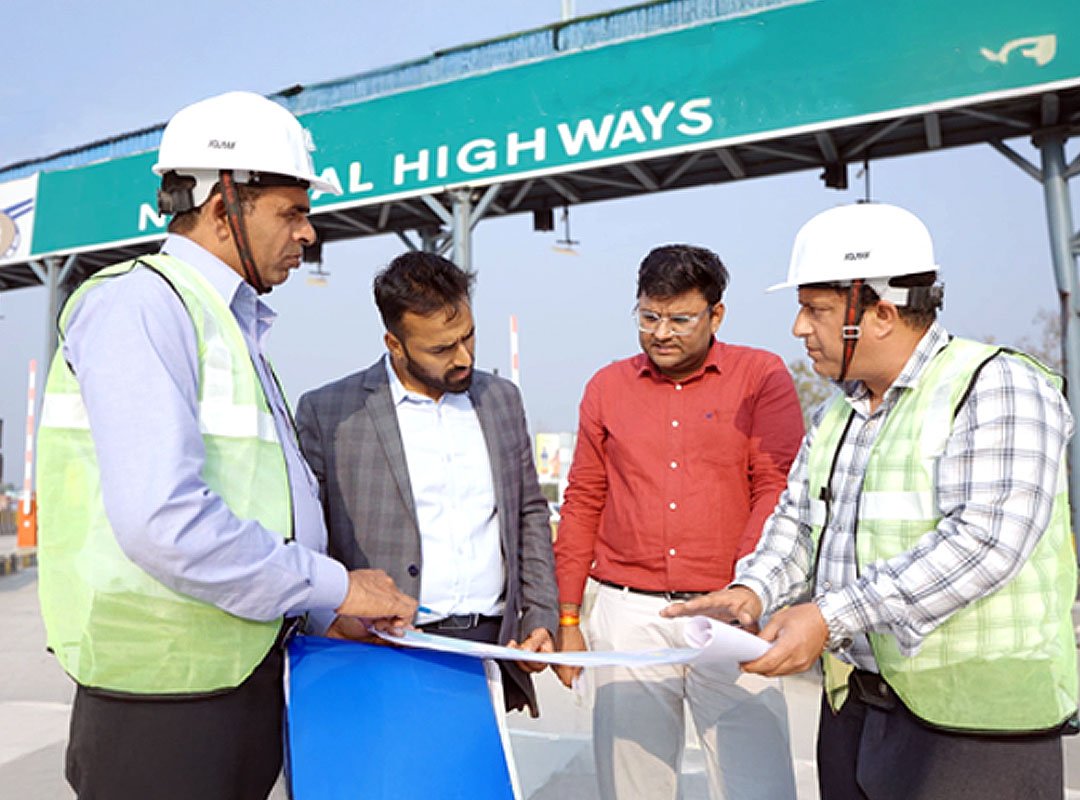
Ground-level coordination refers to the seamless interaction between all stakeholders involved in execution, including project managers, site engineers, contractors, subcontractors, suppliers, and field workers. In highway construction, where activities are often spread across long stretches and multiple work zones, coordination is especially vital. Effective site coordination in construction projects ensures that tasks are executed in the correct sequence, resources are utilized efficiently, and any emerging challenges are addressed promptly. It also enables better synchronization between parallel activities, reducing delays and avoiding unnecessary rework. Rather than being a reactive function, coordination should be proactive and structured. It acts as the bridge that connects planning intent with execution reality.
3. Key Factors Contributing to the Gap
One of the primary contributors to the planning–execution gap is the complexity of large-scale projects. Highway construction involves numerous interdependent activities such as land preparation, grading, drainage development, pavement laying, and safety installations. Each of these activities often depends on the timely completion of others.
Communication plays a central role in this ecosystem. When information does not flow clearly and consistently between teams, misunderstandings can arise. Even minor misinterpretations can lead to inefficiencies, particularly when multiple teams are working simultaneously. Another factor is the variability of site conditions. Despite thorough surveys and assessments, on-ground realities can differ from initial expectations. Soil conditions, environmental factors, and local constraints may require adjustments to execution strategies. Additionally, coordination across multiple stakeholders can present challenges. Different teams may operate with varying priorities, timelines, and working methods. This is where strong site coordination in construction projects becomes essential to align all moving parts.
4. The Impact on Project Outcomes
When coordination is not effectively managed, the impact can be seen across multiple dimensions of a project. Timelines may extend due to misaligned activities or unforeseen delays. Costs can increase as a result of inefficiencies or the need for corrective actions. Resource utilization may become suboptimal, leading to idle time or overlapping efforts. From an operational standpoint, the lack of coordination can affect productivity and workflow continuity. Tasks that are dependent on one another may not progress as planned, creating bottlenecks. These outcomes are often observed as highway project execution challenges, particularly in large-scale developments where multiple work fronts operate simultaneously.
5. Strengthening Coordination for Effective Execution
Bridging the gap between planning and execution requires a structured and practical approach. One of the most effective strategies is to ensure continuous integration between planning and execution teams. Instead of treating planning as a one-time activity, it should evolve alongside project progress.
Regular communication mechanisms play a crucial role in this process. Daily site meetings, progress reviews, and coordination discussions help ensure that all teams remain aligned. These interactions provide an opportunity to address issues early and maintain clarity on priorities. The use of real-time data further enhances decision-making. Digital tools and reporting systems allow project stakeholders to monitor progress, identify deviations, and respond promptly. Access to accurate and timely information reduces uncertainty and improves coordination.
Flexibility in planning is equally important. While maintaining overall project objectives, plans should allow for adjustments based on site conditions. This ensures that construction planning vs execution remains aligned even when conditions change. Clear accountability is another essential element. Assigning ownership for specific tasks and coordination responsibilities ensures that issues are addressed proactively.
6. The Role of Leadership in Ground-Level Coordination
Leadership at the project and site levels plays a decisive role in bridging the planning–execution gap. Experienced leaders bring the ability to interpret plans in the context of real-world conditions and make informed decisions accordingly. Strong leadership fosters a culture of collaboration and accountability. It encourages open communication, where team members can share insights and contribute to problem-solving. This directly improves site coordination in construction projects and ensures smoother execution.
7. Leveraging Technology to Enhance Coordination
Modern infrastructure projects increasingly rely on technology to support coordination and execution. Tools such as project management software, mobile reporting applications, and geospatial monitoring systems provide valuable insights into project progress. These technologies enable real-time tracking of activities, resource utilization, and potential bottlenecks. They also help teams respond more effectively to highway project execution challenges by improving visibility across all stages of construction. However, the effectiveness of technology depends on how well it is integrated into daily operations. The focus should remain on improving clarity and coordination.
8. Coordination in Highway Construction Projects
Highway construction projects present unique coordination challenges due to their linear nature and extensive geographical spread. Work is often carried out across multiple segments simultaneously, requiring precise synchronization. Activities such as earthwork, pavement construction, drainage development, and safety installations must be carefully coordinated to ensure smooth progression. Any delay in one segment can affect subsequent activities, making coordination even more critical. These complexities are a key reason why highway project execution challenges require focused attention on ground-level coordination.
9. Building a Culture of Continuous Improvement
Closing the gap between planning and execution is not a one-time effort. It requires a commitment to continuous improvement. Each project provides valuable insights that can be applied to future initiatives. Documenting lessons learned, analyzing project performance, and refining coordination processes contribute to long-term efficiency. Over time, this strengthens both planning accuracy and execution capability.
10. How PHIPL Bridges the Gap Between Planning and Execution
At PHIPL, project planning is not treated as a static process that ends once construction begins. The company follows an execution-driven approach where planning teams and on-site operations remain continuously connected throughout the project lifecycle. This helps ensure that decisions taken at the planning stage remain practical and responsive to actual ground conditions. To strengthen this alignment, PHIPL maintains close coordination between project managers, site engineers, procurement teams, and execution crews across all active work zones. Continuous communication allows on-ground challenges such as utility conflicts, material movement issues, changing soil conditions, or access constraints to be addressed quickly before they impact larger project timelines.
The company also follows a structured monitoring system that tracks progress across critical activities including earthwork, drainage development, pavement preparation, and equipment deployment. Regular site reviews and milestone-based assessments help identify deviations early, enabling teams to take corrective action and maintain workflow continuity across multiple construction segments. In large highway projects where several stakeholders operate simultaneously, PHIPL emphasizes coordination between contractors, suppliers, consultants, and authorities to reduce execution bottlenecks and approval delays. This improves operational clarity and supports smoother decision-making during fast-moving project phases.
Technology plays an important role in this process. Real-time reporting systems and project tracking tools improve visibility across construction activities, helping teams respond faster to on-site developments and maintain better control over execution progress. By combining practical site coordination, continuous monitoring, and adaptive execution strategies, PHIPL works to ensure that project plans are translated efficiently into on-ground delivery while maintaining quality, safety, and execution timelines. PHIPL focuses on all key functions of management, including planning, organising, staffing, directing, and controlling, to ensure efficient coordination of activities and effectively bridge the gap between planning and execution.
Ground-level coordination is a fundamental component of successful infrastructure development. While planning provides direction and structure, execution determines the final outcome. Bridging the gap between the two requires a balanced approach that combines clear communication, practical planning, strong leadership, and effective use of technology. By focusing on coordination at every stage of execution, organizations can ensure that their projects are delivered efficiently, safely, and in alignment with their intended objectives.