
The National Highways Authority of India (NHAI) is the apex agency responsible for the development, maintenance, and management of India’s National Highway network under the Ministry of Road Transport and Highways (MoRTH). According to the Ministry, India has a National Highway network exceeding 1.46 lakh kilometres, accounting for nearly 2% of the country’s total road network but carrying around 40% of total road traffic. This makes National Highways the backbone of freight transportation, passenger mobility, industrial connectivity, and regional economic development. Delivering these strategically important corridors efficiently requires far more than engineering expertise—it demands robust planning, structured contract management, integrated logistics, and disciplined execution across multiple stakeholders.
An NHAI Contractor in India plays a central role in transforming approved highway projects into operational transportation corridors that meet stringent technical, contractual, and performance requirements. These contractors are entrusted with executing projects under well-defined delivery models such as Engineering, Procurement and Construction (EPC), Hybrid Annuity Model (HAM), and Build-Operate-Transfer (BOT), each designed to balance project risk, financing, execution responsibility, and long-term asset performance. Every project is governed by detailed contract conditions, milestone-based monitoring, independent engineering oversight, and strict compliance with specifications prescribed by MoRTH and NHAI.
Efficient delivery of National Highway projects depends on the contractor’s ability to manage large-scale resources, coordinate with multiple government agencies, maintain uninterrupted supply chains, optimise project scheduling, and ensure smooth transition from construction to operational readiness. Rather than focusing solely on physical construction, successful highway contractors create integrated execution systems that improve productivity, minimise delays, and support timely delivery of nationally significant infrastructure. Companies such as Pawan Highways India Pvt. Ltd. (PHIPL) recognise that modern highway development requires disciplined planning, effective coordination, and systematic project management to build infrastructure that supports India’s long-term economic growth and logistics efficiency.
1. Understanding the Role of NHAI Contractors in India
An NHAI Contractor in India is responsible for executing National Highway projects awarded by the National Highways Authority of India through competitive procurement processes based on technical capability, financial strength, and relevant infrastructure experience. Depending on the project structure, contractors may undertake Engineering, Procurement and Construction (EPC) contracts, participate in Hybrid Annuity Model (HAM) projects, or develop highways under Build-Operate-Transfer (BOT) concessions that involve varying levels of financing and operational responsibility. Beyond construction, these contractors are accountable for resource mobilisation, contract compliance, coordination with consultants and government authorities, achievement of contractual milestones, documentation, and, where applicable, post-construction maintenance obligations. Their role extends across the entire project lifecycle, making them key partners in delivering reliable, high-capacity highway infrastructure that supports national connectivity and economic development.
2. Project Delivery Models That Improve Highway Development
One of the primary reasons National Highway projects are delivered efficiently is the adoption of project delivery models that allocate responsibilities according to project complexity and financial requirements. Under the Engineering, Procurement and Construction (EPC) model, the contractor executes the project for a fixed contract value while NHAI provides project financing, enabling faster execution and reducing financing risks for contractors. The Hybrid Annuity Model (HAM) combines public and private investment, with the government funding a significant portion of construction costs while the contractor finances the remaining share and receives annuity payments linked to project performance over a defined period. In contrast, Build-Operate-Transfer (BOT) projects assign greater responsibility to concessionaires for financing, construction, operation, and maintenance before transferring the asset back to the government. Selecting the appropriate delivery model improves risk allocation, financial sustainability, project monitoring, and overall efficiency across India’s expanding National Highway programme.
3. Corridor-Based Planning Enables Large-Scale Highway Execution
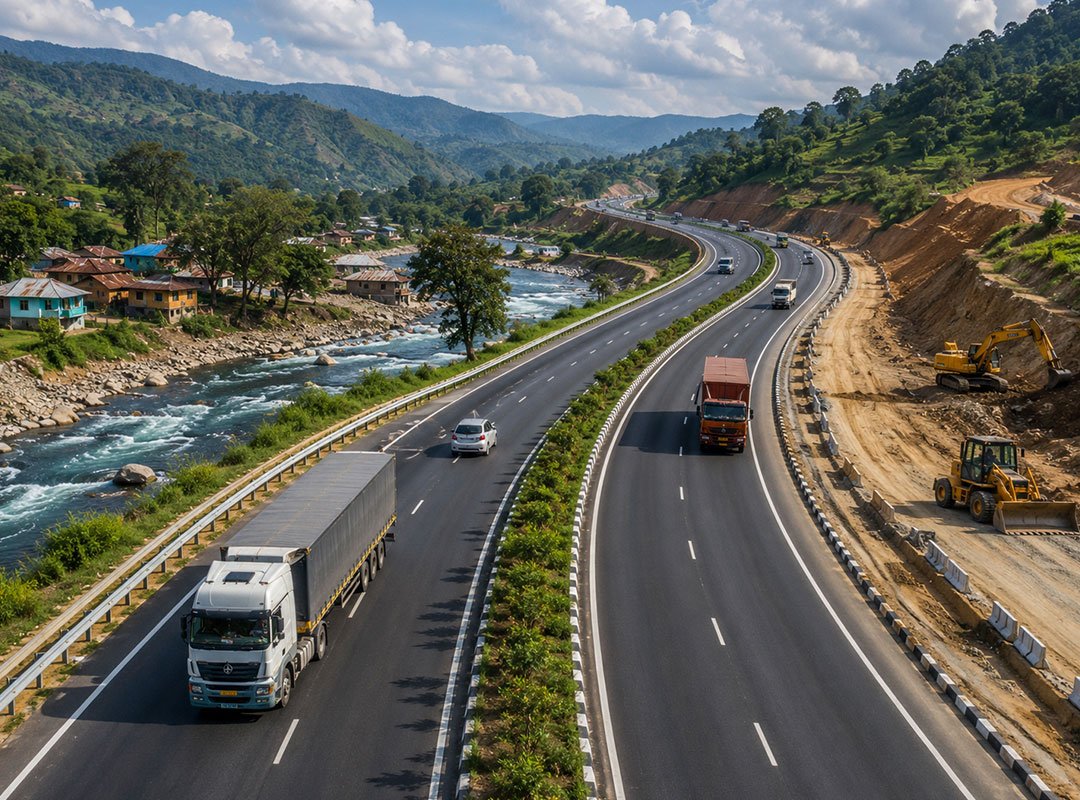
Unlike isolated road projects, National Highway development is increasingly planned as integrated transport corridors that improve freight movement, regional connectivity, and economic competitiveness. Programmes such as Bharatmala Pariyojana adopt corridor-based planning by linking industrial clusters, ports, logistics parks, border regions, and major urban centres through strategically aligned highway networks. To execute these large-scale corridors efficiently, NHAI divides projects into multiple construction packages that can be awarded simultaneously to qualified contractors while maintaining uniform engineering standards and coordinated implementation schedules. This package-based approach allows parallel construction across different sections of the corridor, optimises resource allocation, accelerates project completion, and enables faster commissioning of economically significant highway infrastructure.
4. Integrated Resource Planning Across Long Highway Corridors
National Highway projects often extend across tens or even hundreds of kilometres, making integrated resource planning a critical factor in timely project delivery. An experienced NHAI Contractor in India develops comprehensive resource deployment strategies that align manpower, construction materials, machinery, temporary facilities, and transportation networks with the project’s execution schedule. Depending on the corridor length and project requirements, contractors establish strategically located hot mix plants, batching plants, crusher units, casting yards, equipment maintenance facilities, and labour camps to minimise transportation time and improve operational efficiency. Material procurement is synchronised with construction activities to ensure uninterrupted availability of aggregates, bitumen, cement, steel, and other essential inputs, reducing idle time and enabling continuous progress across multiple construction fronts simultaneously.
5. Multi-Agency Coordination Drives Faster Project Completion
The successful execution of National Highway projects depends on effective coordination with numerous public and private stakeholders beyond the construction site. Throughout the project lifecycle, an NHAI Contractor in India works closely with NHAI officials, Independent Engineers, utility service providers, railway authorities, forest departments, local administrations, environmental agencies, and traffic management authorities to resolve issues that may affect project progress. Activities such as shifting power transmission lines, relocating water pipelines, obtaining railway crossing approvals, securing environmental clearances, and coordinating access to construction sites require continuous engagement with multiple organisations. Efficient stakeholder coordination reduces administrative bottlenecks, minimises work interruptions, and enables contractors to maintain project schedules despite the complexity of large-scale highway infrastructure development.
6. Performance Monitoring Ensures Accountability Throughout the Project
Efficient delivery of National Highway projects relies on continuous performance monitoring that measures progress against contractual commitments rather than relying solely on periodic construction milestones. An NHAI Contractor in India operates within a structured monitoring framework where project performance is reviewed through milestone achievement, physical progress, financial progress, construction schedules, quality observations, and compliance with approved timelines. Independent Engineers appointed under various contract models regularly inspect ongoing works, verify completed quantities, review documentation, and certify progress before payments are processed. Periodic review meetings between NHAI, consultants, and contractors help identify execution challenges at an early stage, enabling corrective actions that minimise delays, improve coordination, and maintain accountability throughout the project lifecycle.
7. Standardisation Maintains Consistent Highway Quality Across the Corridor
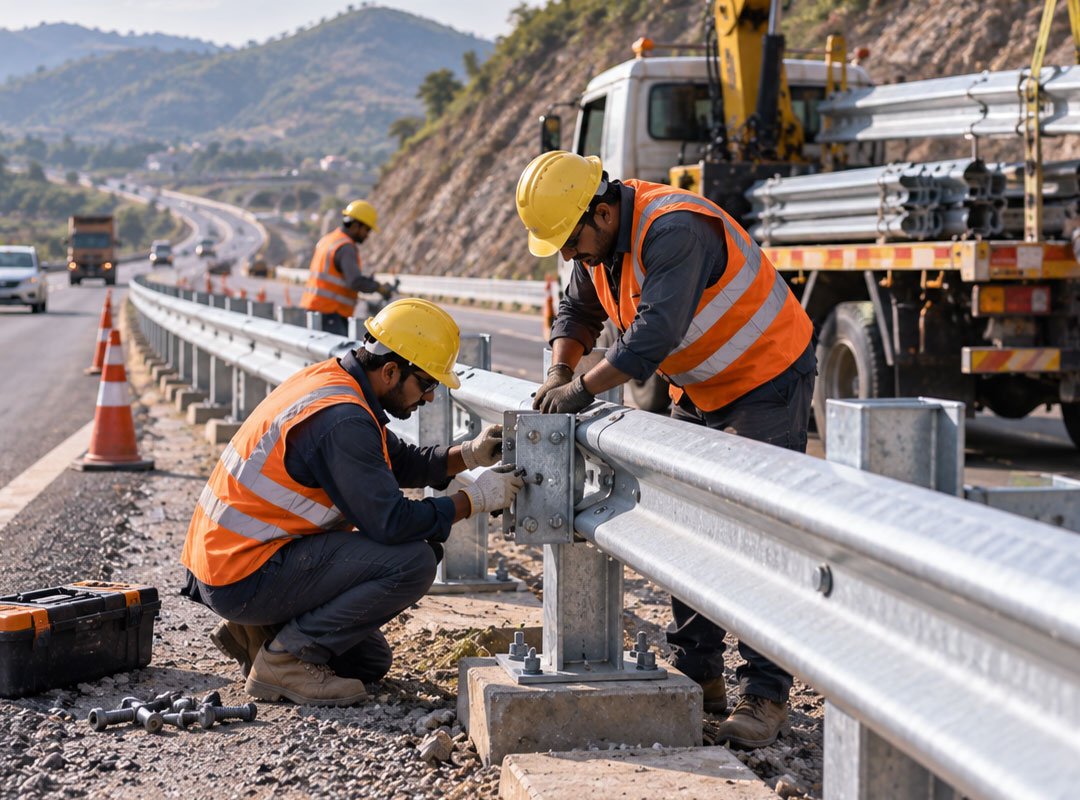
National Highway projects frequently span multiple construction packages executed by different contractors, making standardisation essential for ensuring consistent asset performance across the entire corridor. An experienced NHAI Contractor in India follows uniform technical specifications prescribed by the Ministry of Road Transport and Highways (MoRTH), approved drawings, contract requirements, and quality protocols so that every completed section delivers comparable structural integrity, ride quality, and operational performance. Standardised procedures for material approval, pavement layer construction, bridge components, road furniture, safety barriers, drainage structures, and finishing works help eliminate variations between adjoining packages and create a seamless highway network. This consistency not only simplifies future maintenance but also ensures that users experience uniform driving conditions throughout the corridor irrespective of the construction package or contractor involved.
8. Managing Time, Cost, and Operational Risks Throughout the Project Lifecycle
Delivering National Highway projects efficiently requires contractors to anticipate and manage risks that may affect construction schedules, financial performance, and contractual commitments. An experienced NHAI Contractor in India continuously monitors factors such as fluctuations in material prices, labour availability, fuel costs, weather disruptions, supply chain constraints, and changes in project scope while implementing mitigation measures to minimise their impact. Resource deployment is adjusted according to project priorities, procurement schedules are reviewed regularly to avoid shortages, and construction sequences are optimised to maintain productivity despite unforeseen challenges. Effective risk management enables contractors to maintain execution momentum, reduce project uncertainties, improve cost control, and achieve contractual milestones within the prescribed project timelines.
9. Seamless Transition from Construction to Highway Operations and Maintenance
The successful completion of a National Highway project extends beyond construction and includes preparing the asset for safe and efficient public use. Before the completed highway is opened to traffic, an NHAI Contractor in India undertakes final inspections, rectifies identified deficiencies, completes pending punch-list items, submits as-built documentation, and facilitates the inspection process required for project acceptance. Under delivery models such as the Hybrid Annuity Model (HAM) and Build-Operate-Transfer (BOT), contractors may also be responsible for maintaining the highway during the concession or maintenance period by ensuring pavement performance, road furniture functionality, drainage efficiency, and routine upkeep meet prescribed service standards. This structured transition from construction to operations protects long-term asset quality, enhances road user safety, and supports sustainable management of India’s National Highway network.
10. Experienced NHAI Contractors Strengthen India’s Highway Infrastructure
The efficiency of India’s National Highway development programme depends significantly on the expertise and organisational capability of the contractors entrusted with project delivery. Experienced NHAI Contractors in India combine strategic planning, structured resource management, disciplined contract administration, multi-agency coordination, and robust execution systems to deliver infrastructure that supports the country’s growing transportation demands. Their ability to complete projects efficiently contributes to reduced travel time, improved freight movement, lower vehicle operating costs, enhanced regional connectivity, and stronger economic integration across states. As India continues expanding its highway network to support industrial growth, logistics efficiency, and national mobility, capable highway contractors remain indispensable partners in creating infrastructure that delivers long-term economic and social value.
Efficient delivery of National Highway projects requires much more than engineering expertise. It depends on selecting the appropriate project delivery model, planning resources across long construction corridors, coordinating with multiple government agencies, monitoring contractual performance, maintaining standardisation across project packages, managing operational risks, and ensuring a smooth transition from construction to long-term highway operations. Together, these elements enable NHAI Contractors in India to deliver large-scale infrastructure projects that meet stringent technical, contractual, and operational requirements while supporting the country’s transportation objectives.
As India’s National Highway network continues to expand through strategic infrastructure programmes, the contribution of experienced contractors becomes increasingly important in ensuring projects are completed efficiently and sustainably. Companies such as Pawan Highways India Pvt. Ltd. (PHIPL) contribute to this vision by combining engineering expertise, disciplined project management, and systematic execution practices to deliver highway infrastructure that strengthens connectivity, facilitates economic growth, and supports the nation’s long-term infrastructure development goals.