Modern highways are designed to withstand heavy traffic, varying weather conditions and decades of continuous use. While pavement materials and structural design receive significant attention, one seemingly simple geometric feature plays a decisive role in determining a highway’s long-term performance: road camber.
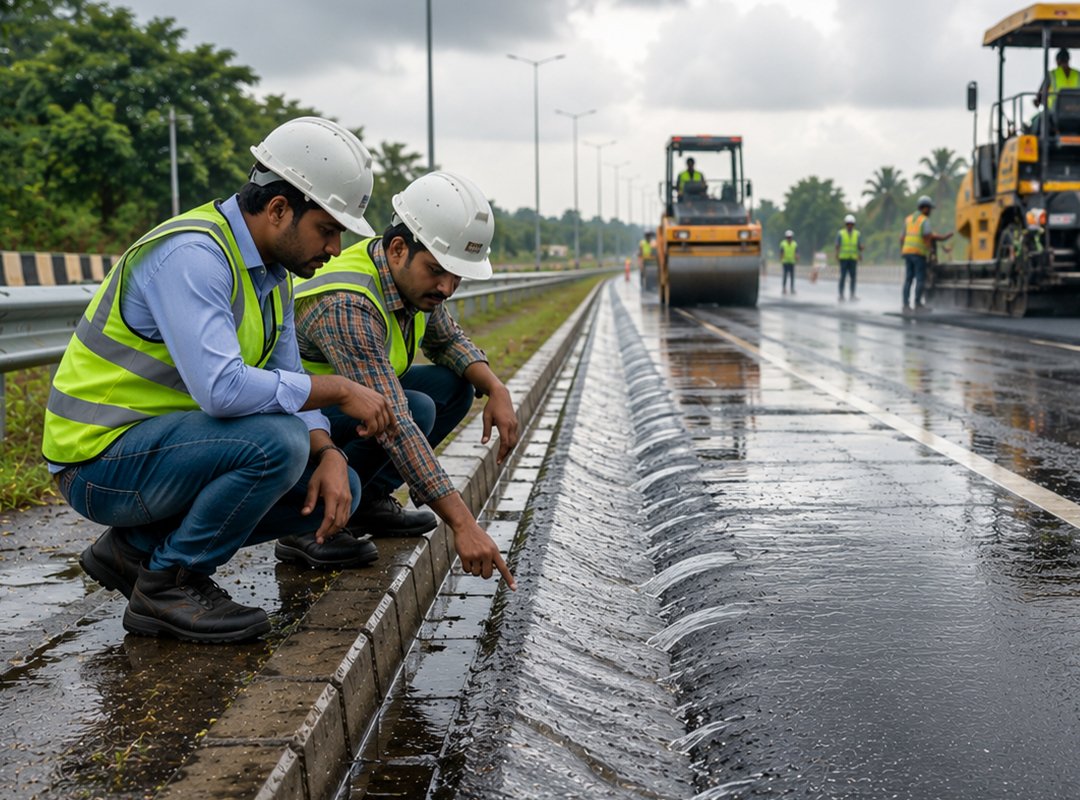
Road camber, also known as the cross slope or crossfall, is the slight transverse slope provided across the carriageway to drain rainwater quickly towards the shoulders and side drains. It forms the first component of an efficient highway drainage system, preventing water from accumulating on the pavement surface and infiltrating the lower pavement layers.
According to the Indian Roads Congress (IRC), pavement drainage is one of the most critical factors affecting pavement performance. IRC recommends crossfalls of approximately 2.5% for bituminous pavements and 2.0% for cement concrete pavements, with steeper slopes adopted in high-rainfall regions. This becomes especially important in India, where the 146,000 km National Highway network carries nearly 40% of the country’s road traffic, while many regions experience annual rainfall exceeding 2,000 mm during the monsoon.
Studies by the Federal Highway Administration (FHWA) and AASHTO consistently identify poor drainage as one of the leading causes of premature pavement deterioration. Water weakens pavement layers, reduces subgrade strength and accelerates failures such as rutting, stripping, potholes and cracking. Consequently, the importance of camber in roads extends well beyond drainage, influencing pavement durability, maintenance costs, road safety and overall lifecycle performance.
For highway construction companies such as Pawan Highways India Pvt. Ltd. (PHIPL), constructing the correct road camber is not merely about complying with engineering drawings. It is about delivering highways that remain safe, durable and economical throughout their service life.
1. Road Camber Is the First Line of Defence Against Water Damage
Water is one of the most destructive elements affecting highway infrastructure. Pavement engineering studies estimate that nearly 80-90% of premature pavement failures are directly or indirectly associated with moisture infiltration. Road camber prevents this by creating a controlled cross slope that rapidly channels rainwater towards the pavement edges before it can accumulate. As the first functional component of an efficient highway drainage system, it reduces surface saturation, limits water penetration through cracks and joints, and protects the pavement from early deterioration. IRC:SP:42 emphasises rapid removal of surface runoff because prolonged exposure to moisture significantly accelerates pavement damage under heavy traffic loading.
2. Road Camber Prevents Moisture from Weakening Pavement Layers
Highways consist of multiple structural layers, including the wearing course, binder course, base, sub-base and subgrade. When water penetrates through the pavement surface, it reduces the strength and stiffness of these layers, resulting in deformation and structural distress. Research by the Federal Highway Administration (FHWA) identifies moisture infiltration as one of the primary causes of pavement failure worldwide. Proper road camber allows rainwater to leave the pavement surface before infiltration occurs, preserving the structural integrity of every pavement layer and significantly improving long-term performance.
3. Road Camber Reduces the Risk of Hydroplaning
Hydroplaning occurs when a layer of water separates vehicle tyres from the pavement surface, causing drivers to lose steering and braking control. The risk increases considerably when standing water accumulates on high-speed roads. Studies indicate that hydroplaning becomes more likely when water film thickness exceeds only a few millimetres, particularly at speeds above 80 km/h. By directing water towards the road edges, road camber reduces water film thickness, helping tyres maintain continuous contact with the pavement. This improves braking efficiency, steering stability and overall highway safety during rainfall.
4. Improving Highway Safety During India’s Monsoon
India experiences one of the world’s most intense monsoon seasons, with several states receiving annual rainfall exceeding 2,500 mm. Wet pavements reduce tyre grip, increase braking distances and impair driver visibility due to splash and spray. Under these conditions, the importance of camber in roads becomes particularly evident. Properly designed road camber quickly removes rainwater from vehicle wheel paths, reducing standing water and improving tyre-pavement friction. Together with a well-designed highway drainage system, it enhances driving safety, particularly on high-speed corridors, expressways and National Highways that carry large volumes of commercial traffic.
5. Protecting the Structural Strength of the Subgrade
The subgrade forms the foundation of every highway pavement, and its strength largely determines the pavement’s long-term performance. Excessive moisture can reduce the California Bearing Ratio (CBR) of fine-grained soils by 30-70%, significantly lowering their load-bearing capacity. This leads to rutting, settlement and structural failures. Proper road camber prevents excessive moisture from reaching the lower pavement layers by ensuring rapid surface drainage. This protective function is particularly important in India, where expansive black cotton soils and prolonged monsoon conditions can severely weaken the subgrade if drainage is inadequate.
6. Road Camber Helps Prevent Pothole Formation
Potholes usually develop when water infiltrates through cracks or pavement joints, weakening the bond between aggregates and bitumen before repeated traffic loading causes surface collapse. This process, known as stripping, is one of the leading causes of premature pavement failure. Effective road camber interrupts this cycle by removing rainwater before it can penetrate the pavement. Preventing moisture ingress is considerably more economical than repairing potholes after they develop, making proper camber one of the most cost-effective preventive measures in highway engineering.
7. Extending Pavement Service Life
Modern highways are typically designed to perform for 15 to 30 years, but achieving this lifespan depends heavily on effective drainage. The AASHTO Pavement Design Guide identifies drainage quality as a key factor influencing pavement durability because prolonged moisture exposure accelerates fatigue cracking, rutting, ravelling and pumping. Properly constructed road camber ensures efficient surface runoff, reducing moisture-related deterioration and helping pavements retain their structural strength for longer. The importance of camber in roads is therefore reflected in lower rehabilitation requirements and improved lifecycle performance.
8. Reducing Highway Maintenance Costs
Reactive maintenance caused by poor drainage is significantly more expensive than preventive engineering during construction. Activities such as pothole repairs, crack sealing, overlays and resurfacing increase maintenance costs while disrupting traffic flow. According to the Federal Highway Administration (FHWA), preventive drainage measures deliver far greater economic value than repairing water-induced pavement failures. Since road camber functions continuously without requiring mechanical systems or operational expenditure, it reduces moisture-related deterioration, lowers maintenance frequency and extends rehabilitation intervals. For large infrastructure programmes such as Bharatmala Pariyojana, this translates into substantial long-term savings and improved asset performance.
9. Road Camber Works with the Highway Drainage System
A properly designed road camber alone cannot ensure efficient drainage. It functions as part of a comprehensive highway drainage system that includes shoulders, side drains, median drains, culverts and cross-drainage structures. While road camber directs rainwater away from the pavement surface, these drainage components safely convey it away from the roadway. IRC:SP:42 recommends treating surface and subsurface drainage as an integrated system to prevent waterlogging, erosion and moisture infiltration. An effective highway drainage system therefore depends on both accurate road geometry and well-designed drainage infrastructure.
10. Different Pavement Types Require Different Road Camber Values
The required road camber varies according to pavement type because different surfaces drain water at different rates. As per IRC recommendations, dense bituminous pavements generally require a crossfall of around 2.5%, while cement concrete pavements require approximately 2.0%. Gravel, water-bound macadam and earthen roads require steeper cambers, typically between 3% and 5%, due to their rougher and more permeable surfaces. Selecting the appropriate road camber ensures efficient surface runoff without compromising ride quality or vehicle stability.
11. Climate Plays a Key Role in Road Camber Design
Rainfall intensity and local geography are major factors influencing road camber design. Regions such as the Western Ghats and Northeastern India receive annual rainfall exceeding 2,500 mm, requiring faster surface drainage than comparatively dry regions like western Rajasthan. Engineers therefore select camber values within IRC limits based on rainfall, terrain, soil conditions and traffic volume. Designing road camber according to local climatic conditions improves pavement performance while reducing the risk of waterlogging and moisture-related damage.
12. Balancing Drainage with Driving Comfort
Although steeper cross slopes improve drainage, excessive road camber can affect vehicle handling, ride comfort and tyre wear. Conversely, insufficient camber increases water ponding and hydroplaning risk. Highway engineers therefore follow IRC-prescribed camber values that provide an optimum balance between efficient drainage and safe driving conditions. This engineering balance allows highways to remove rainwater effectively while maintaining smooth vehicle movement under varying traffic and weather conditions.
13. Road Camber Is Different from Superelevation
Road camber and superelevation are often confused, but they serve different engineering purposes. Road camber is provided on straight sections of highways to facilitate drainage, whereas superelevation is provided on horizontal curves to counteract centrifugal forces acting on moving vehicles. As specified in IRC:38, engineers gradually transition from normal camber to superelevation while maintaining effective drainage. Understanding this distinction is important because both features improve highway performance but address different design requirements.
14. Construction Accuracy Determines Road Camber Performance
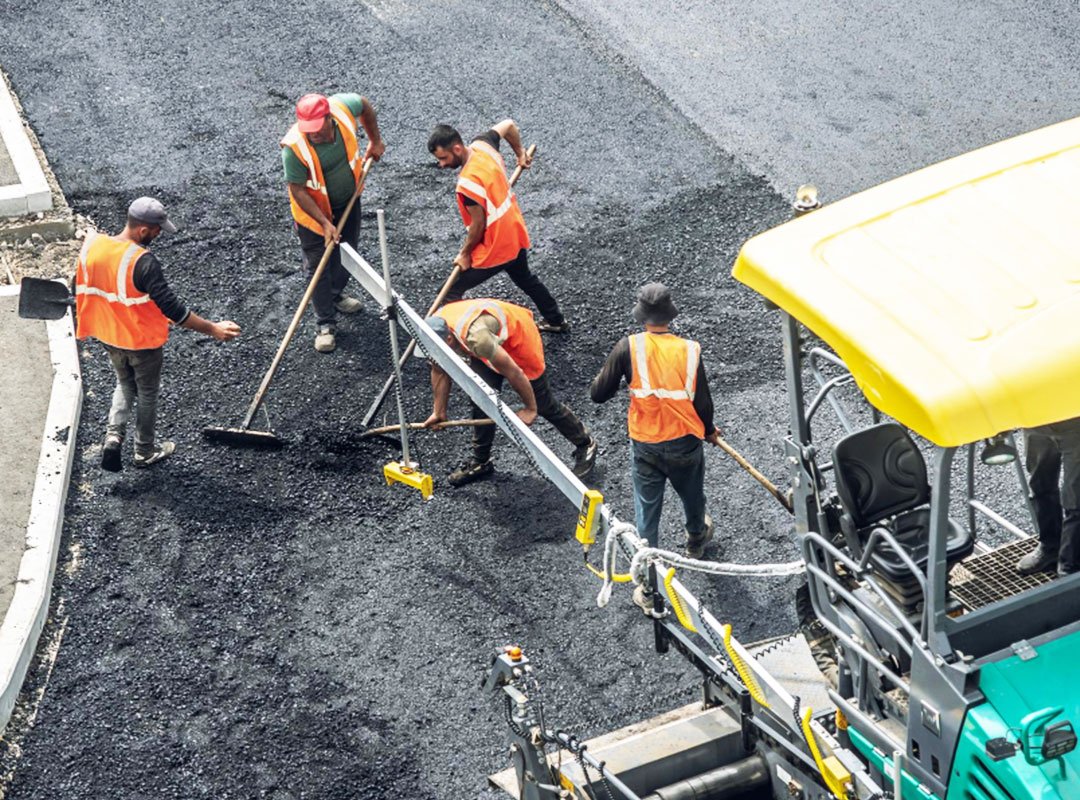
Even the best-designed road camber cannot perform effectively if it is not constructed accurately. Minor deviations in cross slope can create low spots where water accumulates, leading to premature pavement deterioration. Modern highway construction therefore relies on technologies such as GNSS machine control, Total Stations, laser-guided pavers and digital surveying equipment to achieve precise pavement geometry. Strict quality control and compliance with MoRTH Specifications and IRC standards ensure that the constructed road camber performs as intended throughout the pavement’s service life.
15. Road Camber Delivers Long-Term Economic Value
Highway agencies increasingly evaluate projects using Lifecycle Cost Analysis (LCCA) rather than focusing only on initial construction costs. Properly designed road camber reduces water-related pavement damage, lowers maintenance frequency, extends pavement life and minimises traffic disruptions caused by repairs. The importance of camber in roads therefore extends beyond engineering performance to long-term economic sustainability. A correctly constructed road camber protects infrastructure investments while delivering safer and more durable highways at a lower lifecycle cost.
Although road camber appears to be a simple geometric feature, it is one of the most critical elements of highway engineering. By enabling rapid surface drainage, it protects pavement layers, preserves subgrade strength, reduces hydroplaning risk, prevents potholes and extends pavement service life. Every rainfall event highlights the importance of an efficient highway drainage system, with road camber serving as its first and most essential component.
As India’s highway network continues to expand through programmes such as Bharatmala Pariyojana and PM Gati Shakti, designing roads for long-term durability has become increasingly important. With more than 146,000 km of National Highways carrying nearly 40% of the country’s road traffic, even small improvements in drainage design can significantly reduce maintenance costs, improve safety and enhance infrastructure performance.
For engineering, procurement and construction (EPC) companies such as Pawan Highways India Pvt. Ltd. (PHIPL), delivering quality highways goes beyond laying asphalt or concrete. It requires precise execution of road camber, compliance with IRC and MoRTH standards, and integration with a robust highway drainage system. When designed and constructed correctly, road camber becomes far more than a slight slope. It is a critical engineering feature that safeguards infrastructure investments, improves road safety and ensures highways continue to perform reliably for decades.