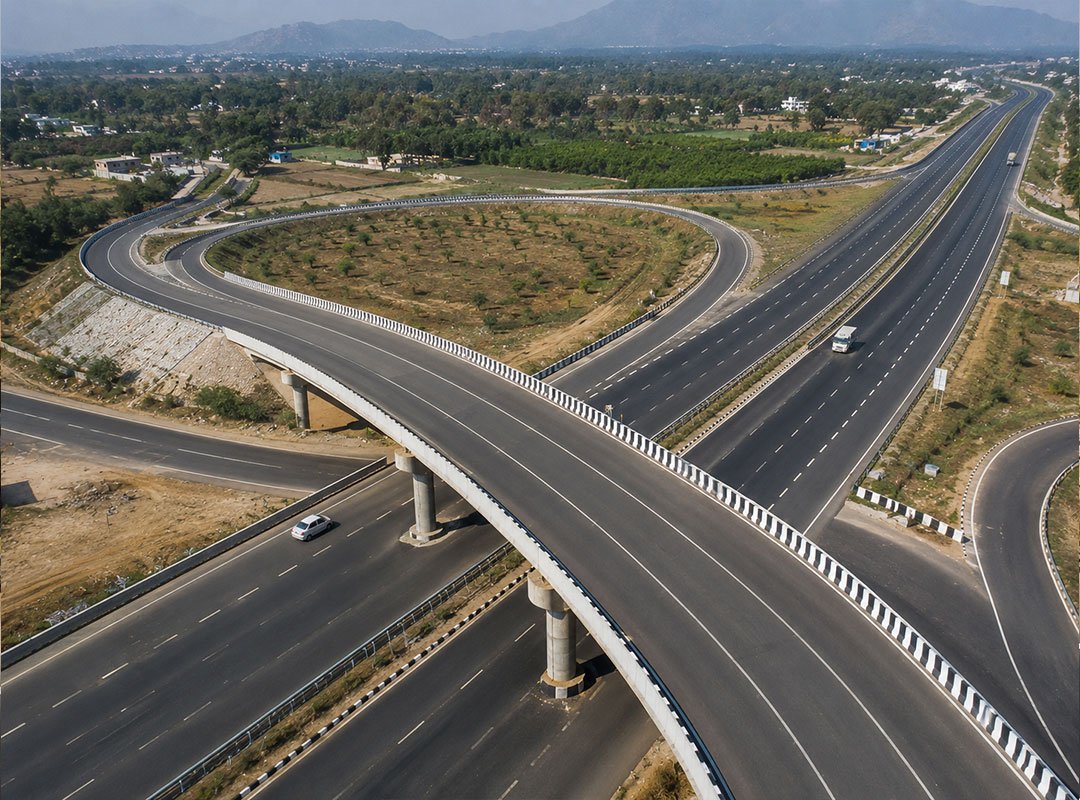

In the infrastructure sector, completion certificates have traditionally been treated as the definitive milestone marking the success of a highway project. They confirm that the asset has been delivered in accordance with contractual obligations. However, for a professional highway construction company, this milestone represents only a baseline level of compliance, not a true measure of success. A well-executed highway project is defined by its long-term performance, safety outcomes, operational efficiency, and its contribution to economic and social development. It reflects a disciplined adherence to highway construction quality standards, a deep understanding of factors affecting road durability, and a rigorous approach to quality control in infrastructure projects. The following dimensions provide a comprehensive perspective on what truly defines execution excellence beyond completion certificates.
1. Long-Term Performance and Structural Durability
A highway project must be evaluated over its lifecycle rather than at the point of completion. Long-term durability is one of the most critical indicators of whether highway construction quality standards have been properly implemented. Highways are subjected to continuous stress from traffic loads, environmental exposure, and material fatigue. Understanding the factors affecting road durability is essential to ensure that the pavement structure performs consistently over time.
Key indicators of long-term performance include:
- Sustained pavement strength with minimal cracking and rutting
- Resistance to environmental degradation such as moisture and temperature variation
- Ability to withstand projected traffic loads without premature failure
- Retention of ride quality and surface smoothness
Effective quality control in infrastructure projects ensures that materials, processes, and workmanship align with design specifications, thereby enhancing durability and reducing lifecycle costs.
2. Engineering Excellence and Subsurface Integrity
The visible surface of a highway is only a fraction of the overall engineering system. True execution excellence lies beneath the surface, where adherence to highway construction quality standards directly impacts structural integrity. A comprehensive understanding of factors affecting road durability begins with soil conditions, load distribution, and material performance.
Critical engineering aspects include:
- Detailed geotechnical investigations and soil analysis
- Proper subgrade stabilization and preparation
- Accurate placement of sub-base and base layers
- Consistent compaction and density control
Robust quality control in infrastructure projects ensures that each construction layer meets specified parameters, preventing early structural failures and ensuring long-term stability.
3. Integrated Drainage Systems
Drainage is one of the most significant factors affecting road durability, yet it is often underestimated in execution. Water infiltration can rapidly compromise pavement strength and lead to structural failure. Adherence to highway construction quality standards requires a comprehensive drainage strategy that addresses both surface and subsurface water flow.
Key elements include:
- Proper road camber and slope for surface runoff
- Efficient side drains and stormwater channels
- Functional culverts and cross-drainage structures
- Subsurface drainage solutions in vulnerable areas
Strong quality control in infrastructure projects ensures that drainage systems are constructed as per design, minimizing water-related damage and extending the life of the highway.
4. Safety-Centric Design and Execution
Safety is a defining parameter of project success and must be embedded within the framework of highway construction quality standards. It is not a corrective measure but a design priority. Several factors affecting road durability also influence safety, such as pavement condition, surface friction, and structural stability.
Key safety measures include:
- Adequate lane width and shoulder design
- High-visibility signage and markings
- Installation of crash barriers and guardrails
- Scientifically designed curves and gradients
5. Traffic Efficiency and Functional Design
A highway must function efficiently under real-world conditions. This requires alignment with highway construction quality standards and a clear understanding of traffic dynamics. Traffic load and usage patterns are major factors affecting road durability, influencing pavement wear and structural stress.
Important considerations include:
- Smooth traffic flow with minimal congestion
- Well-designed entry and exit points
- Adequate capacity for peak traffic volumes
- Integration with existing transport networks
Through effective quality control in infrastructure projects, developers can ensure that design assumptions translate into actual operational efficiency.
6. Lifecycle Planning and Maintenance Readiness
The completion of construction marks the beginning of a highway’s operational phase. Lifecycle planning is essential to maintain compliance with highway construction quality standards over time. Maintenance requirements are directly influenced by factors affecting road durability, including traffic intensity, environmental exposure, and material performance.
Key aspects include:
- Selection of durable and resilient materials
- Scheduled maintenance and inspection protocols
- Early detection of wear and damage
- Efficient repair and rehabilitation strategies
Strong quality control in infrastructure projects during construction reduces the frequency and cost of maintenance interventions.
7. Environmental Sustainability and Integration
Environmental considerations are increasingly integral to highway construction quality standards. Sustainable practices ensure that infrastructure development does not compromise ecological balance. Environmental conditions are also key factors affecting road durability, influencing erosion, drainage, and material degradation.
Key considerations include:
- Preservation of natural drainage systems
- Minimization of deforestation and habitat disruption
- Erosion control and slope stabilization
- Sustainable material usage
Effective quality control in infrastructure projects ensures that environmental measures are properly implemented and maintained.
8. Stakeholder Engagement and Transparent Governance
Execution quality extends beyond engineering to include governance and stakeholder coordination. Transparent processes support adherence to highway construction quality standards. Stakeholder decisions can indirectly influence factors affecting road durability, particularly in areas such as design modifications and construction timelines.
Key elements include:
- Clear communication among stakeholders
- Timely resolution of disputes
- Transparency in cost and schedule management
- Responsiveness to community concerns
Strong quality control in infrastructure projects also involves administrative discipline and documentation accuracy.
9. Technology Integration and Smart Infrastructure
Modern highway development increasingly relies on technology to enhance execution and monitoring. Advanced tools support compliance with highway construction quality standards. Technology also helps track factors affecting road durability, enabling predictive maintenance and performance optimization.
- Digital project management systems
- Drone-based inspections
- Real-time performance monitoring
- Intelligent traffic management systems
Enhanced quality control in infrastructure projects through technology improves accuracy, efficiency, and accountability.
10. Economic and Social Value Creation
A well-executed highway project delivers measurable economic and social benefits. These outcomes are directly linked to adherence to highway construction quality standards. Economic performance can also be influenced by factors affecting road durability, as poor durability leads to higher maintenance costs and reduced efficiency.
- Reduced travel time and fuel consumption
- Improved regional connectivity
- Increased economic activity and trade
- Enhanced access to essential services
Consistent quality control in infrastructure projects ensures that these benefits are realized and sustained over time.
11. Accountability and Performance Assurance
Accountability mechanisms are essential to maintain performance beyond project completion. They reinforce adherence to highway construction quality standards throughout the lifecycle. Monitoring factors affecting road durability allows for timely interventions and performance optimization.
Key measures include:
- Defect liability periods
- Performance-based contracts
- Regular inspections and audits
- Transparent reporting systems
Robust quality control in infrastructure projects ensures that accountability frameworks are effective and enforceable.
12. Future Readiness and Adaptability
Infrastructure must be designed to accommodate future growth and technological advancements. Flexibility is a key aspect of modern highway construction quality standards. Future traffic growth and environmental changes are important factors affecting road durability, requiring adaptable design solutions.
Considerations include:
- Provision for capacity expansion
- Integration with future transport systems
- Scalability of smart infrastructure
- Alignment with long-term development plans
Proactive quality control in infrastructure projects ensures that adaptability is built into the design and execution phases.
13. User Experience and Public Satisfaction
User experience is a direct reflection of execution quality. A highway that meets highway construction quality standards delivers comfort, safety, and reliability. User perception is influenced by several factors affecting road durability, including surface condition and ride quality.
Key factors include:
- Smooth and consistent driving experience
- Reliable travel times
- Perception of safety and security
- Availability of support infrastructure
Maintaining high standards of quality control in infrastructure projects ensures that user expectations are consistently met.
14. Ethical Practices and Professional Integrity
Ethical execution is fundamental to achieving and maintaining highway construction quality standards. Integrity ensures that quality is not compromised at any stage. Unethical practices can negatively impact factors affecting road durability, leading to substandard construction and early failures.
Core principles include:
- Transparent procurement processes
- Compliance with engineering standards
- Elimination of substandard materials
- Commitment to accountability
Strong quality control in infrastructure projects supports ethical practices and reinforces trust.
15. Independent Audits and Continuous Improvement
Independent audits provide objective validation of execution quality and adherence to highway construction quality standards.
They also help identify gaps related to factors affecting road durability, enabling corrective actions.
Key aspects include:
- Third-party quality assessments
- Performance benchmarking
- Identification of deficiencies
- Continuous improvement initiatives
Ongoing quality control in infrastructure projects ensures that lessons learned are applied to future developments.
Completion certificates represent an important administrative milestone, but they do not define the success of a highway project. True execution excellence is reflected in long-term durability, safety, efficiency, and user satisfaction. By consistently adhering to highway construction quality standards, understanding the factors affecting road durability, and implementing rigorous quality control in infrastructure projects, highway builders can deliver infrastructure that performs reliably over time. A well-executed highway is not just built to be completed. It is built to endure, to perform, and to create lasting value for society.