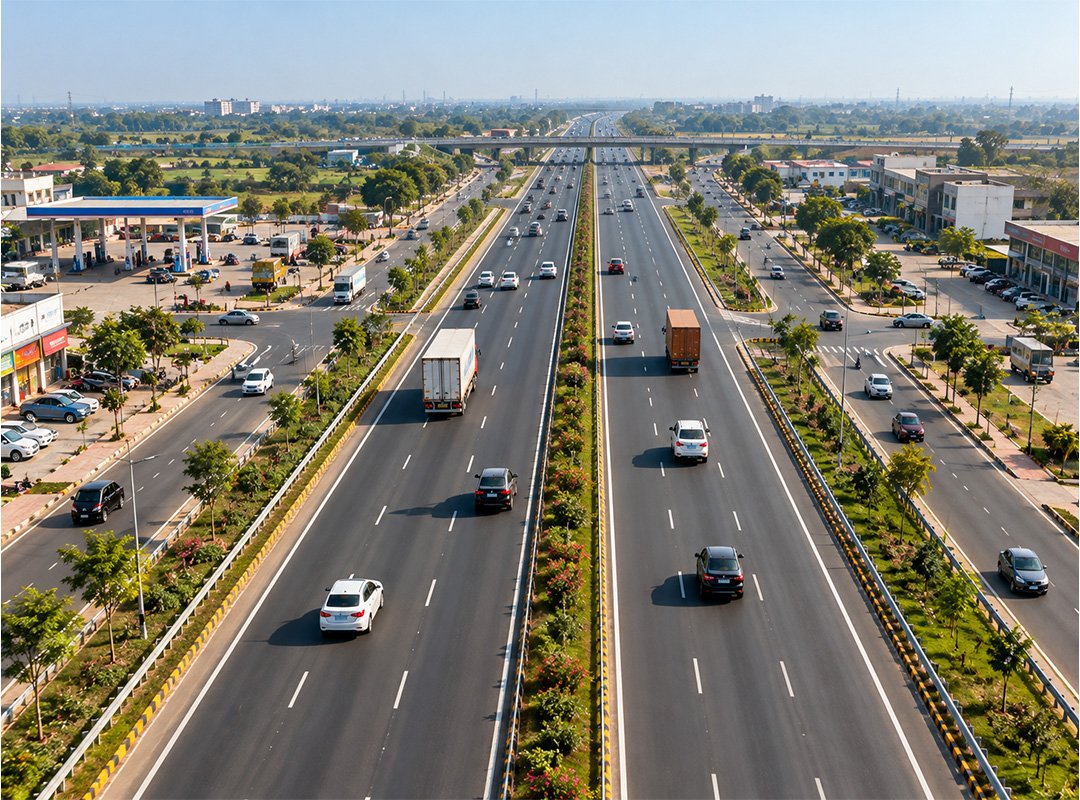
Service roads are subsidiary roads that run alongside a main highway, providing access to roadside properties, settlements, businesses and local streets. They allow many local journeys to take place without requiring drivers to enter or leave the high-speed main carriageway at every property. The importance of service roads is particularly evident on corridors passing through populated areas, where homes, shops, industrial facilities and connecting roads generate frequent turning movements. However, their performance depends on location, junction planning, drainage, pavement condition and how access to the main highway is controlled. Service road design must therefore be considered as part of the wider highway corridor rather than as an isolated strip of pavement.
1. Separating Local Traffic from Through Traffic
One of the primary purposes of service roads along highways is to separate local movements from long-distance traffic. Vehicles accessing nearby homes, markets, offices and industrial establishments often travel short distances and make frequent stops or turns. When these movements take place directly on a major highway, they can interfere with vehicles travelling at higher speeds over longer distances. A parallel service road provides an alternative route for suitable local journeys, helping organise traffic according to its purpose. This separation is especially valuable on busy urban and peri-urban corridors, where roadside development can otherwise create repeated interruptions to the main traffic stream. The importance of service roads lies partly in allowing local access while preserving the intended function of the main carriageway.
2. Providing Access to Roadside Properties
Properties located along major highways need practical and safe connections to the surrounding road network. Service roads can provide access to residential colonies, shops, offices, warehouses, factories, fuel stations and other establishments without requiring every property to connect directly to the main carriageway. This arrangement enables adjacent properties to share access points and reduces the need for numerous individual entrances. Proper planning is essential because closely spaced driveways can create additional turning movements and conflict points. The position of entrances, available sight distance and connections to the public road network must be assessed for each location. Where direct access to the main highway is restricted, a planned service road can maintain local connectivity without undermining the highway’s operating requirements.
3. Controlling Entry and Exit Points
A service road is most effective when its connections to the main highway are planned rather than created informally. Entry and exit arrangements should consider traffic volumes, junction spacing, turning movements, visibility and the distance available for vehicles to accelerate or decelerate. Service roads along highways should connect with designated junctions or approved access points appropriate to the corridor’s design. Unplanned openings, unauthorised connections and closely spaced intersections can create conflicts between vehicles entering, leaving and crossing the roadway. Access-control measures help maintain a clearer distinction between the main highway and local network. The final arrangement must comply with applicable Ministry of Road Transport and Highways (MoRTH) requirements and relevant Indian Roads Congress (IRC) guidance.
4. Supporting Settlements Along Highway Corridors
Major highways frequently pass near villages, towns and expanding urban settlements. Residents may need to reach local markets, schools, workplaces, healthcare facilities and connecting roads without making every short journey on the main carriageway. The importance of service roads becomes clear in these locations, where local travel demand can coexist with substantial regional or intercity traffic. Properly connected service roads can help maintain access to surrounding communities while reducing the need for direct roadside entry and exit movements. Their effectiveness depends on the continuity of the route and the location of crossings and junctions. Planners must also consider how residents can reach destinations on the opposite side of the highway, particularly where a median or access-control arrangement limits direct crossing.
5. Road Width, Alignment and Geometric Design
The width and alignment of a service road must reflect the expected traffic, vehicle categories, roadside development and available right of way. Engineers assess carriageway width, gradients, horizontal curves, sight distance, junction geometry and the space required for vehicles to turn or pass one another. Service road design must also consider the connection between the service road and adjoining streets so that vehicles can enter and leave without abrupt manoeuvres. Commercial areas may require different turning arrangements from residential stretches because trucks and delivery vehicles have different dimensions and operating requirements. The design should comply with the applicable technical standards rather than rely on a single typical cross-section for every location. Land constraints must be evaluated alongside long-term traffic demand.
6. Reducing Roadside Traffic Conflicts
Direct entry and exit movements along a highway can create conflicts between through traffic and vehicles accessing adjoining properties. These conflicts can involve sudden braking, slow-moving vehicles, turning traffic and vehicles waiting for suitable gaps. A well-planned service road design can help organise these movements away from the main traffic stream, provided its connections and junctions are also appropriately arranged. However, a service road does not automatically eliminate collisions or congestion. Poor junction placement, inadequate visibility and uncontrolled access can transfer the same problems to another part of the corridor. Safety depends on the entire layout, including access restrictions, traffic signs, road markings, crossing facilities and compliance by road users.
7. Providing for Pedestrians and Cyclists
Service roads may carry pedestrians and cyclists as well as motor vehicles, particularly near populated areas and roadside commercial developments. Their presence must be considered during planning because a road designed only around vehicle movement may not provide sufficient space or protection for vulnerable users. Depending on the location and applicable requirements, separate footpaths, cycle tracks, crossings, kerbs and suitable lighting may be necessary. Service roads along highways should also account for the movement of pedestrians between residential areas, public transport stops and nearby establishments. Designers must assess crossing locations and visibility at connecting junctions, rather than assume that lower traffic speeds alone make the route safe. The provision of appropriate facilities depends on local demand, available land and the road’s intended function.
8. Supporting Commercial and Industrial Access
Highway corridors often serve industrial estates, logistics facilities, wholesale markets, warehouses and other establishments that generate frequent goods movement. A service road can provide a designated route for suitable delivery vehicles to reach these locations without requiring every vehicle to enter the highway directly. Its design must account for truck dimensions, turning radii, pavement strength and the space needed for vehicles to queue within private premises. Loading, unloading and parking should generally be accommodated within the relevant property or designated facilities rather than obstructing the service road. Where heavy vehicles use the route regularly, the pavement and junctions must be designed for the expected traffic loading. Coordinated access planning supports commercial connectivity while reducing avoidable interference with through traffic.
9. Coordinating Drainage and Utility Infrastructure
Service roads require drainage systems that prevent water from accumulating on the pavement, at junctions or near adjoining properties. Engineers assess surface gradients, runoff paths, side drains, culverts and connections to an approved outfall. Poor drainage can damage pavement layers, weaken the supporting ground and leave standing water that interferes with road use. Service road design should also coordinate underground and overhead utilities, including water supply, sewerage, electricity and telecommunications, wherever these are present or planned. Utility installations must follow applicable permissions and placement requirements so that maintenance work does not repeatedly damage the pavement or obstruct traffic. Drainage and utility planning should be completed alongside the road layout because later modifications can be costly and disruptive.
10. Managing Junctions and Turning Movements
The junctions connecting a service road to local streets or the main highway strongly influence how well the network operates. Their design must account for the expected turning volumes, vehicle speeds, sight distance and space required for deceleration, waiting and merging. Depending on traffic conditions, suitable channelisation, turning lanes, traffic control or other approved measures may be needed. A junction that is too close to another access point can create overlapping queues and confusing vehicle movements. Service roads along highways should therefore be evaluated as part of the corridor-wide network, including the effect of traffic entering or leaving nearby properties. Where a crossing serves pedestrians or cyclists, their visibility and movement should also be addressed in the junction layout.
11. Construction Planning and Traffic Continuity
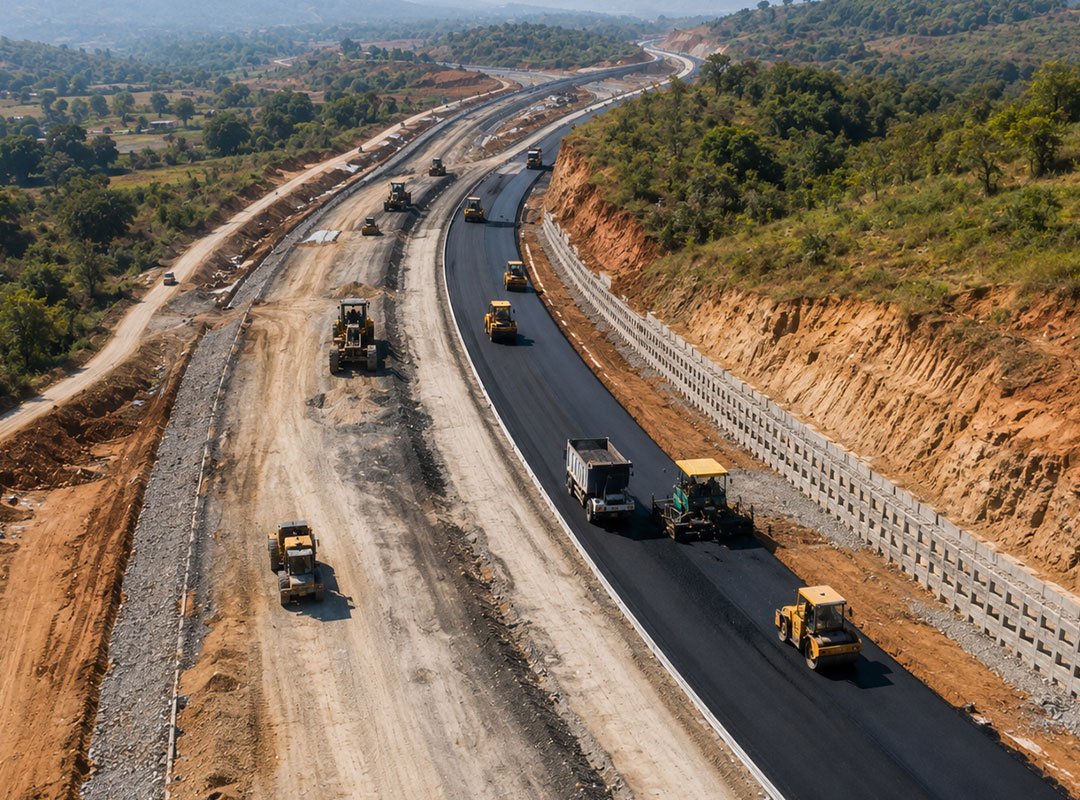
Constructing a service road beside an operational highway requires careful staging to maintain access and manage the movement of existing traffic. Work may involve clearing, earthwork, pavement construction, drainage installation, utility relocation and the formation of connections to existing roads. Contractors must coordinate these activities with land availability, weather conditions, material deliveries and traffic-control arrangements. Temporary diversions and barricades should be planned where work affects existing access or reduces available road width. Service roads along highways may be built in stages, depending on the project’s land, sequencing and access constraints. Quality checks are needed throughout construction to confirm that materials, compaction, levels, drainage and pavement layers meet the approved specifications before the road is opened for use.
12. Inspection and Long-Term Maintenance
Service roads need regular inspection to remain functional throughout their service life. Maintenance teams should look for potholes, pavement cracking, settlement, blocked drains, damaged kerbs, unsafe access openings and deterioration around junctions. Vegetation, parked vehicles or unauthorised structures can also obstruct visibility and reduce usable road width. The importance of service roads extends beyond their initial construction because neglected surfaces or drainage problems can undermine their ability to carry local traffic reliably. Maintenance priorities should reflect pavement condition, traffic demand and the severity of identified defects. Repairs must be properly executed, and work zones should be managed to protect road users and workers. Periodic inspections also help identify recurring problems that require changes to drainage, access arrangements or pavement design.
13. Planning for Land Use and Future Development
Roadside development often changes after a highway opens. New housing, shops, industrial sites and connecting roads can increase local traffic and place additional demands on service roads. Planning must therefore account for the likely development pattern, available right of way and the need to preserve approved access arrangements. Uncontrolled construction along the corridor can introduce new driveways or encroachments that reduce the effectiveness of the original layout. The importance of service roads is greatest when they form part of a coordinated land-use and transport plan, rather than being treated as a solution added after roadside congestion develops. Future changes should be evaluated against traffic capacity, access-control requirements, pedestrian needs and the ability of the existing network to accommodate additional demand.
Service roads help maintain local connectivity while supporting the efficient operation of major highway corridors. Their benefits depend on suitable alignment, controlled access, safe junctions, reliable drainage and regular maintenance. Pawan Highways India Pvt. Ltd. (PHIPL), with experience in highway construction and civil infrastructure, recognises the value of technically sound planning and disciplined execution in developing dependable transportation networks. Quality infrastructure supports better connectivity, operational reliability and the long-term performance of India’s roads.